



From hot flashes to sleepless nights, managing perimenopause symptoms can feel like a rollercoaster. But we have good news: menopause nutrition — aka fueling your body with the right nutrients — can help.
In this blog, you’ll learn how incorporating protein, healthy fats, and micronutrients into your diet can help you manage symptoms and ultimately feel stronger and healthier during every stage of menopause.
Why is nutrition important for menopausal women?
Nutrition is important throughout the whole lifespan, especially during menopause. In all stages of menopause, estrogen levels gradually decrease, leading to symptoms like headaches, fatigue, and the all-too-familiar night sweats.
Perimenopause (the phase leading up to menopause) can start as early as your 30s or 40s, causing your estrogen levels to fluctuate as you approach menopause. Menopause occurs when you have gone 12 consecutive months without a menstrual cycle.
Women who are postmenopausal are also prone to long-term symptoms like bone loss and cardiometabolic risks such as high blood pressure, high cholesterol, or weight gain.
All these changes can feel heavy on your body and mind, affecting your day-to-day life. You may find that seven hours of sleep no longer feels enough or spending time with friends is taking more energy than usual.
You’re not alone if you feel confused or out of control during perimenopause, but it doesn’t have to be the norm. That's where menopause nutrition comes in, helping to support your body with exactly what it needs.
How can nutrition help manage menopause symptoms?
Jessica Bachman, PhD, RDN, says, “Menopause is a hormonally driven transition, but diet and lifestyle are powerful modulators of symptoms and long-term outcomes.”
In other words: Implementing a lifestyle with menopause nutrition can help reduce the effects from perimenopause and help you live a more energetic, vibrant life during every stage. (That’s a win!)
Dr. Bachman notes that prioritizing diets with whole foods, protein, fiber, and micronutrients can help:
- Reduce hot flashes and headaches
- Improve sleep
- Preserve muscle
- Prevent menopause weight gain
- Slow bone density loss
It’s important to note that everyone experiences menopause differently, and symptoms can change from day to day, so be patient as you figure out what works for you! Later in the blog, we’ll dive into helpful strategies and foods to help you navigate menopause through nutrition and support your body with a realistic diet.
[boxout]
Menopause belly: How healthy eating helps
Losing weight can be challenging during menopause, but this is completely normal for women who are postmenopausal. As your hormones shift and muscle mass declines, metabolism can slow. Additionally, it's common to see weight increase more around your abdomen.
The good news is that — while it may be challenging — you can manage weight gain with healthy eating habits. “A pattern focused on protein, fiber, and low added sugar, combined with strength training is the practical path to reduce [accumulation of excess body fat around the stomach],” says Dr. Bachman.
Helpful strategies for managing weight during all stages of menopause include:
- Controlling calorie intake
- Increasing protein intake with meals
- Reducing ultra-processed food
- Incorporating resistance training exercise
[/boxout]
How to support bone health during menopause
In the postmenopausal stage, women also face the ongoing effects of aging. “Bone loss and sarcopenia accelerate with age and estrogen loss, so ensuring adequate calcium, vitamin D, and protein becomes more important,” says Dr. Bachman.
Due to low estrogen levels, women who are postmenopausal are at high risk of osteoporosis, or gradual loss of bone density that leads to weak and brittle bones. Throughout menopause, women should also aim for a higher protein intake than the general adult and support their bones by adding calcium and vitamin D to their diets.
Adequate protein intake helps grow and maintain muscle mass, which is an important factor for bone health. (And that’s why consistent exercise should also be part of your routine.) During exercise, your muscles pull on your bones and strengthen them, supporting long-term bone health.
What nutrients should women prioritize in menopause for healthy eating?
Creating a menopause nutrition plan can feel overwhelming, but focusing on a few key nutrients can help you get started and respond to your body’s changing needs.
Dr. Bachman notes, “Menopause itself doesn’t automatically create a specific single nutrient deficiency, but age-related changes and dietary shifts can increase the risk of low intakes [of necessary vitamins and nutrients].”
A menopause nutrition plan can help you reach your nutrient intake goals and manage weight. Anytime Fitness Coach Heather adds, “During menopause, women may see a weight shift or change in body composition. The reaction is often to eat less, but the true solution is to eat better.”
With that in mind, here are some of the key nutrients to incorporate into your menopause diet, including which foods to eat, how much, and how often.
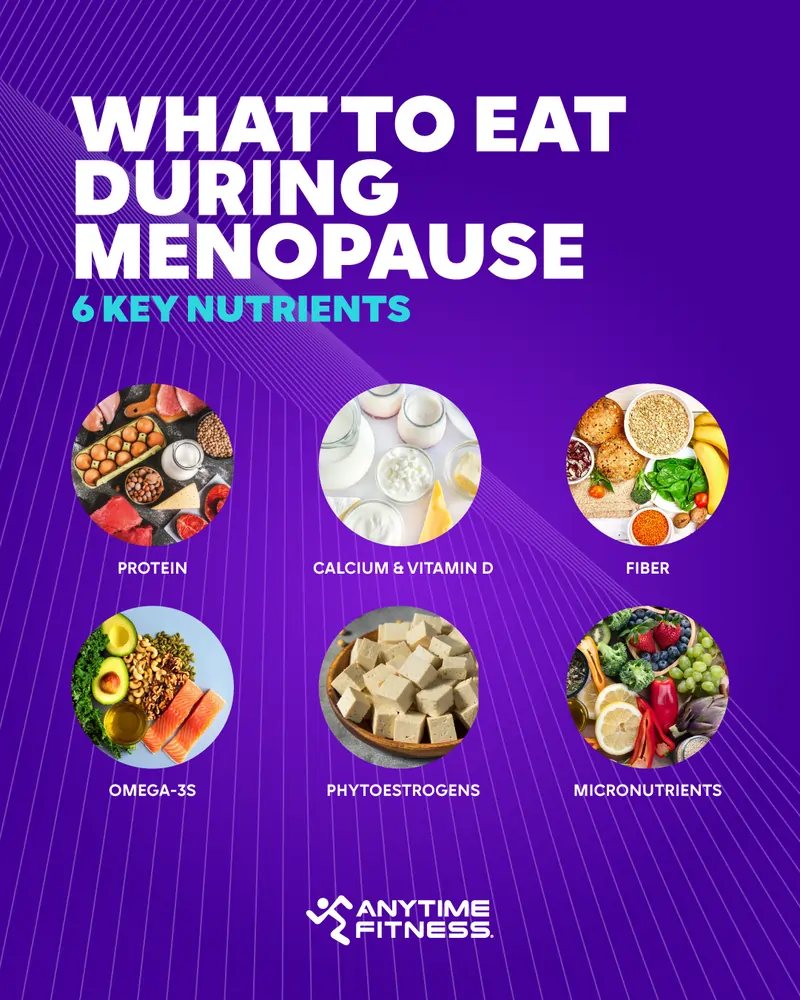
1. Protein
Protein is one of the most important nutrients to consume during all stages of menopause. High intake of protein supports your muscle mass and resting metabolic rate.
Intake goal: At least 1.0-1.2 grams per kilogram of body weight (g/kg) per day
If you are actively working out or trying to lose weight, increase this to at least 1.2-1.5 g/kg.
Food sources you can include in your diet plan:
- Eggs
- Dairy
- Fish
- Poultry
- Tofu
- Legumes
2. Calcium and vitamin D
Calcium and vitamin D are fundamental to reducing bone loss, so they are especially important during menopause. A low intake of these nutrients can increase the risk of fragility fractures in your bones.
Intake goal: 800–1,200 mg of calcium per day and plenty of sun for vitamin D
Food sources you can include in your diet plan:
- Dairy
- Fortified plant milks
- Canned fish with bones
- Leafy greens
Supplements can also help reach your intake goal but should only be taken as needed and only by recommendation from a medical provider. If you’re at a high risk of bone deficiency or fracture, taking 800 IU (international units) of vitamin D per day is recommended based on a 2019 study.
3. Fiber and whole, plant-based foods
These nutrients help with weight management, bowel regularity, and may modestly influence estrogen metabolism. Consuming them will help you feel full for a longer period.
If you are being mindful of your calories, reaching your fiber and whole plant food nutrition goals can help support weight loss without skipping any meals.
Intake goal: 20–30 g per day
Food sources you can include in your diet plan:
- Vegetables
- Fruits
- Legumes
- Whole grains
4. Omega-3s
Omega-3s are beneficial to cardiovascular health. They can also help with mood swings and inflammation.
Intake goal: Two times a week
Food sources you can include in your diet plan:
- Fatty fish
- Flaxseeds
- Walnut
5. Phytoestrogens
Phytoestrogens, also known as dietary estrogen, produce the same effect as estrogen. When consumed, the body responds as if it is estrogen, increasing the hormone levels. Eating foods high in phytoestrogens can help reduce the severity and frequency of menopausal symptoms like hot flashes.
Intake goal: 40-70 mg per day
Food sources you can include in your diet plan:
- Tofu
- Soy milk
- Edamame
- Tempeh
6. Micronutrients
Micronutrients are vitamins and minerals that only need to be consumed in small amounts — but this doesn’t make them any less important! Micronutrients are pivotal to muscle growth and bone health, making them especially beneficial throughout menopause. The intake amount can vary depending on your natural levels.
Micronutrient considerations in menopause:
- Increase B12 intake if you are not consuming many animal products.
- Measure your iron levels if you are menstruating in perimenopause.
- Take magnesium to help with better sleep.
- Maintain a healthy blood pressure with potassium.
[boxout]
Bonus: The Mediterranean diet
While there’s no one-size-fits-all diet to manage menopause symptoms, one strategy to consider is the Mediterranean diet. Dr. Bachman says, “[It] is high in fiber and phytonutrients that may reduce some common symptoms and moderate some of the increased chronic disease risk associated with menopause.”
The Mediterranean diet emphasizes:
- Fish and poultry
- Healthy fats like extra virgin olive oil
- Plant-based ingredients like vegetables, fruits, whole grains, legumes, and nuts
These foods contain beneficial nutrients that can help reduce the risks of many health concerns, including weight gain, cardiovascular issues, and bone loss.
[/boxout]
Sample menopause diet plan from a registered dietitian
As you can tell, there are many dietary considerations for menopause, but meeting your nutrition goals is easier than you might think! In most cases, you can work with what is already in your fridge and include additional quality protein, high-fiber foods, or whole grains. Here’s an example of what a day of eating to support your body through menopause might look like.
Breakfast: Start the day with a healthy foundation
A breakfast full of protein and healthy fats keeps you full and provides steady energy throughout the day.
Try this yogurt parfait:
- Greek or fortified soy yogurt
- Mixed berries
- Ground flaxseed (2 tbsp)
- Chopped nuts (2 tbsp)
Lunch: Reenergize
For lunch, emphasize high-quality protein and fiber from whole grains and vegetables.
Try this salad bowl:
- Mixed greens
- Quinoa or farro
- Roasted chickpeas or grilled chicken
- Mixed vegetables
- Olive oil with lemon dressing
- Fruit
Snacks: Get a pick-me-up
Snacking provides steady energy and nutrients that help regulate appetite, mood, and metabolism between meals. Try pairing a protein/fat source with a high-fiber carbohydrate like fruit or vegetables.
Try these snacks:
- Apple with nut butter of choice
- Carrot sticks with hummus
Dinner: End the day strong
For dinner, lean protein supports muscle mass and metabolism, while high-fiber carbs give you stable, lasting energy. Plus, incorporating healthy fats like salmon and olive oil promotes hormone balance and reduces inflammation.
Try this nutrient-dense dinner:
- Grilled salmon or tofu
- Steamed broccoli
- Sweet potato
- A side of salad with olive oil
The importance of balancing fitness and nutrition during menopause
Building your own fitness routine is a great way to support healthy eating and establish helpful patterns that can benefit your longevity.
Working out is also a great way to manage perimenopause symptoms. You may find that scheduling time for bodily movement will make you feel energized and accomplished.
Benefits of exercising during menopause:
- Less severe and frequent hot flashes
- Higher energy levels
- Better sleep
- Controlled weight gain/loss
- Muscle building
Easy ways to get started:
- Eat protein for breakfast
- Walk for 15 minutes a day
- Engage in strength training exercise (push-ups, squats, planks) for 30 minutes
- Eat protein 30-45 minutes after a workout
Recap: Quick tips for healthy menopause nutrition
Track your symptoms for 1–2 weeks. Analyzing patterns in your symptoms can help identify trigger foods and show you what’s working — and what’s not. For example, drinking caffeine may contribute to your afternoon hot flashes.
Prioritize protein in each meal. Set a goal of consuming at least 1.0-1.2 g/kg of high-quality protein per day to produce muscle protein synthesis.
Pair nutrition with resistance training. When it comes to preserving muscle and bone health, healthy eating is only half of the puzzle. Implement weight training exercises to grow your muscle mass and strengthen your bones.
Support your long-term health with a menopause nutrition plan
Above all, remember that menopause nutrition is about nourishing your body. Every menopause journey is different, and a tailored and intentional diet plan can help you feel your best.
“Small, sustainable changes [like adding] protein at breakfast, one extra vegetable serving a day, and two strength sessions a week compound into meaningful improvements in symptoms and long-term health,” says Dr. Bachman.
As hormones shift in perimenopause, quality nutrition gives your body what it needs to manage symptoms and support long-term health. Combining regular exercise with a balanced diet full of key nutrients like protein, calcium, and fiber sets you up to live a vibrant, energetic life through menopause and beyond.
More nutrition tips for you
- How to Read Nutrition Labels for Weight Loss: 5 Tips From a Nutrition Coach
- 14 Cheap, Healthy Meals to Boost Your Energy
- Eating Before or After a Workout: The Strategy for Max Energy
Want more advice on how to support your body during menopause? Learn these menopause exercise tips for every stage.

.avif)