

.avif)
Lifespan vs. longevity — you’ve likely heard these terms before, but what’s the difference between them? Here’s a hint: While lifespan measures the length of time a person lives, longevity focuses on how to extend life while maintaining health and independence. In this blog, we’ll dive into lifespan vs. longevity so you can map out a healthy future and make choices that serve your mind and body well for years to come.
We’ll answer questions like:
- What is lifespan?
- What is longevity?
- What is the difference between lifespan and longevity?
- Lifestyle habits to support longevity
- Three types of exercises for long-term health
First things first: What is lifespan?
Lifespan is defined as the average length of life for a species. An alternate definition is “the duration of existence of an individual,” aka the length of someone’s life. According to the latest data from the World Health Organization’s Global Health Observatory, the global average life expectancy for humans is 71 years.
In the U.S., we’re living longer than we used to. Life expectancy (or average lifespan) has increased from 55 years for males and 58 years for females in 1900 to 78 years for males and 83 years for females in 2010. That’s more than 20 additional years of life for both sexes.
Today, the average person can plan to have a healthy life expectancy and live to old age. It’s also more important than ever to focus not only on lifespan, but also on longevity.
What is longevity?
Longevity means to have a long duration of life, or to live beyond the average life expectancy. However, we're not only talking about living more years; we’re talking about living those years in good health. Longevity is the pursuit of living more years and living better. While it certainly has to do with increasing your lifespan, the focus is on adding to your health span.
[boxout]
What is a health span?
In the field of geroscience research, the aim is to understand the biology of aging. Scientists in this field consider health span to be the portion of the lifespan up until “an individual is no longer in good health or is suffering from diseases or disabilities of aging.” Similarly, the Merriam-Webster definition of health span is the length of time that a person is healthy — not just alive.
[/boxout]
Lifespan vs. longevity: What’s the difference?
Now that we’ve covered lifespan and longevity, let’s dive deeper into the differences between them. When considering longevity vs. lifespan, a simple way to think about them is in terms of quality of life (supported by healthy choices) and length of life (the number of years).
When talking about lifespan, such as “average lifespan” or “maximum lifespan,” we’re referring to the number of years that a person lives (average = 71, maximum = 120).
Longevity as a concept means “to have a long life” or to live longer than the average life expectancy — to be one of the lucky ones to reach an old age. This implies health and independence. Therefore, the pursuit of longevity is to extend the number of years in your life during which you are able to do the things you enjoy, rather than living longer just for the sake of extending life beyond average life expectancy.
.avif)
Improving longevity: Healthy fitness and lifestyle habits
While there’s no surefire way to add years to your life, certain lifestyle factors are backed by science and proven to increase your odds of living longer. The key? Activities that support heart health. The American Heart Association lays out eight health and fitness factors (Life’s Essential 8) shown to decrease the risk of chronic disease and promote healthy aging. As a result, the lifestyle practices below have the potential to lead to a longer and better life (that is, a longer lifespan and health span), possibly beyond average life expectancy.
Build a healthy routine with these lifestyle habits:
- Avoid smoking, vaping, e-cigarettes, and secondhand smoke.
- Aim for seven to nine hours of sleep per night.
- Eat a balanced diet of whole foods, lots of fruits and vegetables, lean protein, nuts, and seeds.
- Get 2.5 hours of moderate or 75 minutes of vigorous physical activity per week.
Work with a healthcare professional to:
- Maintain a healthy body weight as measured by a BMI between 18.5-25.
- Control your levels of non-HDL, or “bad,” cholesterol (to help prevent heart disease, stroke, and obesity).
- Control your levels of hemoglobin A1C as a measure of blood glucose.
- Keep your blood pressure under control. Levels below 120/80 mm Hg are optimal.
Bonus tip: Include strength training at least twice a week, making sure to target all major muscle groups (legs, chest, back, core, arms, shoulders) at moderate or higher intensity.
Why fitness matters for longevity
Fitness is truly more than a “feel good” activity — it’s an activity that a long, healthy life depends on. As we age, our brains become less active and they produce fewer neurotransmitters like dopamine and serotonin. They even weigh less over time, at a rate of 5% per decade after 40. However, as one research study states, “one of the best ways to help counter the cognitive decline associated with aging is to stay physically fit.” Exercise helps boost brain health as well as physical fitness, meaning you’ll not only have better odds of living longer — you’ll be living better.
3 types of exercises for long-term health and fitness
Regular exercise can help you achieve results like muscle gain, weight loss, or better sports performance. And while all types of exercise can be beneficial, certain activities are especially important for maintaining strength, health, and increasing longevity. For example, it’s recommended that adults do muscle-strengthening activities involving all major muscle groups, at moderate or greater intensity, two or more days per week. If you’re focusing on longevity, prioritize the three types of exercise below.
- Exercises that improve endurance and VO2 max (maximal oxygen intake). This improves your aerobic or cardiovascular fitness, measured as maximal aerobic capacity. Not sure where to start? Ask yourself this question: “What gets my heart rate up?” These types of activities include bicycling, dancing, rowing, and climbing stairs. Here’s a bonus: Even yardwork or housecleaning and fall into this category! The key is to get moving and then maintain it for a desired period of time.
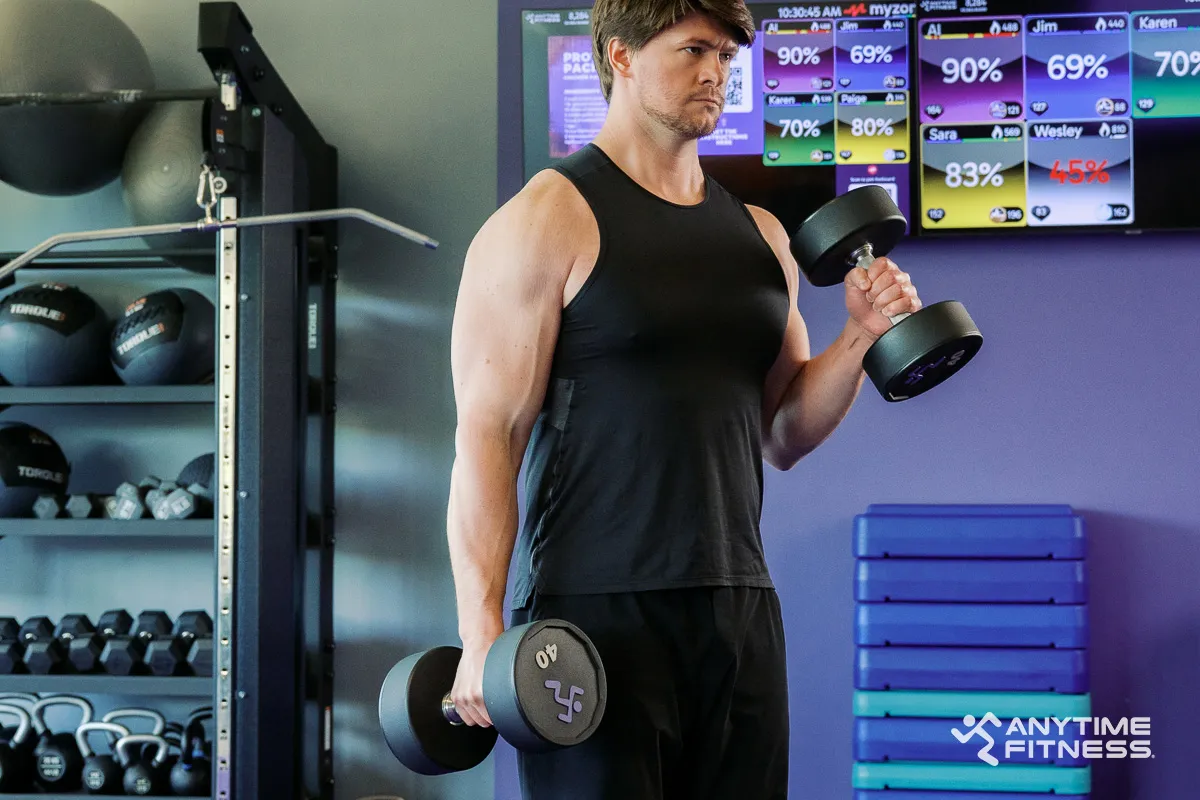
- Strength training exercise — with a focus on functional training. Functional exercises mimic real-life movements (think: squatting, pushing, pulling, rotating, and more). These exercises help improve activities of daily living (ADL) more than traditional strength training. Weightlifting also makes ADL easier while improving bone health. The American College of Physicians also recommends resistance training and weight-bearing exercise to help maintain or improve bone mass, reducing the risk of injury from falls.
- Balance training. By challenging the body to achieve stability while moving, balance training helps reduce the risk of injuries from falls. Examples include single-leg exercises, yoga, Tai Chi, and even practicing standing on one leg. When practicing balance exercises, be sure to have something stable to hold onto nearby, such as a chair or wall, for support if needed.
Understanding VO2 max
Maximal oxygen intake or maximal aerobic capacity (VO2 max) is more than a metric — it’s a powerful indicator of health. A healthy VO2 max score is important for better quality of life (health span) as well as living longer. The higher your VO2 max, the lower your risk of death. In fact, researchers suggest it is “one of the most important predictors of mortality.”
One study also found that higher VO2 max levels were associated with a 9% relative risk reduction of all-cause mortality. Another study found that added hours of weekly physical activity (at moderate to vigorous intensity) further increased the degree of mortality risk reduction to 20%.
While some fitness trackers can give you VO2 max estimations, in-person VO2 max testing done in a laboratory setting is the gold standard. The VO2 max charts below also offer insight into healthy ranges for men and women.
.avif)
.avif)
[boxout]
Meet the Evolt 360 body composition scanner
The Evolt 360 body composition scanner is an advanced tool that provides detailed data about your health, available at Anytime Fitness. By measuring data like total body fat percentage and skeletal muscle mass in real time, it gives you a clear lens into the positive changes you can make to support long-term health. With recurring body composition scans at regular intervals, you can track and understand progress with the help of a Coach.
When the Evolt 360 body composition scanner shows metrics changing over time as outlined below, that indicates improvement:
- Skeletal muscle mass: Staying the same or increasing
- Bone mineral density: Staying the same or increasing
- Visceral fat: Decreasing until in the "optimal" range
- Bio Age Score: At or below your chronological age
These metrics can be used alongside other signs that you're slowing or mitigating the effects of aging, such as being able to lift heavier weights (aka strength gains) or having improved endurance or more stamina.
Related: Why the Evolt Has a Place in Your Health Journey
[/boxout]
Healthy living for today — and tomorrow — starts right now
No matter how old you are, healthy living is a decision you can make each day to improve your quality of life — and potentially extend it beyond the average life expectancy. And when it comes to lifespan vs. longevity, it’s important to prioritize both. Whether that means integrating strength training into your exercise routine, meeting with a health professional, or getting an Evolt 360 body composition scan, you have the tools you need to make positive choices one step at a time so you can achieve a longer, healthier, and more fulfilling life.
Ready to dive deeper into your health journey and the longevity practices that work for you? We’re here to help! Sign up for a free fitness consultation to get started with an Evolt body composition scan.