


.avif)
Let’s face it — perimenopause can be complicated, with physical changes like increased muscle loss (at a rate of 3%–8% every decade after 30). Here’s the good news: your workout doesn’t need to be complicated. Lifting weights safely at a cadence that works for your mind and body offers so many benefits, from a reduced risk of bone fracture to overall strength. So, if you have questions like “when should I increase weight?” you’re in the right place.
In this blog, we’ll cover:
- Why it’s important to increase weight over time
- When should you increase weight?
- How often to go up in weight safely
- How lifting affects soreness and recovery
- Mistakes to avoid when increasing weight
Why is it important to increase weight for strength during perimenopause?
When should I increase weight? It’s an important question for building strength — and we’ll cover that shortly. But first, what does strength training have to do with perimenopause?
Perimenopause is known as the time leading up to menopause for women and people with periods, or the end of reproductive years. There’s no one-size-fits-all experience for perimenopause — it’s personal and unique to each person. It also happens at different ages, often in a person’s 40s, and sometimes earlier. Hormone levels begin to fluctuate, menstrual cycles can become irregular, and other symptoms like sleep changes are common.
One of the symptoms that’s often talked about is bone loss, influenced by hormone changes (declining estrogen). This is where strength training comes in. It’s no surprise that strength training is good for your muscles and bones, but these are some lesser-known benefits specifically for perimenopausal women:
- Boosted metabolism
- Reduced visceral fat
- Lower blood pressure
- Improved cholesterol levels
- Increased bone density
- Greater cognitive performance
- Improved self-esteem
To experience these benefits, it’s essential to increase the amount of weight you’re lifting as your body gradually gets stronger. This is called progressive overload, and you’re likely already doing it by being in tune with your body during each lifting session.
So, when should you increase weight? Knowing when to increase weight when lifting is more intuitive than it might seem. When the weight you’re lifting feels too light for the rep range you’re aiming for, it’s time to reach for the next heaviest set of weights. You can also add a plate to the barbell or move the pin down on the cable stack — you get the idea!
This is the foundation of strength training effectively, and for women navigating both perimenopause and postmenopause, it’s table stakes.
How the body communicates
When it comes to building and maintaining muscle during perimenopause, there’s so much happening beneath the surface that can’t be seen. Understanding how the body communicates with itself and its strength-building processes can provide important clues about the results that are happening (or seemingly not happening).
Here are a few key things to know when lifting weights and practicing strength training:
- Our bodies operate to be as efficient as possible, and they’ll only maintain the tissues that are required.
- Lifting weights helps combat age-related muscle loss (aka sarcopenia) by signaling: “We need this muscle!”
- As mentioned, with perimenopause comes hormonal shifts — including fluctuating estrogen levels.
Estrogen is a major player in building muscle, so when that ebbs and flows, it’s important to prioritize heavy strength training with progressive overload. This sends consistent signals to our bodies to keep the muscle mass we have, or even to build more!
When to increase weight
If you’re wondering when you should increase weight in your workout, you can use your reps as a benchmark. Here’s a rule of thumb: If you’re able to do two additional reps beyond your goal number of reps on your last set for two consecutive weeks, you’re ready to increase weight. This is called the two-for-two rule.
When should you increase weight for sustainable progress? Hint: Use the RPE scale as a guide
Another way to gauge whether it’s time to increase the weight you’re lifting is if you’re able to maintain proper form for the entirety of your sets and reps at the intended intensity level.
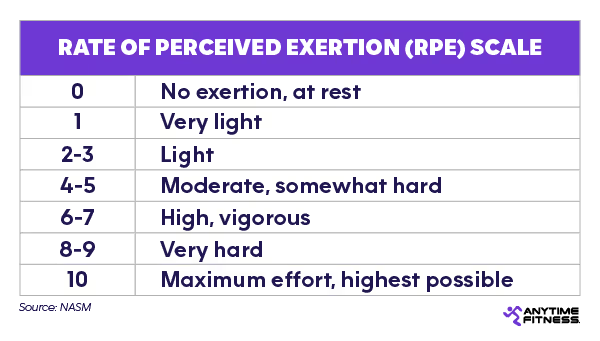
The RPE scale is a 1-10 scale that is often used to quantify (rate) your own effort (perceived exertion) during a workout. Depending on how you rate your level of effort, you can gauge whether it’s time to add more weight and do it safely. For example, if you rate your exertion level as a two, three or four, it may be time to add more weight so that your level of effort falls in the five, six or seven zone (or higher). You can test out the heavier weights for a short period of time and make sure your rate feels right for your body.
Here’s how the scale works:
- 0 — No exertion (at rest)
- 1 — Very light, easiest possible
- 2-3 — Light, easy
- 4-5 — Moderate, somewhat hard
- 6-7 — High, vigorous
- 8-9 — Very hard
- 10 — Maximum effort possible
While lifting is key for muscle and bone strength, it’s important to find balance with additional exercises that focus on cardio, flexibility, and recovery as well. As a general guideline, the American College of Sports Medicine (ACSM) and the CDC recommend at least 30 minutes of moderate-intensity aerobic exercise five days a week (think walking or yoga), or 20 minutes of vigorous activity (think cycling or running) three days a week.
In addition to cardio, these sources also recommend that adults should include muscle-strengthening exercises at least two days a week to maintain or improve overall strength and endurance. So, if you’re lifting weights or using barbells, you’re on the right track.
How often to increase weight when lifting
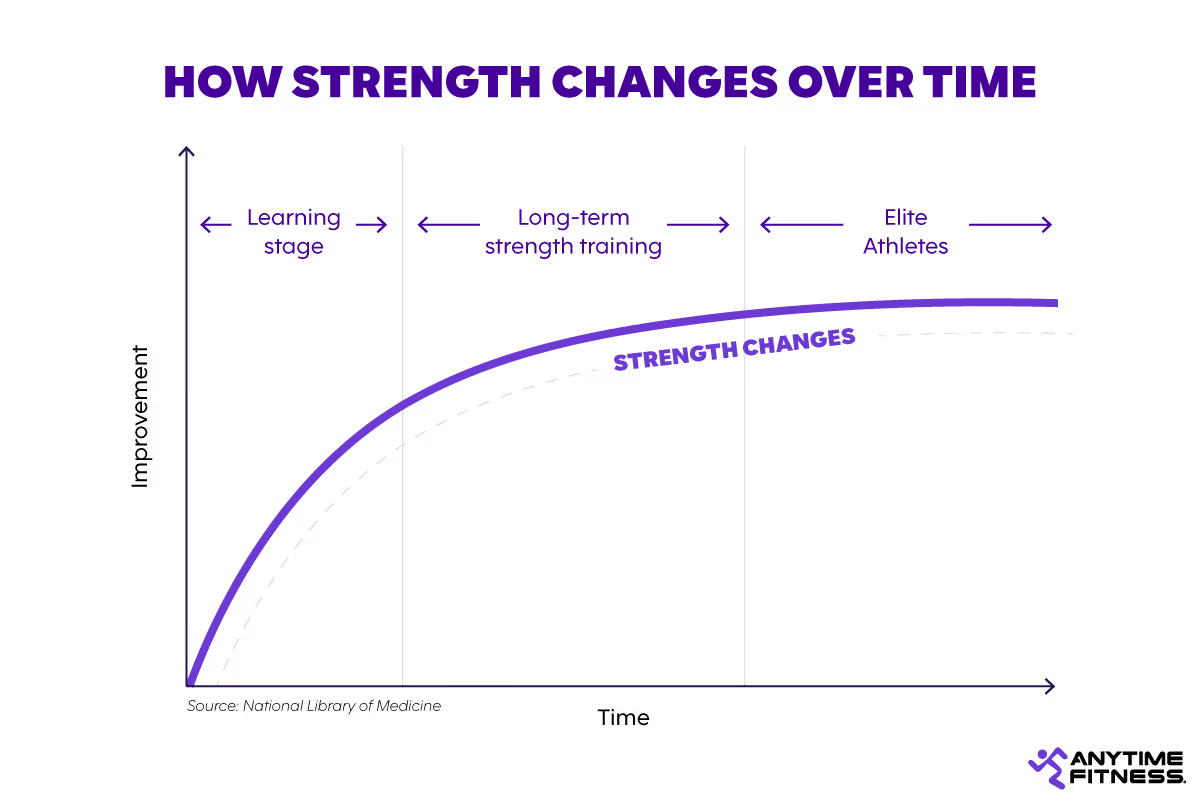
Now that we’ve covered how to increase weight, the next question is how often to increase weight when lifting. This largely depends on where you are in your strength training journey. If you’re newer to the weight room, you might tend to experience strength gains more rapidly than people who have lifted weights regularly for many years.
This isn’t because people who have been lifting for a long time are doing anything wrong. Rather, it’s because the body adapts to exercise (like lifting weights) over time. When someone starts lifting for the first time, gains can be more noticeable and happen at a faster rate. The rate of growth then slows during long-term strength training — this is completely normal and healthy, so don’t be discouraged if you notice this over time!
Will lifting more weight increase soreness and recovery time?
Each person’s body responds to exercise differently, including their level of soreness after exercise. Some people may notice more tiredness or hunger after increasing the intensity of a workout, with a recovery period that extends beyond their typical response. In other cases, people may not have a noticeable need for extra recovery measures — this all has to do with factors like your unique biology, routine, and personal habits.
If you’re dialed into your strength training routine and have your workout days and rest days already set up, you can count on sticking to your routine even when lifting more weight during your workouts. There’s no need to reinvent the wheel, especially if what you’ve been doing for recovery has been working for you so far.
However, as you increase the amount of weight you’re lifting over time, it’s important to be flexible with yourself and allow wiggle room for extra rest and recovery if your body is asking for it. That may mean taking an extra recovery day as needed, or enhancing your existing recovery routine with extra steps like foam rolling or flexibility exercises. You can also drink a little more water, go to bed a few minutes early, do mindful stretches or massage for the muscle group you worked, or take BCAAs (branched-chain amino acids) for muscle recovery.
Mistakes to avoid when increasing weight during a workout
Does lifting heavier weights build muscle faster? Should I do the maximum number of reps I can each day? These are common questions when people want to build strength quickly. While challenging yourself is important (and yes, sometimes that means doing extra reps to push yourself), being intentional and consistent is most critical. This will keep your workout routine sustainable for the long run and help prevent strain or injury.
One common mistake when increasing weight is the idea that it’s the only way to add difficulty and obtain results. It’s essential to make sure you’re lifting the right weight for your goals, but there are other ways to challenge your body and switch up your workout. Whether it’s changing up the tempo, adding sets or reps (aka increasing volume), or weaving in unilateral variations, these variations keep your weight-lifting workout mentally and physically engaging, allowing you to build strength at a sustainable pace.
Ready to lift heavier? Here’s what’s next
We’ve answered questions like “When should I increase weight when lifting?” and covered tips for how to maintain the strength-building progress over time — including perimenopause and postmenopause. Now you’re ready to put it into practice!
Getting started can be as simple as heading to your local gym and exploring the weights available using guided workouts in the AF App. If you’re looking for one-on-one Coaching, advice about topics like when should you increase weight, and more, we recommend working with a Coach. See you in the gym!
No matter where you are on your strength journey, understanding your body can offer the insights you need to maintain momentum throughout perimenopause and beyond. Sign up for a fitness consultation to get started!