

Are the workouts that gave you results in your 20s and 30s not giving the same benefits in your 40s and 50s? Are you eating the same foods but noticing changes in the way your body stores fat? It’s not you — it's your body. Find out why, and use the menopause exercise tips in this article to work with it instead of against it.
What is menopause?
Menopause is a natural biological process marking the end of a woman's reproductive years. It’s defined by when menstrual cycles stop for 12 consecutive months — at the 12-month point, menopause has occurred.
This is caused by a decline in ovarian function, leading to reduced levels of key hormones like estrogen and progesterone (more on that later), which cause physical and metabolic changes throughout the body. These transitions can affect everything from sleep to mood to body fat composition. They can also cause low energy.
While these challenges can give menopause a bad reputation, there are plenty of ways for women to find relief — and feel in control during this time (including through menopause exercises!). Taking a holistic approach focused on creating the best hormonal conditions can empower you to take on a fitness routine that empowers you (and helps ease any menopause symptoms in the process!).
7 hormones that play a role in menopause and fitness
Estrogen, progesterone, and testosterone are sex hormones that fluctuate due to menopause. These changes affect other hormones as well, including insulin and growth hormone (the hormones that influence metabolism and tissue growth), and oxytocin and cortisol (the hormones that influence how we feel and deal with stress). Let’s look at these hormones a little more closely.
- Estrogen: Stimulates tissue growth, promotes inflammation, and more. This is the primary sex hormone regulating the menstrual cycle and fertility for women. E2 or estradiol is one type of estrogen (the most potent form). It flatlines during menopause, causing symptoms like difficulty building muscle, more insulin resistance, and loss of bone mineral density. Because there are estrogen receptors throughout the entire body, changes in estrogen result in full-body menopause symptoms.
- Progesterone: Balances estrogen and has a calming effect on the brain by increasing BDNF (brain-derived neurotrophic factor). It supports pregnancy, or in the case of no pregnancy, it causes the uterine lining to shed with each menstrual cycle. Progesterone declines during perimenopause, causing cycle changes such as spotting or heavy flows, mood swings, memory loss, and brain fog.
- Testosterone: Regulates libido and affects mood, sleep, energy, motivation, and muscle tone. It declines during post-menopause, but decreases more slowly than estrogen and progesterone, causing a relative abundance of testosterone.
- Thyroid Hormone (TH): The body’s thermostat. It regulates temperature, metabolism, and energy.
- Growth Hormone (GH): Stimulates muscle tissue and bone growth, as well as sugar and fat metabolism, body composition, and water retention. When insulin is high, then GH is low.
- Insulin and Cortisol: Regulate blood sugar, critical for controlling temperature regulation, sleep, and body weight.
- Oxytocin: Known as the “cuddle hormone” and counteracts cortisol. Oxytocin can be increased through physical affection, laughter, petting animals, and doing good for others.
Preparing your body for exercise: What to expect during the stages of menopause
Before we cover the best workouts for menopause, let’s talk about what to expect during each stage. Menopause unfolds in distinct stages, each bringing its own set of hormonal shifts, physical changes, and fluctuating energy levels that can affect your fitness routine.
Understanding what to expect during each phase can help you navigate this transition with confidence and clarity, and choose an exercise plan that matches where you’re at (we’ll explore the options further below!).
Early Perimenopause
Early perimenopause typically takes place in the mid- to late-30s and early 40s. During this time, there are subtle changes to the menstrual cycle. Estrogen is fluctuating, while progesterone is declining.
Women may be more sensitive to storing fat from food, and more reactive to storing fat under stress. The body is also spending more time in fight or flight nervous system states rather than rest and digest.
Late Perimenopause
Late perimenopause is defined as three to eleven months without a period. The body experiences a loss of estradiol (E2), leaving estrone as the primary estrogen, and it’s not as strong and protective. There is also a loss of progesterone, reduced sensitivity to exercise and protein, increased visceral fat, and decreased bone density.
Menopause
Surprisingly, menopause is technically only one day long! It’s defined as 365 days without a period. The average age when menopause takes place is 51, but each person experiences menopause differently and at different times.
Postmenopause
This is defined as everything from menopause until the end of life. Estrogen and progesterone are low, and testosterone is higher relative to estrogen and progesterone. This balance of sex hormones leads to a metabolism that depends more on carbohydrates, as well as a harder time building and maintaining muscle.
During menopause and postmenopause, fat storage shifts to the belly without any change in eating habits. The average woman sees a 44% increase in deep belly fat, so don’t be alarmed if you notice this — it’s normal and you’re not alone! (Plus, we’ll cover solutions for this further below).
Changes in brain chemistry and decreases in GABA and serotonin can also happen, causing mood swings and brain fog. Women can also experience hot flashes, sleep disturbances and insomnia, and low energy levels.
Best exercises for menopause
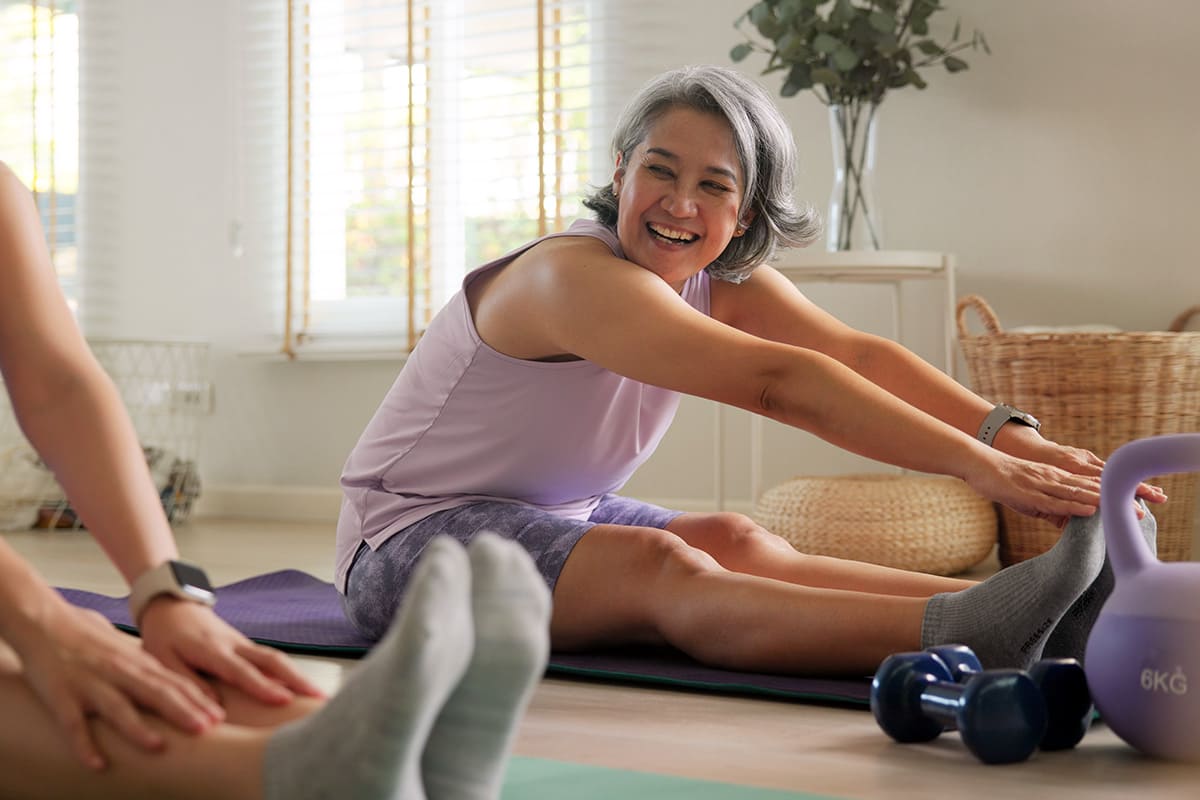
Physical activity that can be done consistently while challenging your body is especially important throughout the stages of menopause. With that said, a perimenopause workout plan should include heavy strength training. Practicing resistance training with a key focus on bone-building exercises such as plyometrics (more on that later!) can support the body through the changes mentioned above.
Heavy strength training
When it comes to menopause (following perimenopause), heavy strength training that results in growth in muscle mass and bone density is the most important exercise. Heavy lifting sends signals to the body to keep the bone and muscle mass that is already there, and to build even more muscle along the way (this is sarcopenia — age-related muscle loss — in reverse!).
Additional benefits of heavy lifting during menopause include:
- Increased metabolic rate
- Better joint strength and stability
- Relief from vasomotor symptoms (aka hot flashes)
- Better regulation of blood sugar
- Weight management benefits
Now, let’s explore several more recommended menopause exercises that can be used to add variety.
Yoga, Pilates, and Tai Chi
These are good options for menopausal women because they promote mindfulness, mind-body connection, mobility, breath control, and are often done for enjoyment. This all points to relief for a stressed nervous system.
Add these activities into your weekly routine as desired, but be sure you are prioritizing heavy strength training and aerobic activities for their health benefits, and consider yoga or Pilates as your cherry on top.
Walking
Among the cardio exercises to choose from, walking is one that can be done anytime, anywhere — no equipment needed. It’s also one of the only forms of exercise that lowers cortisol and doesn’t cause hunger spikes or cravings.
For this reason and others, walking is advised up to 12,500 steps per day for menopausal women. This is based on research that shows a significant benefit over 10,000 steps per day related to lowering visceral fat and waist-to-hip ratio.
Aerobic exercise
Aerobic exercise is important for heart health and reduced risk of cardiovascular disease. It is recommended that all adults get at least 150 minutes of aerobic activity per week.
However, during menopause, balancing cortisol is an extra consideration. This means doing activities that tend to spike cortisol (such as cycle classes or long bouts of steady-state cardio) may need to take a back seat during this phase of life. (Unless, of course, those workouts bring you joy — then keep at it, you spin goddess!)
HIIT and SIT
You can take your cardio intensity higher through intervals, such as with HIIT (high-intensity interval training) or SIT (sprint interval training).
HIIT circuit:
Complete each exercise for one minute. Rest for 30 seconds between each exercise. Repeat the circuit four times.
Exercises:
- Squats
- Pistol squat
- Curtsy lunge
- Plank to push-up
- Burpees
Total workout time: 30 minutes
Benefits: This helps your cells’ mitochondria (energy powerhouse) be more efficient and helps effectively decrease fat mass.
SIT finisher:
After your strength training workout, perform sprint intervals on the treadmill: Sprint at top speed for as long as you are able. Step off the treadmill and rest until your heart rate is in zone one. (Turn down the treadmill speed while you recover for safety). Repeat until you are too exhausted to continue.
Benefits: This helps your muscles use sugar for energy more easily and boosts cognition by supporting metabolism in the brain.
5 ways to get rid of menopause belly with exercise and lifestyle practices
Some women may experience what’s sometimes called “menopause belly.” This bloated feeling can be caused by a combination of things, so while exercise is helpful, there are a few additional steps that can also make a difference. A holistic approach includes taking nutrition, stress management, sleep, and overall wellness into account as well. In addition to a menopause workout plan, use these tips to help feel your best:
1. Manage stress: Build a menu of options to have at the ready to relieve or cope with stress in the moment before it feels overwhelming.
2. Walk as much as possible: You can aim for up to 12,500 steps per day, or anywhere between 7,000 and 10,000 steps to experience tangible health benefits. Walking is low-intensity movement that helps regulate cortisol and insulin.
3. Prioritize quality sleep: Poor sleep leads to higher cortisol levels, more hunger, and more fat storage.
4. Lift heavy weights: As estrogen declines, so does our body’s tendency to build and maintain muscle. Heavy strength training (also called resistance training) signals the body to build lean mass, increase bone mineral density, regulate blood sugar, boost metabolism, and control weight.
5. Nutritional balance: Carbs are your friend during menopause. A diet rich in vegetables, whole grains, and unprocessed foods is associated with lower intensity psychological symptoms, sleep disorders, as well as vasomotor symptoms (hot flashes).
Why hormonal shifts can lead to bloating
Women’s bodies’ fluid retention is also regulated by estrogen. Progesterone balances out estrogen, and with declining levels of both during menopause, you may be left with bloating and excess water retention.
As estrogen (estradiol or E2) declines during menopause, your body also becomes more insulin resistant. E2 usually helps move sugar into cells to be stored for energy, but because E2 is declining, blood sugar regulation becomes more difficult.
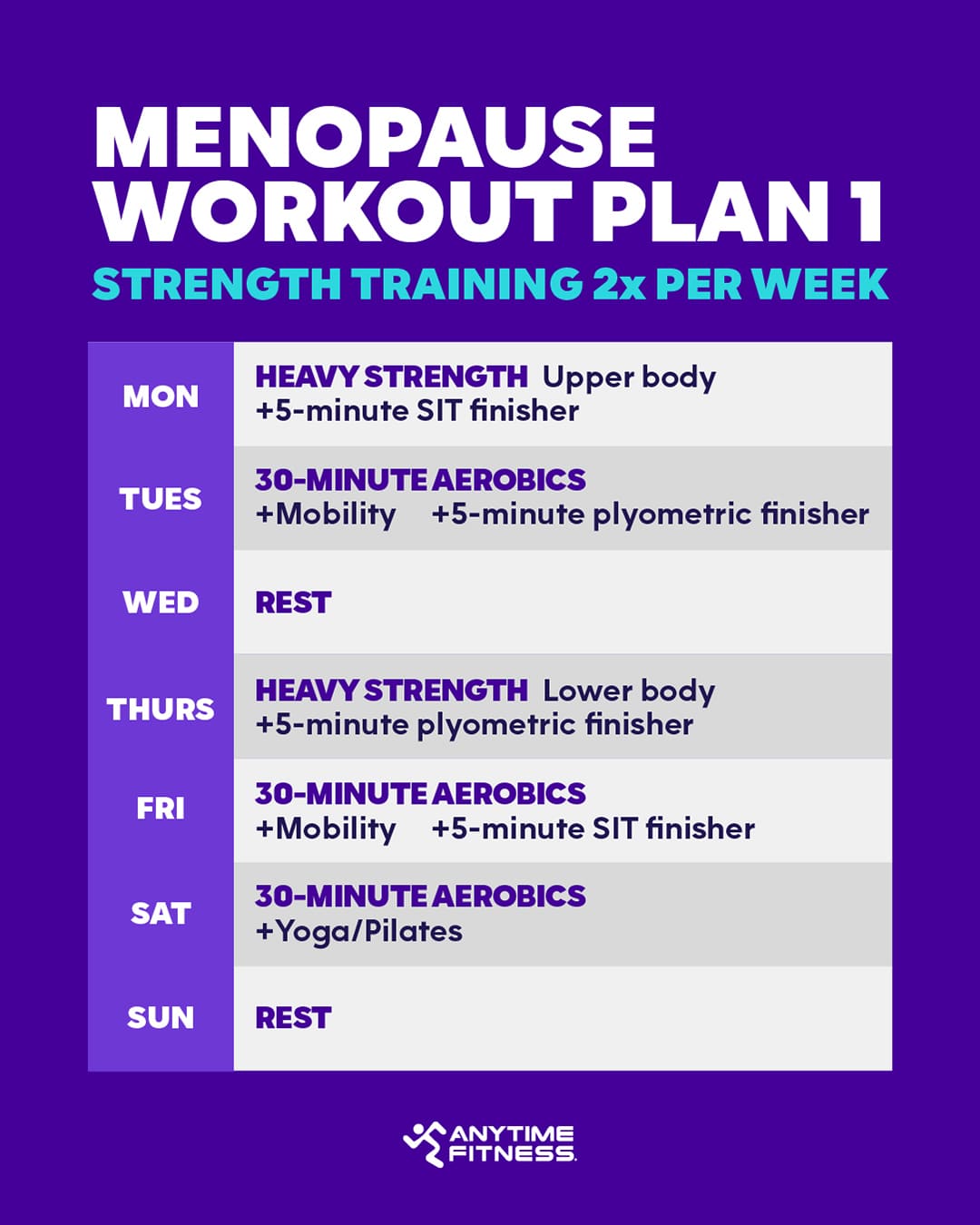
Menopause workout plan 1: Strength training 2x per week
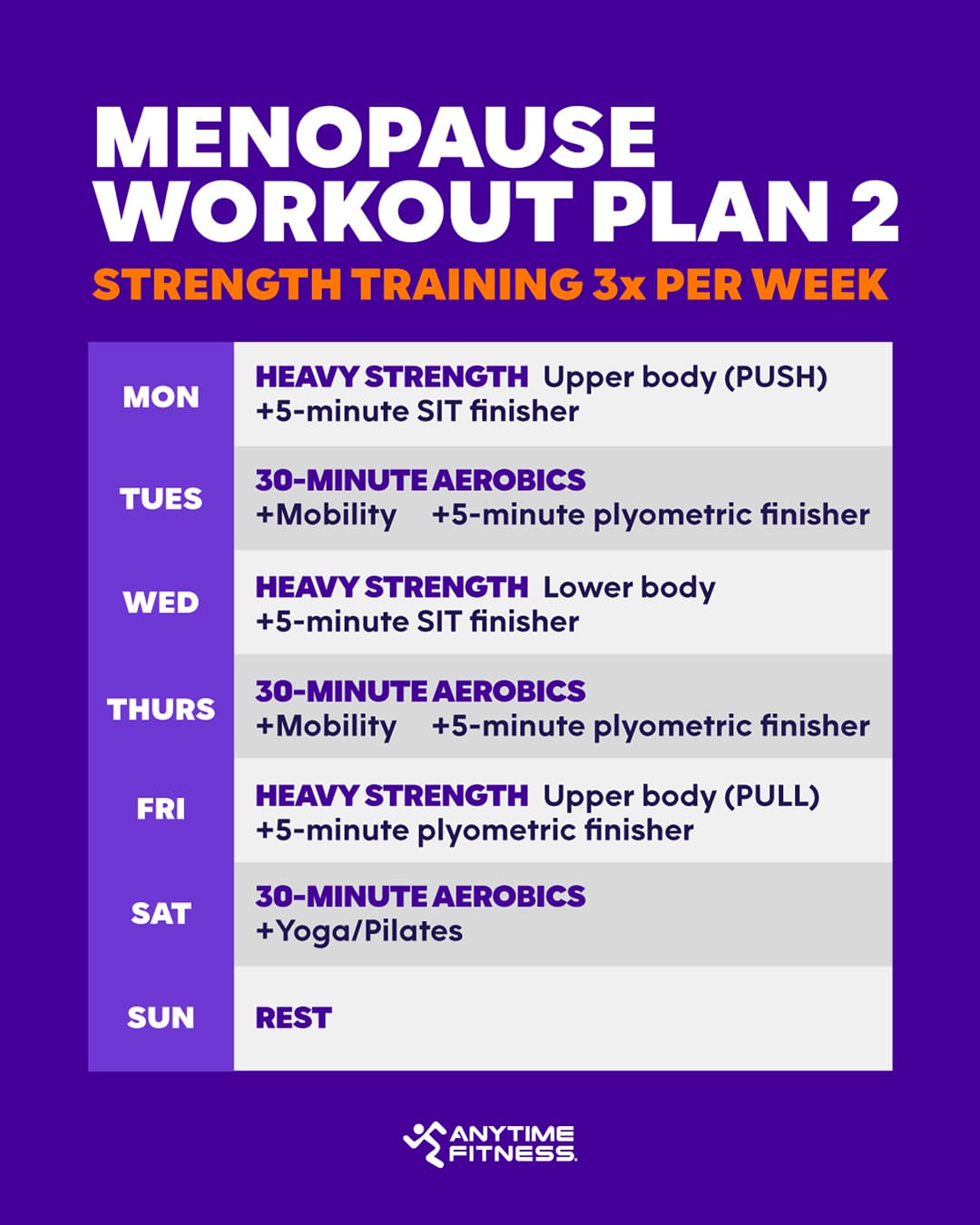
Use these sample menopause workout plans to get started, or talk to a Coach for personalized recommendations.
Menopause workout plan 2: Strength training 3x per week
The right menopause workout: Your key to control
Menopause may bring a whirlwind of changes, but it’s also an opportunity to embrace a new chapter of health and wellness. By understanding the hormonal shifts at play and choosing a menopause workout plan that fits your goals, you can work with your body to start feeling your best.
Reminder: When it comes to exercising during menopause…
- More is not always better. Think: quality over quantity.
- Aim for three to five workouts per week on top of daily unstructured activity (walks, sports, housework, etc.).
- Aim for at least two heavy strength training workouts per week.
- Aim for three aerobic workouts per week.
- Aim for all workouts to have a five-minute sprint interval or a five-minute plyometric finisher.
- Walk most days, between 5,000 and 12,500 steps.
- Incorporate yoga, Pilates, mobility, flexibility training, or relaxation activities as much as possible.
It’s not about doing more — it’s about doing what’s right for your body at this stage. With a thoughtful approach to nutrition, stress management, and the menopause exercises above, you can feel strong, healthy, energized, and ready to thrive through menopause and beyond.
Ready to take control of your menopause journey? Start implementing these tips today and feel the difference, or get personalized health and fitness advice from a Coach for even more support.
.avif)