

From unfamiliar equipment to nagging self-doubt, the weight area of the gym can be intimidating. We get it — it might be tempting to skip the free weights and stick to the treadmill every week, but you could be missing out on the benefits of strength training, from increased muscle mass and strength that supports your daily life to increased longevity.
The good news is there’s a variety of strength training equipment in the gym, so if you’re not quite ready to hit the squat rack, you’ve still got options! Enter: cable machine exercises.
Cable machines can help you train safely, practice your form, build muscle mass and strength, and feel more confident in the gym. Let’s talk about how cable machines can help you get more out of every workout and build strength that supports you for life. We’ll cover:
- What are cable machines?
- The types of cable machine attachments you need to know
- The benefits of cable machine exercises
- How to use cable machines to build strength
- Nine cable exercises to build strength and confidence in the gym
[boxout]
What cable machine exercises should beginners start with?
Quick Answer:
Start with cable machine exercises such as lat pulldowns, standing cable rows, bicep curls, tricep rope extensions, hinges, lunges, chest flys, hip abductor exercises, and Pallof presses. Cable machines offer adjustable resistance and added stability, making them a practical way to practice form while building full-body strength and confidence.
Key Takeaways:
- Cable machines can be used for both upper- and lower-body strength exercises.
- Different attachments allow you to target different muscle groups.
- Adjustable weight and continuous resistance make it easy to progress as you get more comfortable.
- Start with a weight that challenges you without compromising your form.
[/boxout]
What are cable machines?
Cable machines use adjustable pulleys and weight stacks to produce smooth and continuous resistance. Due to the free movement of the cable, you can do various types of exercises, including cable row exercises, cable fly motions, and even bicep curls.
Unlike free weights (think: dumbbells, kettlebells, and curl bars), cable machines provide an added layer of stability, so you can focus on rep tempo and mind-muscle connection while getting a feel for the proper form of each exercise.
The types of cable machine attachments you need to know
One reason strength newbies tend to shy away from cable machines is because of all those attachments — and we don’t blame you! Having options is nice, but without knowing what’s what, it can also be intimidating. From straight and wavy bars to ropes and straps, there’s a lot to understand before you even begin your workout.
The grip shape, design, and weight of each will vary by brand, but they all function similarly. Each grip serves a specific purpose and generally targets a different muscle group. While grips come in all shapes and sizes, there are six main types:
- Lat bars
- Tricep ropes and bars
- Curl bars
- Hand grips
- Row handles
- Ankle straps
The benefits of training with cable machine exercises
Cable machines are a versatile piece of gym equipment for safe and efficient strength training, regardless of fitness level or experience. Benefits include:
1. Adjustability
Cable machines make it easy to adjust weight and resistance — no need to wander all over the gym!
2. Versatility
With various grips and attachments, you can target multiple muscle groups on just one cable machine.
3. Control and stability
Cable exercises work multiple muscle groups and stimulate the stabilizing muscles, enhancing balance, coordination, and strength.
4. Continuous resistance
Cable machine exercises provide continuous resistance throughout the entire motion, which is effective for building muscle strength.
5. Joint-friendly
Cable machine exercises have a fixed path that keeps strain off your joints, including the shoulders, elbows, and knees. This is especially important, as your risk of sarcopenia — a natural decline in bone density — increases with age.
[boxout]
Why cable machines are ideal if you’re new to the weight floor
Because the movements with cable machines are always consistent, it’s easier for you to draw attention to specific muscles and maintain good posture without overthinking your form. That means every rep is even more powerful. Plus, as you get more familiar with proper form over time, you’ll be able to pick up free weights with confidence.
[/boxout]
Can you build muscle with just a cable machine?
Yes! We may be biased, but we believe cable machine exercises deserve a permanent place in your strength training routine. Why? They deliver smooth, controlled resistance with every pull and every rep, allowing you to work through a full range of motion for max results.
Unlike traditional machines or free weights, the constant tension from the cable forces your muscles to work harder at all points of the lift. With attachments like the cable rope, adjustable pulleys, and other grips, you can tailor weight, sets, and reps to your goals, keep joints supported, and safely build strength over time as you progress in your workouts. (Hint: Progressive overload is key to building muscle mass over time.)
How to use cable machines and attachments
We’ve covered the why of cable workouts, but how do you actually use the machine? There are a few key steps to know.
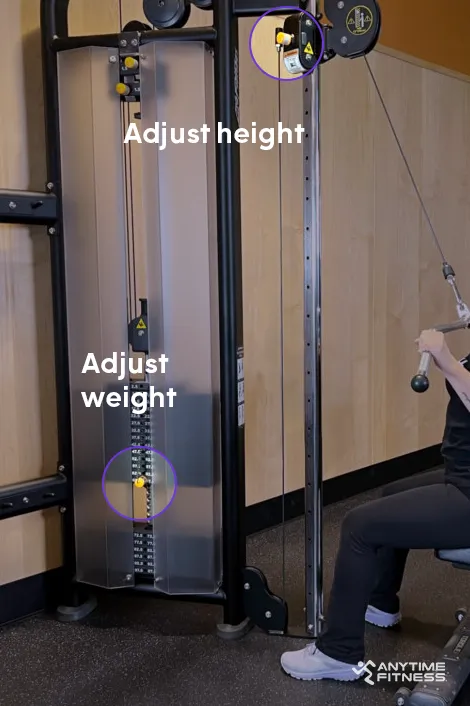
First, adjust the height of the cable machine. The height you need depends on the type of exercise you’re doing. Most cable machines are equipped with a pin or lever on the side of the pulley column. To adjust the height:
- Pull the pin or lever out.
- Move the pulley to the hole that corresponds to your desired height.
- Let the pin go to lock it in the new position.
- Give the pin a tug to make sure it’s locked in before you start your set.
Next, choose a weight. Opt for a weight that challenges you without compromising your form. Every cable machine is slightly different, but most have a knob on the side to adjust the weight. To increase or decrease the weight, pull the knob out, then put it at the appropriate weight for the exercise you want to do. Make sure it’s locked in before you start moving the weight.
Next, attach handles such as the cable ropes or other grips on the machine. Most machines have a carabiner clip, which you can easily open to attach grips. Here’s how:
- Unclip the carabiner.
- Pass it through the metal ring at the end of the cable.
- Attach your rope or handle.
- Before you begin your workout, pull the cable once to ensure that it’s properly secured.
Note: Many machines have smaller increments at the top of the weight stack. It’s best to use the additional knob to add those weights before you start working out — the weights on top of the weight stack could be resting down.
Additionally, many cable machines allow for more weights at the back of the cable pulley than just what you see on the weight plates. Make sure there aren’t any extra weights positioned below the pulley before you start each exercise. Now, let’s put it all into practice!
9 cable machine exercises to build muscle and practice your form
Here are nine of our favorite cable machine exercises to get you started. These exercises use various types of cable machine attachments, so you can get a feel for how each one works as you build full-body strength. Here we go!
Lat pulldowns
Muscles worked: Back and shoulders | Cable attachment type: Lat bar
The lat bar is most commonly used for the lat pulldown move, a workout classic. To do this exercise, you’ll first need to attach the lat bar to the overhead cable. This move can be performed seated or standing, depending on your cable machine.
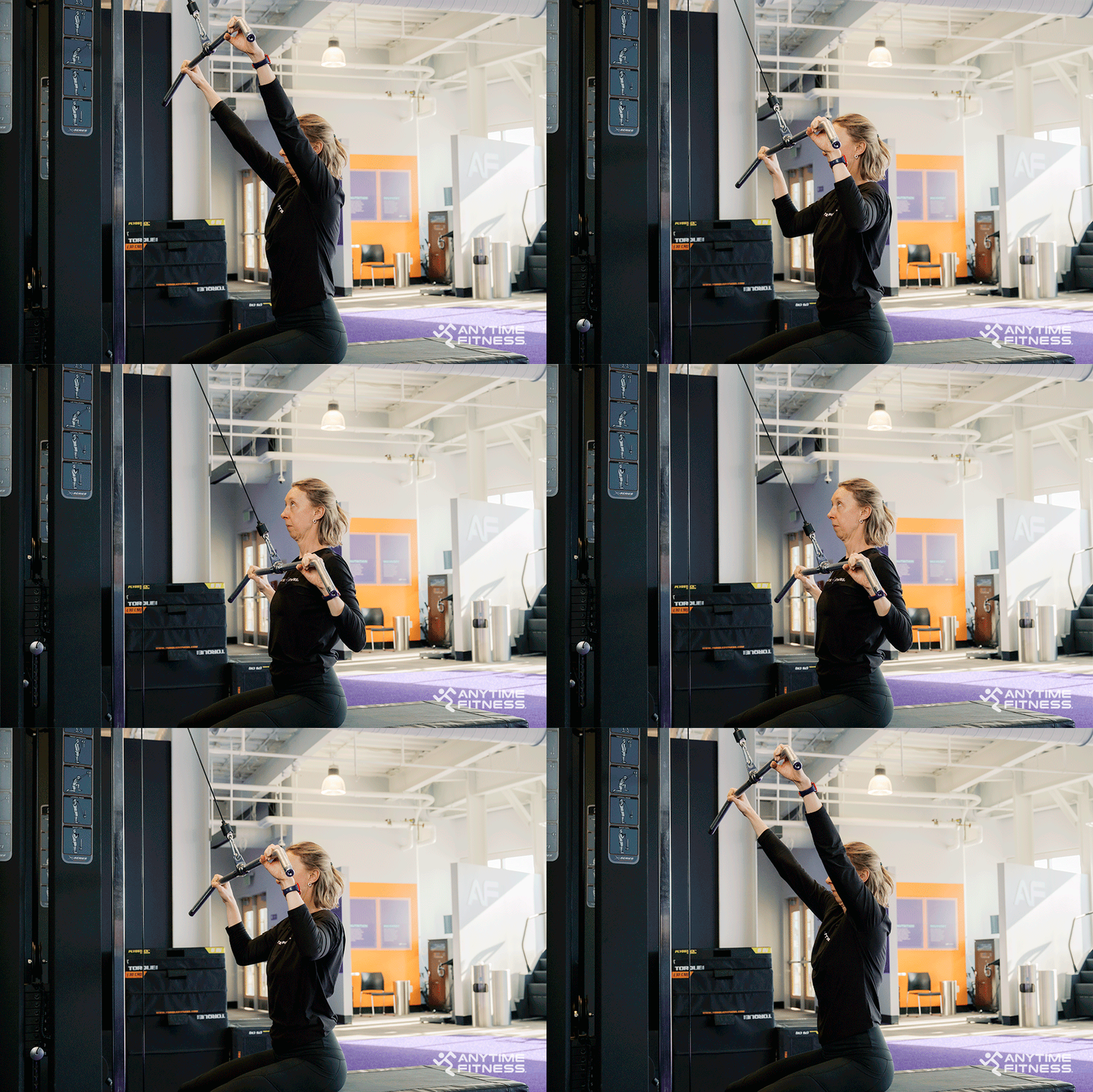
How to:
- Grasp the bar with both hands about shoulder-width apart.
- With the bar in your hands, slowly sit down on the bench and inch your body into position, with your knees at a 90-degree angle and feet flat on the floor.
- Slowly pull the bar to chest level, squeezing your shoulder blades and lats together. Keep your chin and chest out, neck straight and relaxed, and elbows back.
- With control, return the bar to the starting position.
Complete 2-3 sets of 10-15 reps.
Tricep rope extension
Muscles worked: Upper arms | Cable attachment type: Cable rope
This move is what the rope attachment was made for. Attach your grip to the upper cable to start. Move your arms fluidly and slowly to keep that constant tension.
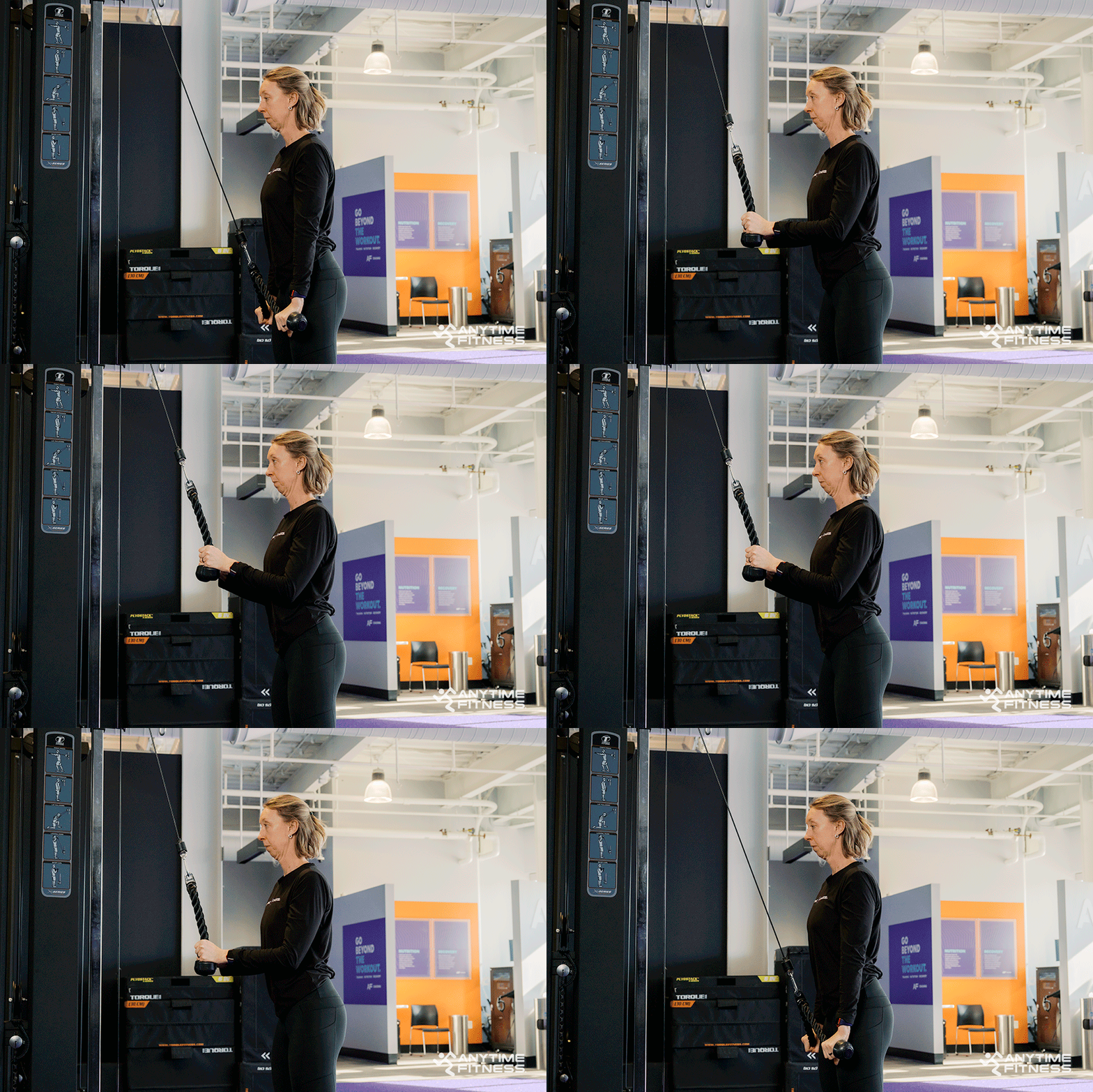
How to:
- Stand upright, holding the rope with both hands at chest level with your elbows bent.
- Pull the handles down, bending only at the elbows. Fully extend your arms and keep your shoulders and back steady. Your hands should finish at the top of your thighs in the downward position.
- Return your hands to your chest.
Complete 2-3 sets of 12-20 reps.
Bicep cable curls
Muscles worked: Upper arms | Cable attachment type: Straight bar or Y bar
Like a traditional bicep curl, this move fires up your upper arms and chest.
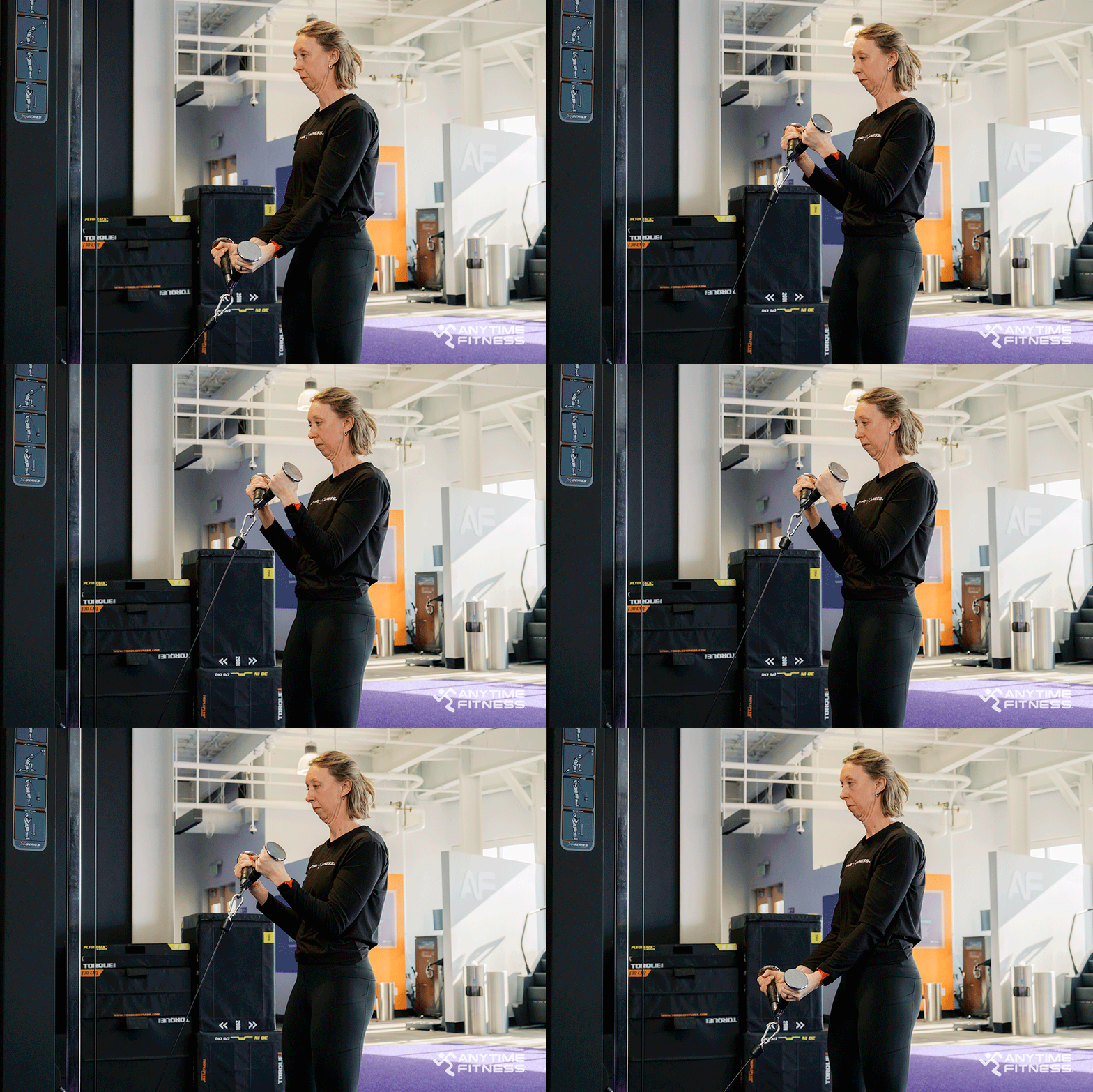
How to:
- Stand upright with the bar at the top of your thighs.
- Bend at the elbows, curling the bar up to chest level.
- With control, return the bar back to your thighs.
Complete 2-3 sets of 10-15 reps.
Standing row handle cable row
Muscles worked: Back and shoulders | Cable attachment type: Single handles or row handle
The standing cable row is a classic for a reason — you’re sure to feel it in your back and shoulders.
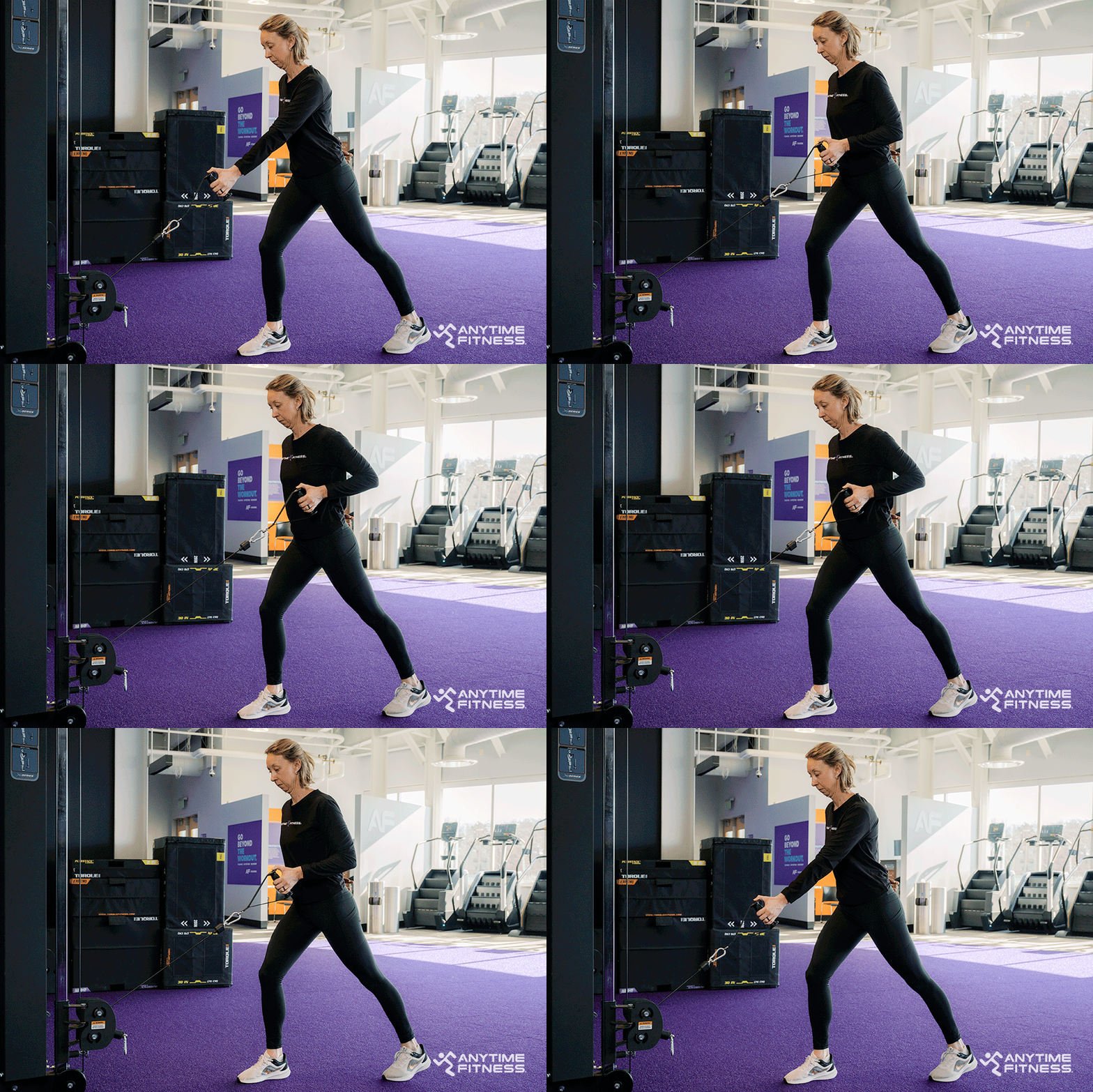
How to:
- Attach single handles or a row handle to a low pulley on the cable machine.
- Stand facing the machine with feet shoulder-width apart and knees slightly bent.
- Grasp the handles with arms extended and engage your core.
- Pull the handles toward your torso, driving your elbows back and squeezing your shoulder blades together.
- Slowly extend your arms to return to the starting position with control.
Complete 2–3 sets of 10-15 reps.
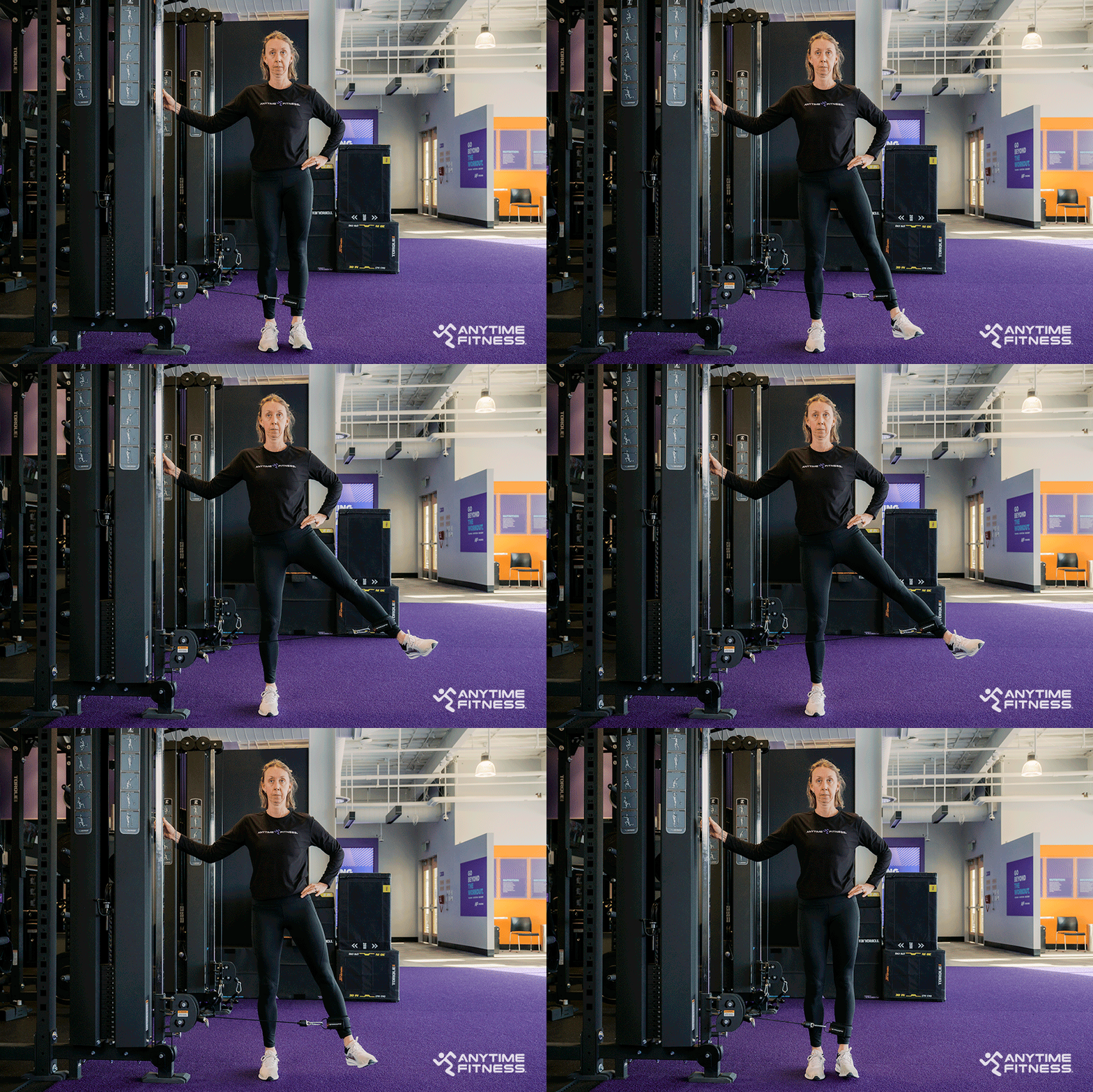
Hip abductors exercise
Muscles worked: Quads, glutes, core | Cable attachment type: Ankle strap
Trust us: This move will have your outer thighs and glutes (along with your core!) absolutely fired up. Start by anchoring your cable to the bottom of the machine.
How to:
- Stand parallel to the machine, with your unweighted leg closest to the machine. Grab the machine with your closest hand if you need to stabilize yourself. Start with your legs hip-width apart, your weighted foot raised, toe pointed.
- Lift your weighted leg out to your side, keeping your upper body and hips straight and core stable. Your leg should be the only part of your body moving.
- Return your leg to the starting position.
Complete 2–3 sets of 10–15 reps per leg.
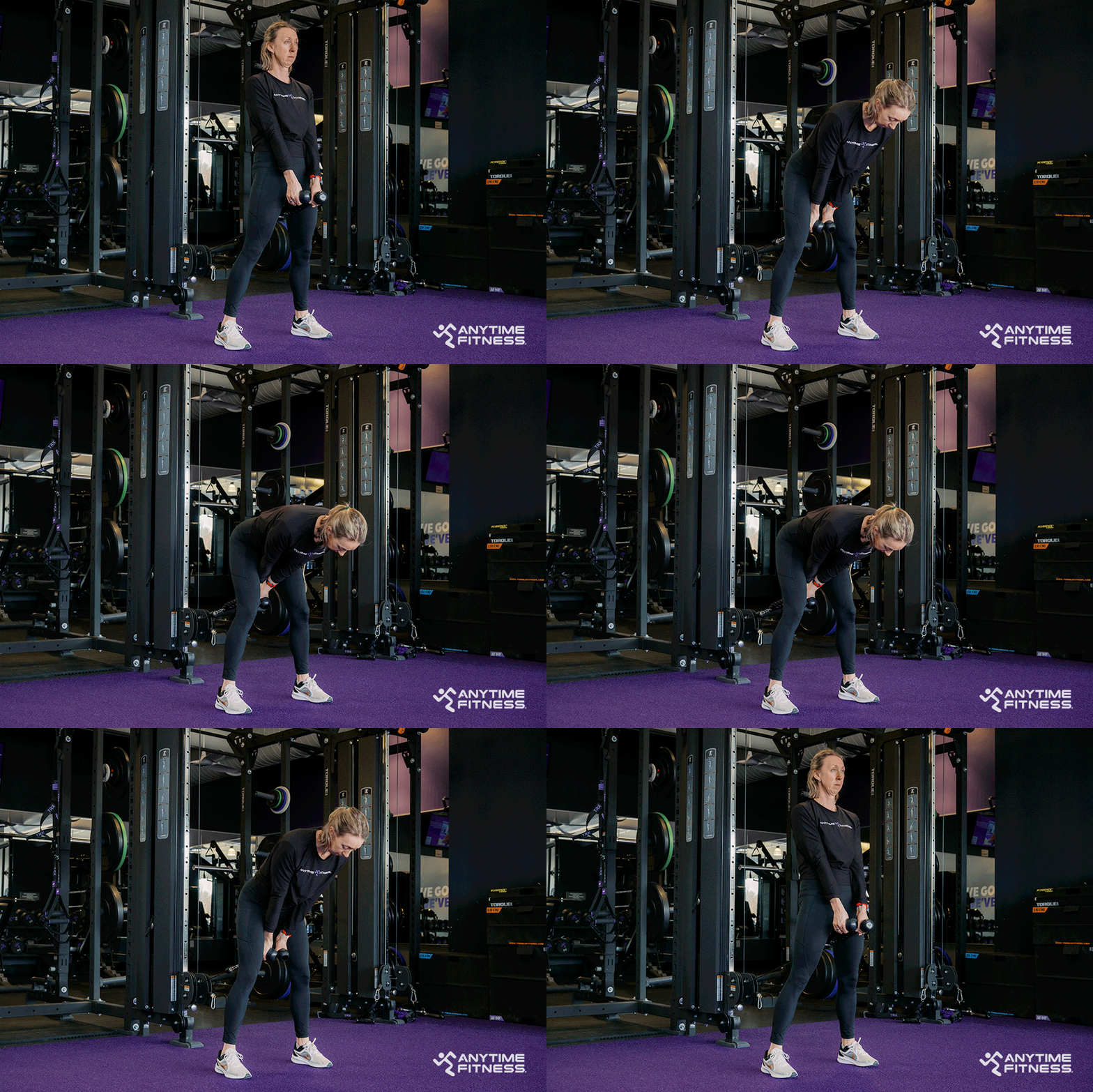
Hinge
Muscles worked: Glutes, hamstrings, lower back, core | Cable attachment type: Rope
One of the most fundamental lifts, hinges mimic everyday movements and strengthen the backside of your body.
How to:
- Stand facing away from the machine with feet hip-width apart, holding the attachment with arms straight.
- Push your hips back while keeping a neutral spine and slight bend in the knees.
- Lower your torso until you feel a stretch in your hamstrings, keeping the cable close to your body. The rope should travel between your legs.
- Drive your hips forward to return to a standing position, squeezing your glutes at the top.
Complete 2–3 sets of 10–15 reps.
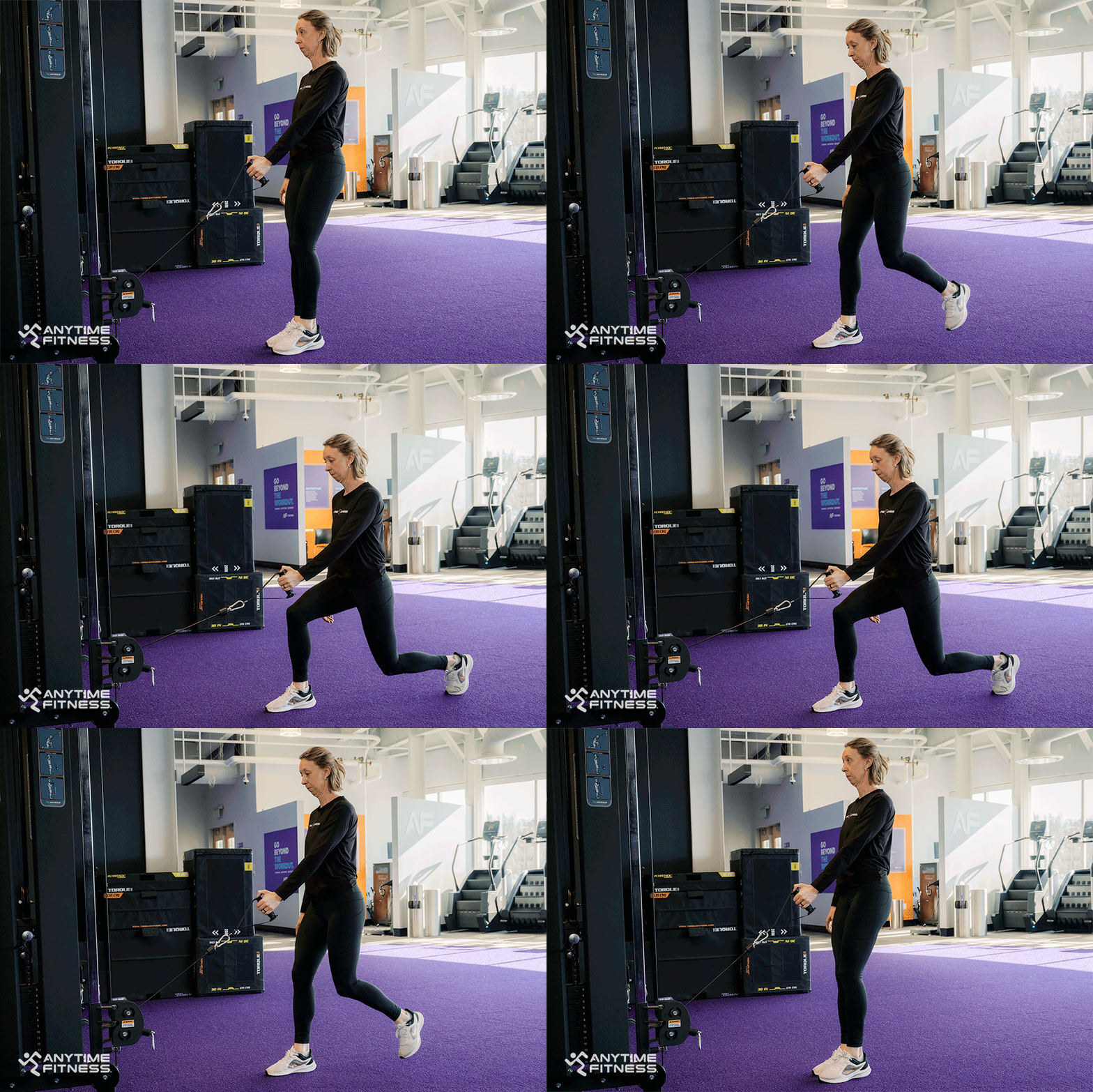
Lunge
Muscles worked: Quad, glutes, hamstrings, calves | Cable attachment type: Single handle
Lunges are another fundamental exercise, providing unilateral stability in your lower body.
How to:
- Attach a single handle to a low pulley on the cable machine and hold it close to your chest for balance.
- Stand tall with feet hip-width apart and engage your core.
- Step one foot forward and lower your body until both knees are bent at about 90 degrees.
- Push through your front heel to return to the starting position.
- Repeat for the desired number of reps, then switch legs.
Complete 2–3 sets of 10–15 reps per leg.
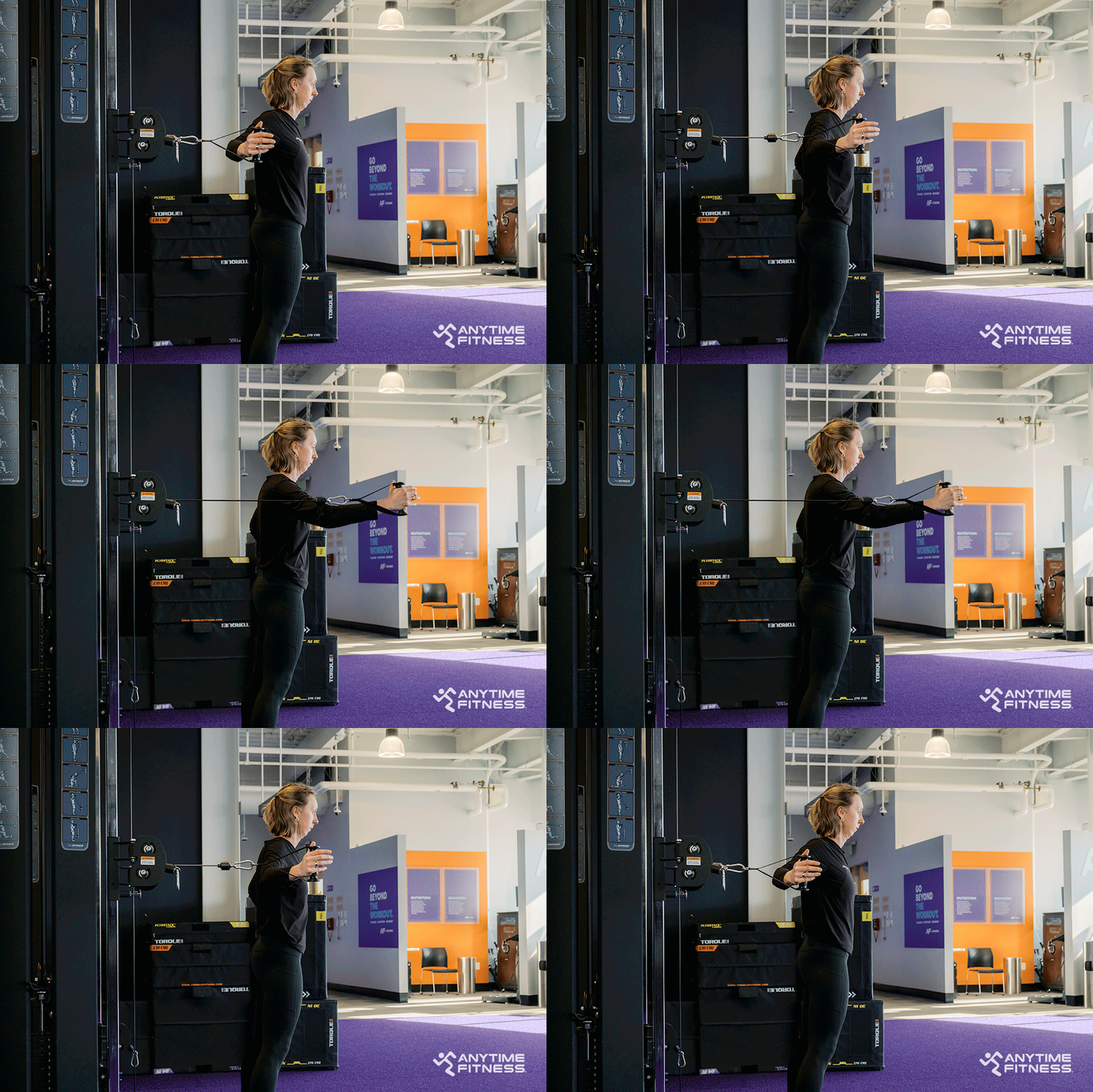
Chest fly
Muscles worked: Chest and shoulders | Cable attachment type: Single handles
Like the name implies, this move requires you to make a sort of flying, flapping motion. Start by attaching each grip to its own upper cable.
How to:
- Set the pulleys at chest height.
- Stand centered between the cables with one foot slightly forward for balance.
- Grasp the handles with a slight bend in your elbows and arms extended out to your sides.
- Pull the handles forward in a wide arc until your hands meet in front of your chest, squeezing your chest muscles at the top.
- With control, return to the starting position, keeping tension on the cables throughout the movement.
Complete 2–3 sets of 10-15 reps.
Pallof press
Muscles worked: Core (abdominals, obliques), glutes, shoulders | Cable attachment type: Single handle
The Pallof press is a killer full-body move for all-over strength.
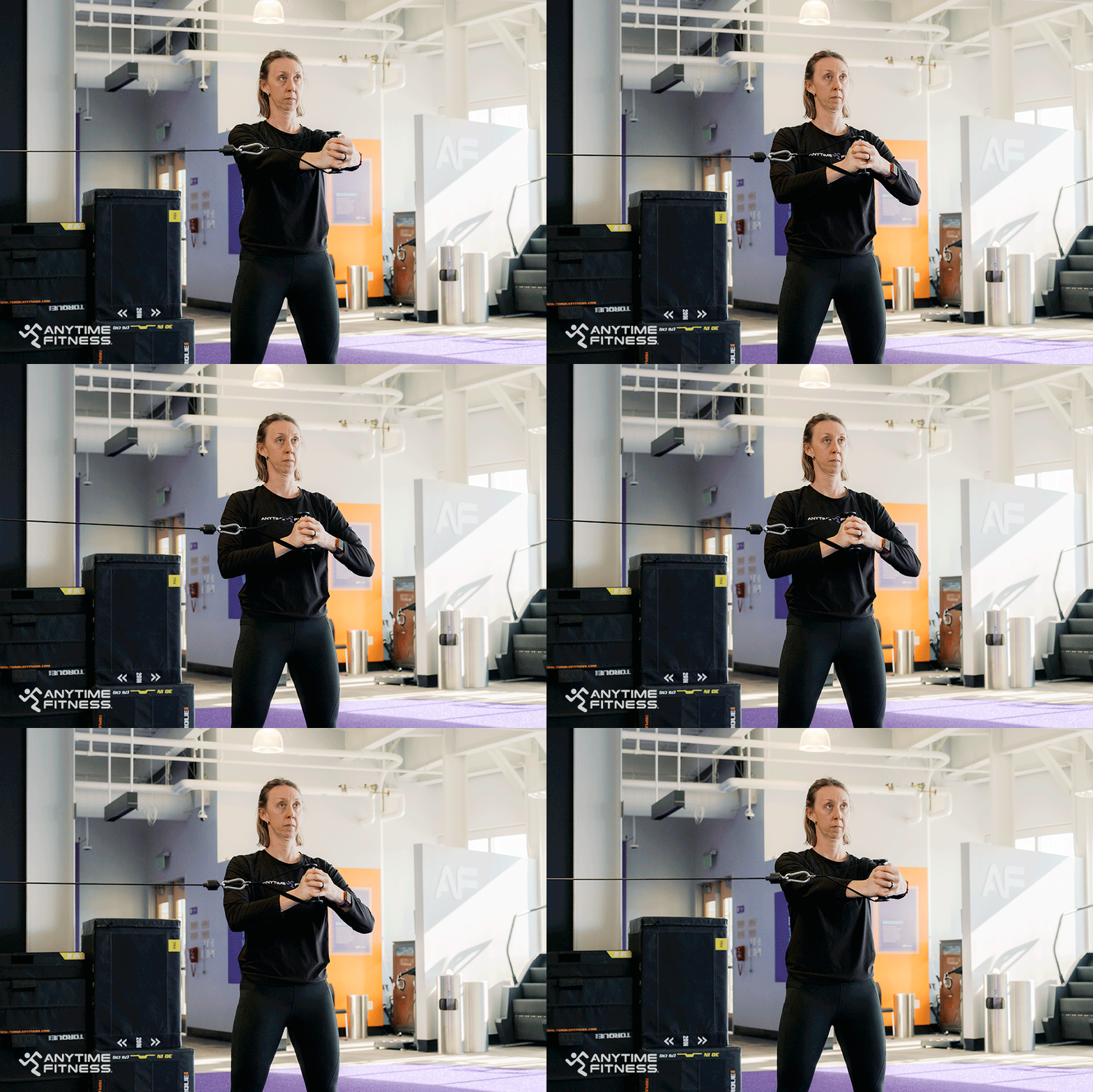
How to:
- Set the pulley at chest height.
- Stand sideways to the machine, feet shoulder-width apart, holding the handle close to your chest with both hands.
- Step away from the machine to create tension in the cable and engage your core.
- Press the handle straight out in front of your chest, resisting the pull of the cable.
- Hold briefly, then slowly bring the handle back to your chest with control.
Complete 2–3 sets of 10–15 reps per side.
How to make progress with cable machine workouts and unlock strength
The more consistently you engage in cable machine exercises, the quicker you’ll notice improved strength (and confidence in your abilities). Changing up the tempo during each exercise, adjusting rep and set counts, and increasing weight with each workout will also help you make noticeable progress.
To build lasting strength and endurance, use cable machines two to three times per week. This gives your muscles time to adapt and recover between workouts, ensuring that each workout is effective and safe, especially if you’re training to failure.
The 3-3-3 rule
Once you get into a regular cable machine routine, having structured workouts helps track your progress and consistently challenge your muscles.
One method for planning your workouts and tracking your progress is the 3-3-3 rule:
- Three exercises: One lower-body exercise, one upper-body push exercise, and one upper-body pull exercise.
- Perform 8-10 reps of each exercise.
- Complete three sets of that circuit.
- Repeat three times with a new circuit each time.
For example:
- Circuit 1 (three times): 3x8 hinges, standing cable presses, lat pulldowns
- Circuit 2 (three times): 3x8 lunges, cable chest flys, standing cable rows
- Circuit 3 (three times): 3x8 hip abductor movements, Pallof presses, tricep rope extensions
Consider swapping dumbbells each week to mix things up. Keeping the movements controlled, joints safe, and muscles challenged is a great way to build strength and confidence with cables.
Muscle now, confidence and independence later
With practice and consistency, cable machines are a powerful tool for building real strength, confidence, and resilience, no matter your experience level. The smooth, consistent resistance helps you develop muscle, protect your joints, and move better both in the gym and in everyday life — that means more strength to do the things you love, longer. It all starts on the cable machine!
More strength and longevity tips
- Strength Training for Women Over 40: Newbie Guide to Building Muscle
- Lifespan vs. Longevity: Fitness and Lifestyle Tips to Support Both
- Beginner Strength Workout for Strength Training — Hit the Weights With Confidence
- Maintain Strength: Take Rest Days for Muscle Growth
- How to Add More Protein to Your Diet: Smart Snack Hacks
Want more personalized guidance, including strength plans based on your unique fitness goals? We’ve got you covered. Book a free 1:1 session with an Anytime Fitness Coach to get started.