

Anyone who’s experienced a period can probably agree that it’s…not great. We get it — your first instinct might be to curl up on the couch with a heating pad. Sometimes, that’s what’s best! But other times, working out on your period can actually provide some relief — not to mention a number of health benefits. Wondering how to support your body through exercise on your period (and the rest of your cycle)? Let’s talk about it! We’re covering:
- Can you work out on your period?
- The benefits of working out on your period
- The best workouts to do on your period
- Tips for working out on your period (and every other phase of your cycle)
First of all: Should you work out on your period?
Yes! In fact, working out on your period could have some serious benefits, from improved sleep to better mood. (Exercise has these benefits all the time, but having extra support during your period is where it’s at!)
Does your period change your energy level?
Yes, energy levels change significantly throughout the menstrual cycle. In fact, research has shown that motivation and mood are lower during the luteal phase. However, you may feel extra energized and motivated around ovulation.
Does your menstrual cycle affect your ability to exercise?
Changes in mood and energy levels may impact your desire to exercise, but there are no physiological reasons that make you less able to exercise at any time during your cycle.
The benefits of working out on your period
Moving your body while on your period can provide relief and help you reenergize, even when you want to do the complete opposite (let’s be real — it’s tempting). Here are three big benefits of exercising while you’re menstruating:
- Less pain from cramps. A study published in the Journal of Education and Health Promotion found that women who exercised for 30 minutes three days per week had less menstrual pain than those who didn’t exercise. Remember: The benefits are greatest if you exercise regularly, not just during the days that you have symptoms.
- Improved mood: When estrogen levels get lower, you might feel sad, angry, anxious, or depressed. The good news: Exercise releases feel-good endorphins that help boost your mood. Regular exercise can help both before and during your period, when mood swings are generally most prevalent.
- Reduced fatigue: The hormonal changes we go through during our period can make us feel tired. According to the Office on Women’s Health, physical activity can boost energy levels during the menstrual cycle.
Do you bleed more on your period when you exercise?
No — in fact, research shows that the opposite may be true. One study showed that higher rates of physical activity were correlated with lower odds of heavy menstrual bleeding over time.
How to work out during each phase of the menstrual cycle
Your menstrual cycle is more than just the week you’re on your period — every phase can affect your body and energy levels. Whether you’re feeling amped up or your period is…perioding, you’ve got options for your workout. Here’s how to best support your body through exercise during each phase of your menstrual cycle.
Phase 1: Menstrual phase — Match intensity with your energy
During your period, energy levels are at their lowest due to low levels of estrogen and fewer nutrients due to blood loss. But that doesn’t mean you have to skip your workout!
Choose exercise forms that you enjoy at an intensity you can handle (see our recommendations below). Alternatively, you can switch up your usual workout routine to fit your body’s needs and energy levels. You can do this by:
- Decreasing the volume of your workout (the number of sets and reps)
- Turning up the volume on your workout playlist (a major mood and motivation boost!)
- Changing the activity you’re doing (for example: swapping out a planned run for a strength session using light to moderate weights)
We’ll focus on the best workouts for your period later in the blog.
Phase 2: Follicular phase — Pick up the pace
During this phase, you may feel yourself coming back to regular energy levels, and your mood may be bouncing back. Lean into trying new things at the gym, including vigorous activity with heart-pumping, high-intensity exercise.
Phase 3: Ovulation — Go all in
Around ovulation, your body will have the most energy and you may feel extra motivated. Use this time to aim for PRs, increase your workout volume by adding a few sets or reps, or even add a bonus workout into your weekly split.
If you enjoy high-intensity activities like sprinting, HIIT workouts, plyometrics, or other vigorous workouts, consider focusing on them during this week of your cycle.
Phase 4: Luteal phase — Tune into your body’s signals
If you’re someone who tends to experience premenstrual syndrome (PMS) or premenstrual dysphoric disorder (PMDD) symptoms like bloating, mood swings, or depression, pay close attention to how exercise affects your mind and mood during this phase. Shifting hormones and changing energy levels mean it’s time to listen extra closely to your body’s signals. Here’s what we know based on the research:
- Simply being in the luteal phase may result in higher anxiety, tension, and depression, and lower motivation before exercise.
- Continuous high-intensity exercise during the luteal phase can exacerbate some of the psychological responses above.
- Exercise may feel harder in the luteal phase, even when it’s the same intensity or difficulty you would normally do.
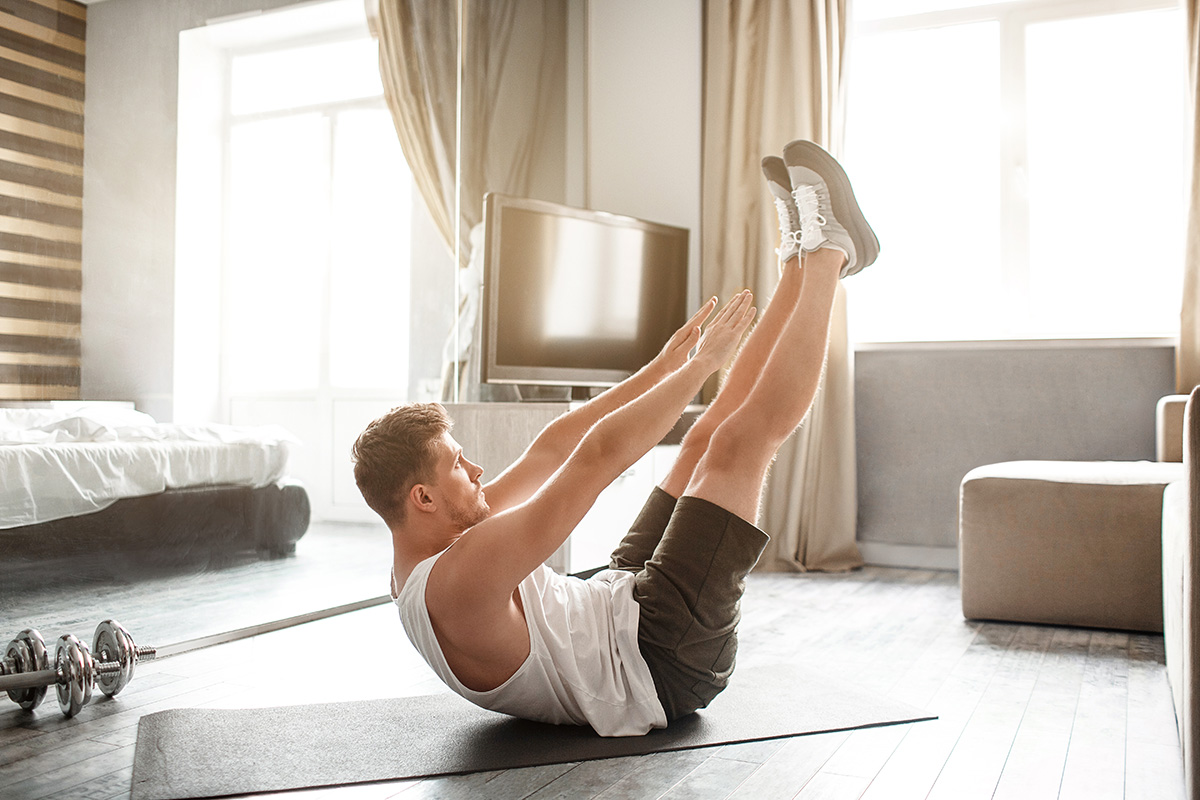
In short: Some days you may feel energized — if that’s the case, check off that long run! Or if you’re feeling a little sluggish, try a lower-intensity activity like this living room workout.
The 3 best workouts to do on your period
Let’s focus on the menstrual phase. The first few days of your period can be the most uncomfortable, so it’s helpful to focus on gentle movements and exercises that help you get a workout in and improve period symptoms.

1. Yoga
Doing yoga regularly can help ease PMS symptoms and period pain, including reducing breast tenderness and abdominal swelling. Focus on restorative movements and gentle stretching like cat-cow, child’s pose, and reclined spinal to help relieve tension in your pelvis and lower back. See our top seven poses for stretching after a workout here!
2. Walking
During the most uncomfortable parts of your period, an activity like walking may be best. In addition to the whole host of benefits regular walking provides (lowered risk for heart disease, stroke, and high blood pressure, as well as improved immune system, mood, energy, endurance, and sleep), cardio has been shown to relieve PMS symptoms for those who do it regularly.
3. Swimming
While not available at your local Anytime Fitness, exercising in a swimming pool is a low-intensity option that’s gentle on your body. Studies have shown that it can actually help relieve cramps, mood changes, headaches, tiredness, and breast tenderness.
Try these recommended period workouts
Whatever your body needs, there’s a workout for that — try one of these workouts:
- Want to feel your muscles but not in the mood for racking up heavy weights? Try this TRX-only workout: 8 TRX Leg Exercises to Tone your Lower Body
- Cramps holding you back? Try this upper-body workout that avoids crampy areas: Fast Track to Strong Arms: Beginner-Friendly Arm Workout
- Avoid jostling or jumping movements with this low-impact workout: High- vs. Low-Impact Exercise: What’s the Difference and How to Modify
- Craving the comfort of your bedroom or living room? We’ve got you: At-Home Circuit Workout — No Equipment Needed!
Are there any exercises to avoid on your period?
The effects of exercise vary from person to person, so some women may feel these effects more than others. Recognizing what kinds of exercise (and what intensity levels) leave you feeling better, not worse, is most important. So, is there a specific type of exercise you should avoid on your period? In short: Not necessarily — do what feels best for your body and mind. If something isn’t working, that’s okay — it’s a sign to try something else.
4 tips for better period workouts
Keeping these four tips in mind can make working out on your period just a little more comfortable.

1. Stay hydrated.
Hydration is always important, especially when you’re on your period! It can help alleviate cramps and backaches. In fact, one study found that those who drank more water experienced less severe menstrual pain during the first three days of their periods.
2. Wear comfortable clothing.
When that all-too-familiar bloated feeling comes around, stretchy joggers over tight yoga pants can make all the difference. Wear breathable tops and pants that you feel comfortable moving in!
3. Listen to your body.
Yes, exercising during your period can help improve period-related symptoms. But if you feel like all you can manage is a short walk around the block, do it. Then find other meaningful ways to practice self-care, like taking a hot bath or making tea and relaxing with a book.
4. Practice period hygiene.
There’s nothing worse than a workout that gets interrupted by your period. Use menstrual products you trust while exercising — your trip to the gym might not be the best time to try out that new disc or tampon brand you’ve been curious about.
Other period hygiene practices apply to when you’re working out, too:
- Use the lowest-absorbency tampon possible.
- Stay clean with regular showers and baths, and change your period products regularly.
- Opt for unscented products.
- See a medical professional with any concerns or questions.
Pro tip: Always keep period products in your gym bag, especially if you have irregular periods or a heavy flow. This will keep you prepared if you get your period unexpectedly. Because accidents happen, packing an extra pair of underwear and gym pants may also be a good idea. Bonus points for avoiding gray or colors that could show spotting that sneaks through (it happens!).
Can working out too much cause you to miss your period?
Exercise alone is not enough to cause you to miss your period — nutrition also plays an important role.
Let us explain: Exercise causes your body to burn more energy in the form of calories than it typically would. Post-workout snacks and meals help our bodies replenish these energy stores. When there is a large enough gap between the energy being used by the body and the energy being taken in (i.e., when the caloric deficit is too great) the body saves resources and energy by stopping the menstrual cycle. This is known as amenorrhea (three missed periods in a row).
In short: The cause of amenorrhea is often exercise without proper nutrition, not the exercise itself.
Note: Amenorrhea can be a sign of underlying issues, so if you’re noticing irregular or missed periods, consult a medical professional.
The bottom line: Listen to your body!
Everyone experiences periods differently, your symptoms can change from cycle to cycle, and you may feel different energy levels every day. This is your reminder to prioritize movement that feels good — any form of exercise on your period can be a safe and helpful way to relieve cramps, boost your mood, and even prevent heavy menstrual bleeding over time.
No matter how you choose to move your body throughout your cycle, remember to listen to your body, drink lots of water, and treat yourself with kindness.
Listening to your body isn’t always as easy as it sounds — especially when you’re on your period! Check out these five signs you need a rest day to understand when it’s time to slow down and take things easy.
Terms & Conditions
* Offer open to existing Anytime Fitness® members of participating locations in the United States and Canada, only. Offer valid for access to Apple Fitness+℠, access begins on eligible device activation and continues for 3 months. Fitness+ requires a subscription and Apple ID with payment card on file. Reactivation of the offer is required every 3 months to maintain access. If free access ends, payment card on file will be charged $9.99/month USD and $12.99/month CAD and subscription automatically renews until canceled. Apple may change the subscription price at its discretion, other terms and Apple Privacy Policy apply; see the applicable terms at https://www.apple.com/legal/internet-services/itunes/. Offer requires use of the Anytime Fitness mobile application. Offer limited to 1 subscription per Family Sharing group, Apple IDs already associated with a trial or subscription for Fitness+ are not eligible. Valid only for Fitness+ in the United States and Canada. Fitness+ requires iPhone 8 or later with iOS 16.1 or later, or Apple Watch Series 3 or later with watchOS 7.2 or later paired with iPhone 6s or later with iOS 14.3 or later. Fitness+ is a registered trademark of Apple Inc. Apple is not a sponsor of this promotion. No cash value, not valid with any other offer, no refunds or credits. Each Anytime Fitness location is independently owned and operated. Void where prohibited.

.avif)