


By this point, you probably know that resistance training is essential to improving performance and overall health for women. But did you know that there are different styles of training for specific outcomes?
Understanding the difference between strength vs. muscle mass could be the key to achieving your strength training goals and seeing the results you’re looking for — whether that’s getting stronger without getting bulky or simply maintaining the ability to do everyday tasks with ease.
You’ll learn:
- The key differences between strength and muscle mass
- Is one better than the other?
- How to train to increase strength
- How to train to increase muscle mass
- How both fit into your workout routine
[boxout]
Quick hits: Strength vs. muscle mass
Let’s start with some quick definitions and key differences to know.
Muscle mass
- Definition: Muscle mass is the total amount of skeletal muscle tissue in your body.
- Training focus: Moderate loads with moderate repetitions.
- Outcomes: Aesthetics, injury prevention, improved bone and hormonal health, boosted metabolism, and leaner body composition.
Strength
- Definition: Strength is your muscles’ ability to exert force.
- Training focus: Heavy loads with low repetitions.
- Outcomes: Efficient movement, improved balance and coordination, and the ability to do everyday activities without fatigue or pain.
Remember: When comparing strength vs. muscle mass, you can’t have one without the other. Muscle is the foundation for strength and healthy movement as you age. Let’s dig deeper into how to train for each (and why they’re important!).
[/boxout]
Strength vs. muscle mass: Is one better than the other for women?
Both strength and muscle size can help improve body composition, decrease the risk of disease, and improve self-esteem and body image.
Strength and muscle mass also contribute to your overall health and wellness in unique ways. For example: Muscle mass improves metabolism, protects bones, and improves insulin sensitivity for better weight management. (It’s also critical for those taking GLP-1 medications.)
On the other hand, muscle strength is especially important for middle-aged women because it’s essential to performing functional, everyday movements like picking up your kids or grandkids without tweaking your back, carrying in the groceries, or walking the dog. In fact, a 2023 study concluded that muscle strength is more important than muscle mass alone when evaluating physical performance in older adults.
That said, your body needs both strength and muscle mass to perform optimally and help you feel your best. Why? It all goes back to the concept of periodization training.
Recap: The five phases of periodization training
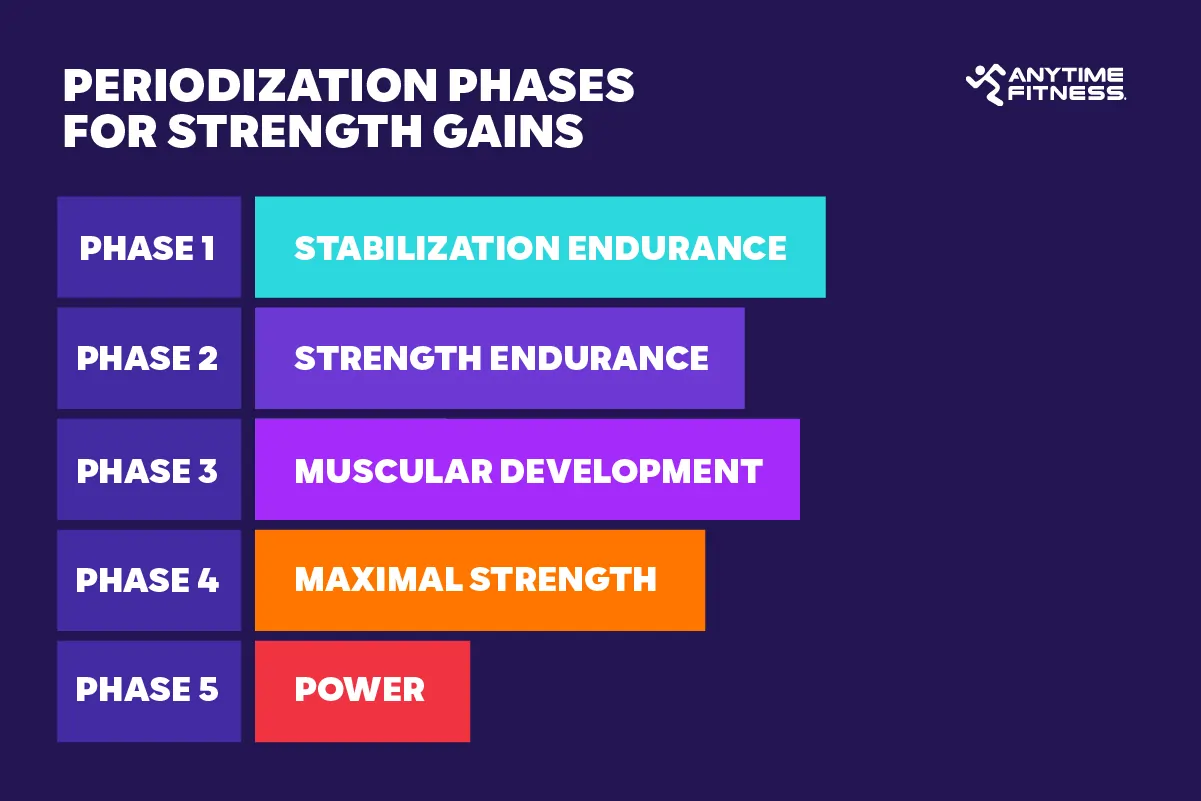
Periodization training is a method that divides your training cycle into strategic phases. Each consecutive phase builds on the last to encourage your muscle fibers to continuously adapt and grow. Here’s an overview of each phase:
- Stabilization endurance (Phase 1): Improves joint mobility, core strength, and overall endurance.
- Strength endurance (Phase 2): Builds muscle and boosts stamina.
- Muscular development/hypertrophy (Phase 3): Increases muscle mass/size through higher volume workouts with moderate weights and more reps. (It’s not just for bodybuilding!)
- Maximal strength (Phase 4): Encourages your muscles to handle heavier loads through low reps with high intensity.
- Power training (Phase 5): Trains your body to exert the most effort in the shortest amount of time.
Depending on your unique goals, you may cycle through all five phases, or just a few. However, the cycle always goes in order. For example: If you want to focus on power (Phase 5), you need to go through Phases 1–4 first.
How to train for strength and muscle mass
In order to get stronger, you need to start with a solid foundation of muscle mass.
Think of your muscles like the engine of a car — you need an engine in order for it to run. Adding on muscle mass is like upgrading to a bigger engine, while strength is like horsepower. A small engine can only generate so much horsepower. In the same way, building muscle mass (Phase 3) is essential before moving to strength training (Phase 4).
Here’s another example: When training for a marathon, you wouldn’t run 26.2 miles right away. Instead, you would run shorter distances and gradually increase your mileage to prepare your body for the ultimate goal. Similarly, starting with high reps and low-to-moderate weight (Phases 1–3) tells our muscles to wake up and prepares them for heavier loads over time (Phases 4-5).
To sum it up: Focus on building muscle mass first, then move onto training to increase strength.
Can you build strength without getting bulky?
You may be wondering if it’s possible to train to increase muscle strength without increasing muscle size — the answer is yes! But it requires a careful balance between training to increase strength vs. muscle mass.
For example: For two days a week, focus on training for strength with heavy weights and low reps, then dedicate one or two days to lighter weights and higher reps with time for recovery in between. This helps your body maintain the muscle mass it needs to function optimally while encouraging strength gains through heavier resistance training.
The key is finding a schedule and workout split that works for your body and goals. Not sure where to start? Our expert Coaches can help — and with insights from the Evolt 360 body composition scanner, your Coach can work with you to create a customized training plan based on your data. We’re talking detailed measurements on everything from body fat percentage to total body water and more.
Unlike a traditional scale, the Evolt gives a clearer picture of what’s really going on in your body (down to comparisons of the amount of muscle mass in one arm vs. the other). This level of detail can help you fine-tune your training plan to help you achieve your strength goals even faster.
The training plans below are an example of a workout your Coach might create based on your goals and Evolt data.
Sample muscle-building workout for women
A muscle-building strength routine typically includes supersets of similar exercises one after the other with moderate reps and little rest. Here is a sample workout that targets the upper and lower body with two supersets. The first targets the hamstrings, and the second targets the chest and shoulders.
The goal of each superset is to fatigue the muscles by applying more stress and more volume to the same muscle group while targeting slightly different muscle fibers. This results in greater muscle mass gains as more fibers break down and get repaired by the body.
For each exercise, choose a moderate weight that challenges you without hindering your form.
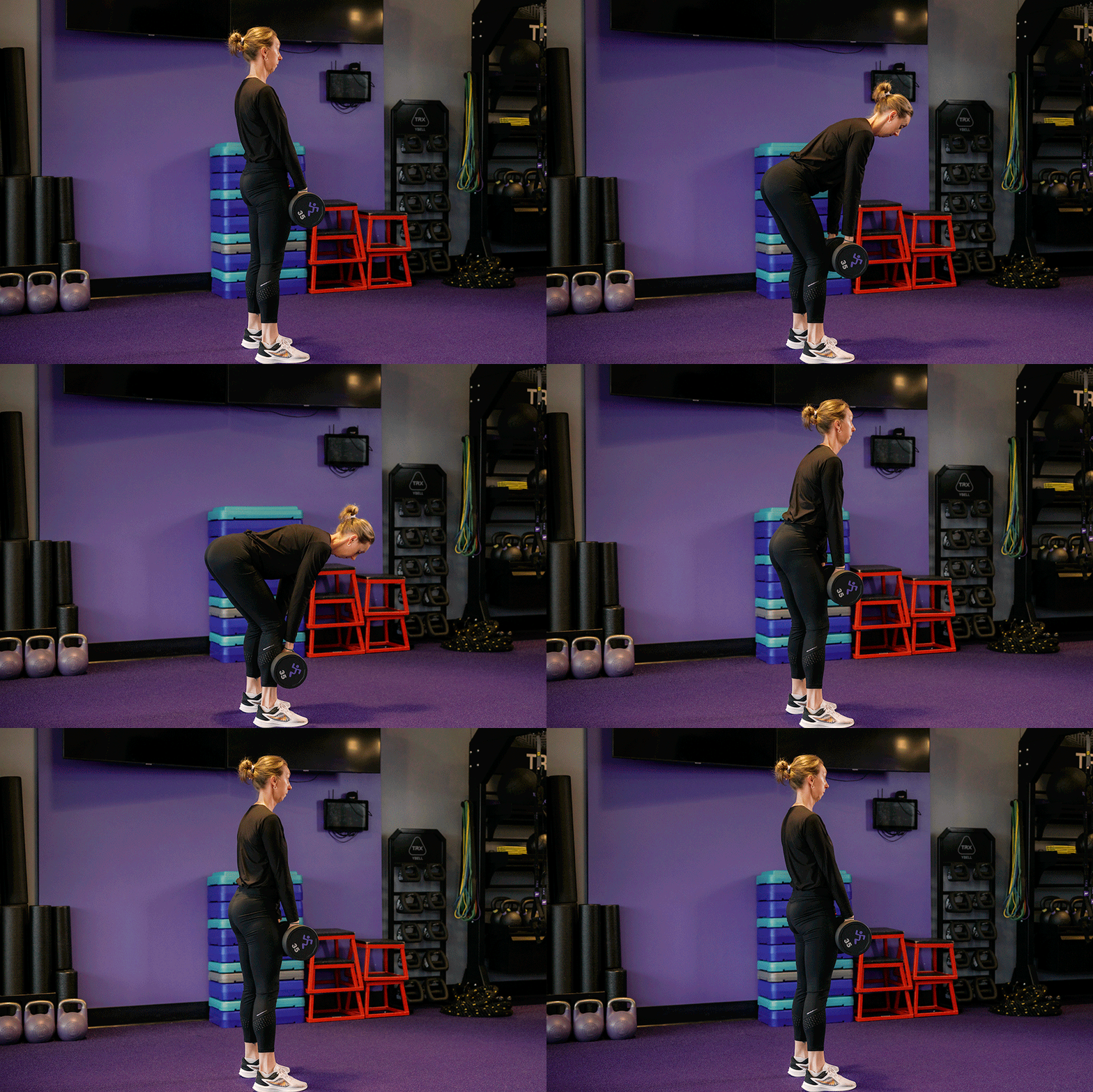
Superset A: Deadlift
How to:
- Start in a shoulder-width stance with two dumbbells between your feet.
- Hinge your hips backward and flex your knees.
- With a flat back and straight arms, grab the weights.
- Drive your hips forward to lift the weights off the floor, keeping your shoulders back. Come to an upright position.
- Lower the weights again by hinging your hips backward.
- Repeat for 3 sets of 12 reps.
Superset A: Hamstring curl
.gif)
How to:
- Lie on your back with your heels on an exercise ball. Keep your legs straight and hips raised.
- Dig your heels into the ball and pull it toward your hips.
- Finish the movement with your feet flat on the ball.
- Roll the ball back out and extend your legs fully.
- Repeat for 3 sets of 12 reps.
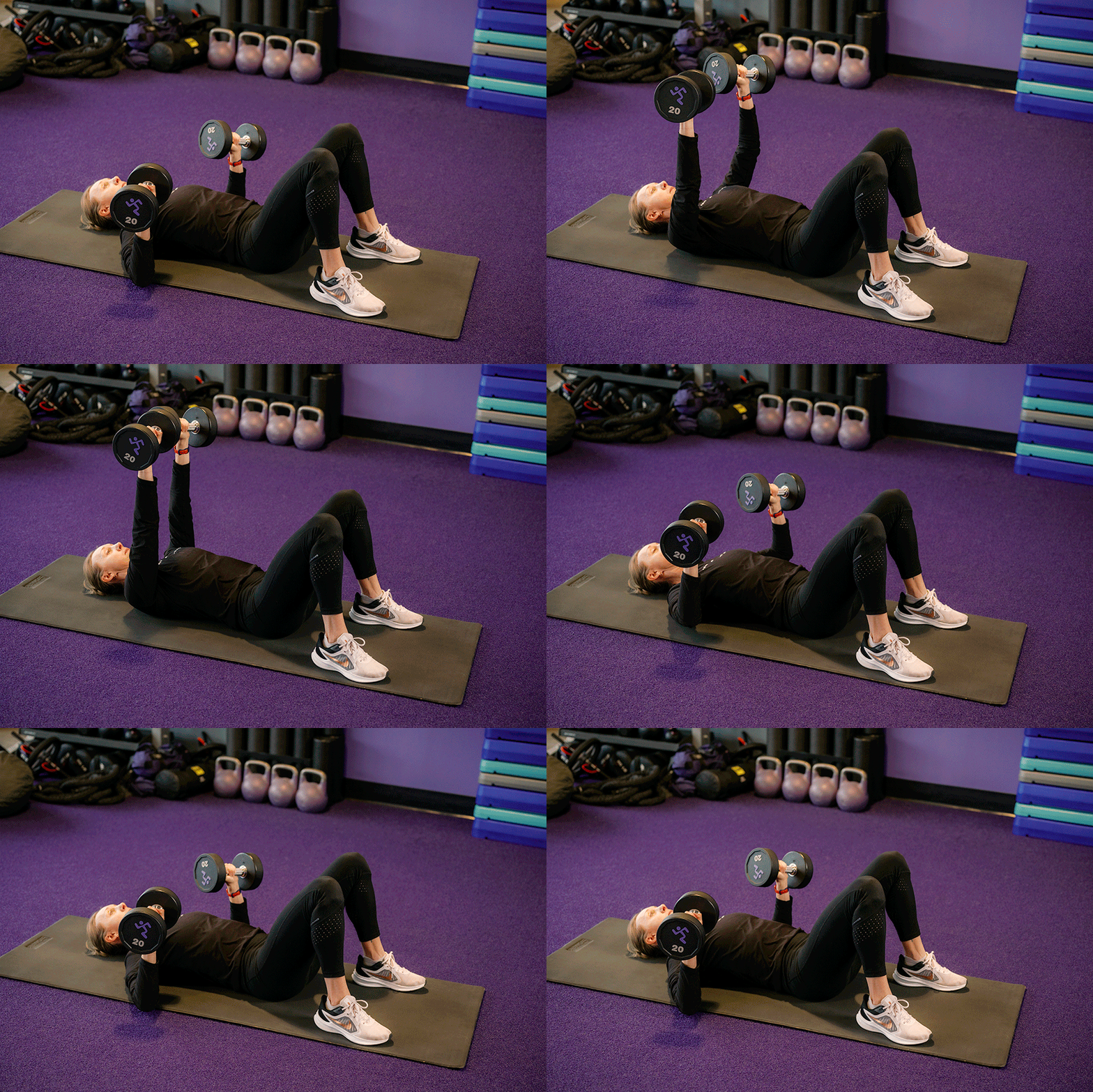
Superset B: Floor press
How to:
- Lie on your back on the floor and hold two dumbbells at shoulder level with your elbows bent and palms facing forward.
- Press the weights straight up over your chest, keeping your palms facing forward.
- Lower the weights back to shoulder level.
- Repeat for 3 sets of 12 reps.
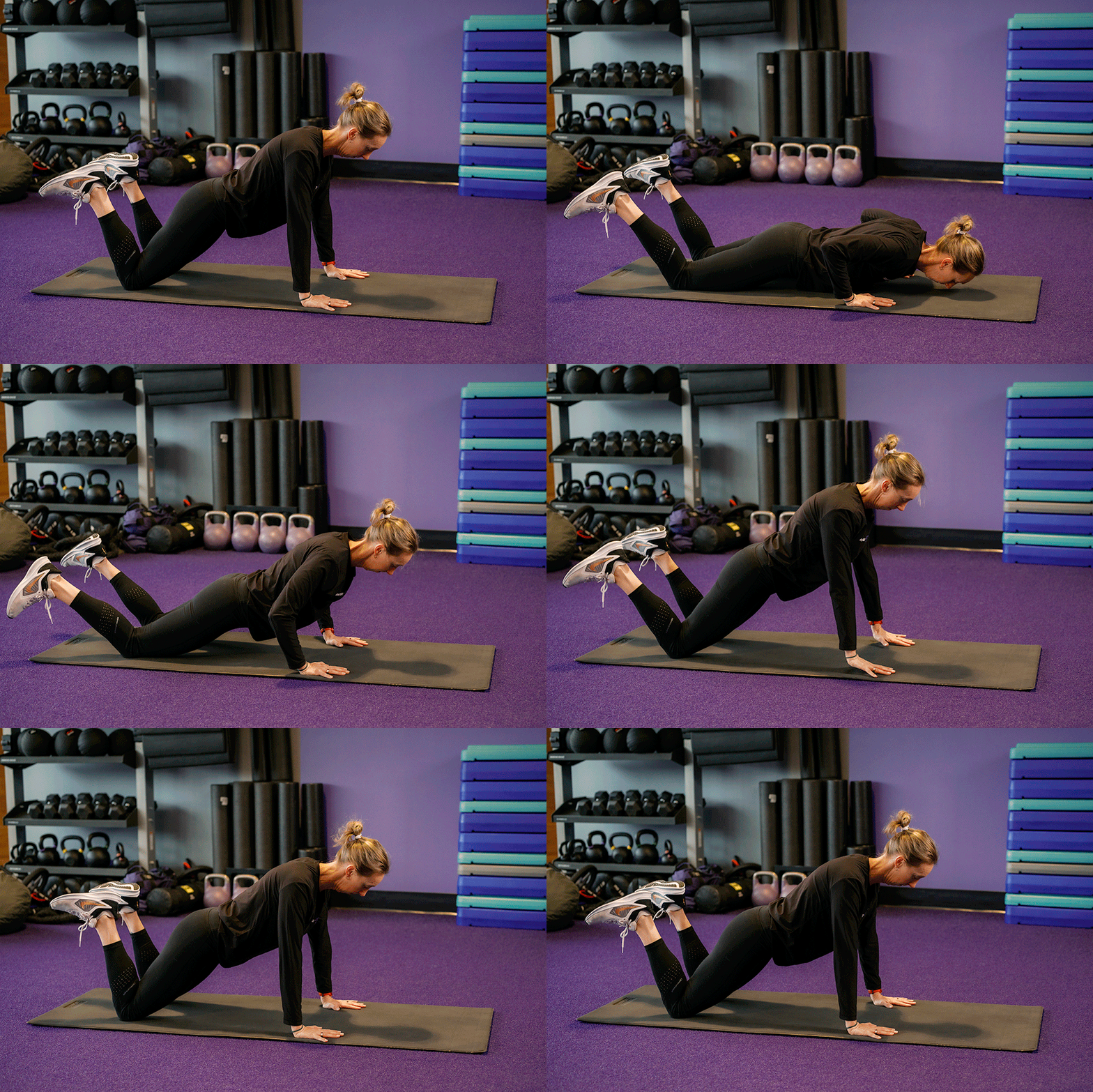
Superset B: Power push-up
How to:
- Start in a traditional push-up position, supporting your body on your toes and hands with your elbows bent and chest nearly touching the floor.
- Rapidly push up off the floor with both hands.
- Land with your hands back on the floor, lowering your chest back down, then immediately push up again.
- Repeat for 3 sets of 12 reps.
Sample strength training workout for women
To increase strength, the minimum recommendation for training is 30–45 minutes two days per week with heavy loads and low reps. Here is a sample full-body workout. For each exercise, choose a heavy weight that challenges you without hindering your form.
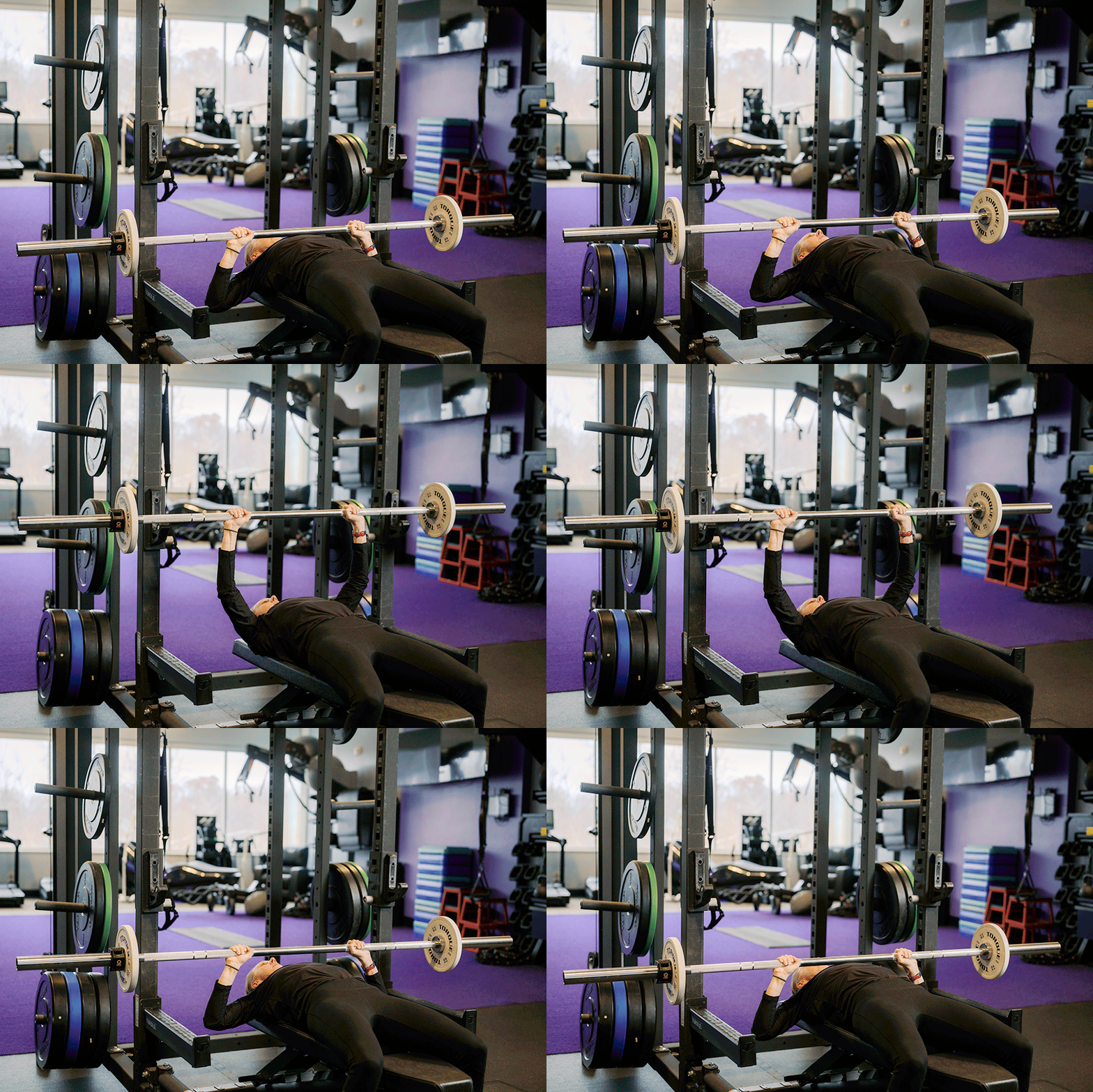
Barbell chest press
How to:
- Lie on your back on a flat bench, holding the barbell with a grip slightly wider than shoulder-width.
- Bend your elbows and slowly lower the weight to the middle of your chest.
- With control, press the barbell back up to a straight arm position. Be careful to avoid locking your elbows.
- Complete 4 sets of 6 reps.
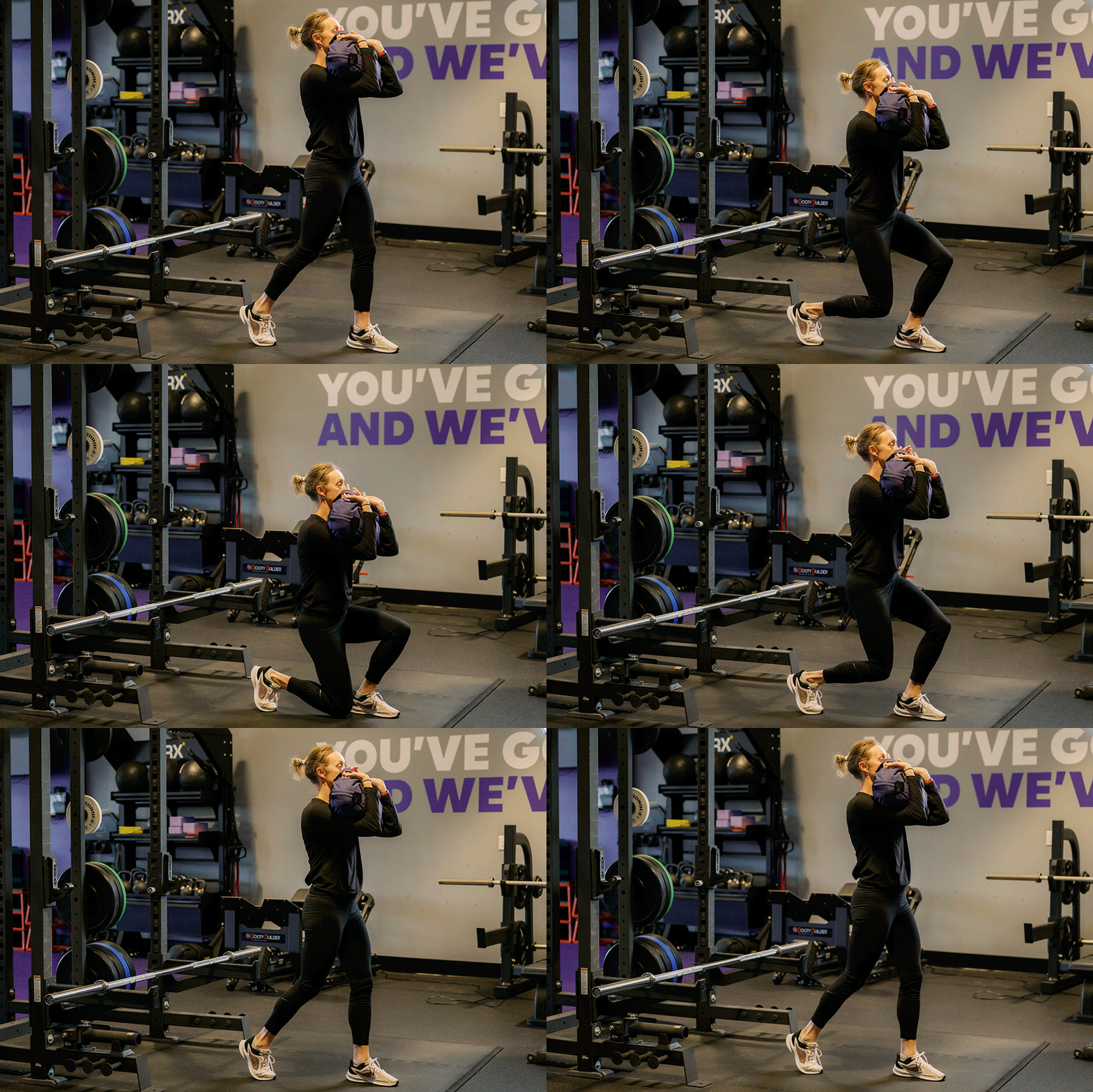
Zercher split squat
How to:
- Stand upright in a split stance. Hold a sandbag (or plate) in a front rack position (resting on your biceps) with your elbows up.
- Lower your body toward the floor, bending at the hips and knees with your weight on your front leg.
- Push off your front foot to return to the starting position, keeping your back flat and head up throughout the movement.
- Complete 4 sets of 6 reps. Complete all reps on one side before switching to the other.
Hang clean
.gif)
How to:
- Get into a squat position and hold a barbell at your knees, with your feet and hands hip-width apart.
- In one motion, rapidly extend your hips and knees to pull the barbell up, keeping your arms straight.
- Catch the bar at your shoulders, dipping slightly at the hips and knees to absorb the weight.
- Finish the motion by standing upright with the barbell across your shoulders and elbows out in front of you.
- Complete 4 sets of 6 reps.
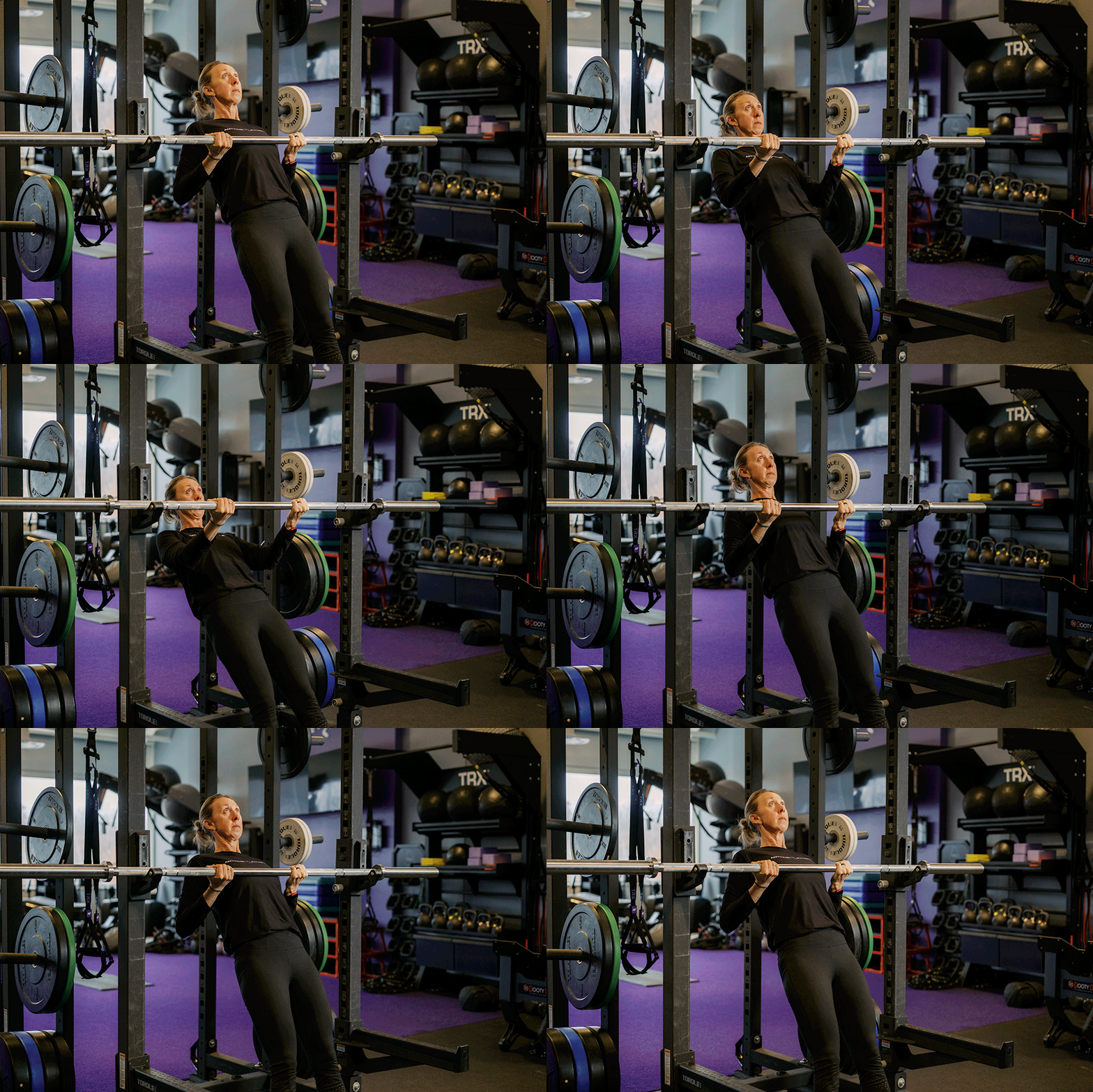
Modified self row
How to:
- Hold onto a suspended straight bar with a wide grip. Keep your arms straight, knees bent, and feet on the floor.
- Bend at your elbows to pull your chest toward the bar, keeping your back straight.
- With control, lower your body back to a straight arm position.
- Complete 4 sets of 6 reps.
Don’t skip recovery and nutrition! Keep these tips in mind
Resistance training is important on its own, but pairing it with proper nutrition and recovery makes it even more effective. Here are some quick tips to support your body as you focus on increasing strength and muscle mass.
Nutrition: Once again, think of your body like a car — it needs fuel to run. A protein-rich diet supports your strength gains and provides the energy you need to get through each workout. Aim for 20–30 grams of protein within two to three hours after hitting the gym. For daily protein goals, the Mayo Clinic recommends getting 10%–35% of your total calories from protein.
Recovery: Whether you’re training to build strength or muscle mass, resistance training causes your muscle fibers to break down. Your body needs time to recover and repair those muscle fibers between workouts (this is how muscle grows and gets stronger!). Aim for one to two recovery days per week with low-intensity exercise like a walk, jog, or yoga session. You can also try other recovery techniques like massage or an infrared sauna with red light therapy (available at some Anytime Fitness locations!).
Strength + muscle mass = power for life
When it comes to strength vs. muscle mass, both are important to feeling your best, but strength takes the cake for functional, everyday movement (especially as you age!). While muscle mass provides the foundation, strength is what powers your life — from taking your daily walk to carrying that heavy laundry basket up the stairs.
A well-rounded fitness routine takes both strength and mass into account, continuously challenging your muscles to grow and adapt. Reminder: You’ve got this, we’ve got you, and you can do hard things!
More strength tips for you
- Hypertrophy vs. Strength Training: How to Increase Size and Strength
- When to Increase Weight When Working Out During Perimenopause
- Menopause Exercises and Tips for Fitness Through Every Stage
Want personalized support and a science-backed plan to crush your strength goals? We’ve got you covered. Connect with a Coach to get started.


.avif)