



What does it actually take to live a long, healthy life? This is a growing question in health and wellness spaces — with an abundance of answers. We’re here to help provide clarity about longevity myths and facts related to fitness. Plus, we’ll share the tools you need to start building a strong foundation that will serve you well over many years. (Hint: It’s never too early to start!)
Let’s take a look at:
- How longevity myths show up in fitness
- 4 common misconceptions about fitness and life expectancy
- Tips for a longer life that you can use today (and for years to come)
- How to stay consistent with fitness when life gets busy
- Real examples of longevity seen in the gym
How longevity myths show up in fitness
Before we dive in, let’s get clear about what longevity myths can look like. Longevity claims can be made about sleep, screen use, nutrition, socialization, and yes — exercise. Some of these claims are helpful, while others lack evidence.
For example, the idea that intense exercise could make up for a poor diet (and still lay the foundation for extreme longevity) is unlikely. Balance — as we’ll cover shortly — is an essential part of all fitness tips relating to longevity and quality of life over many years.
Here’s another key idea to keep in mind when differentiating fact from fiction: So many variables affect longevity, from genetics (affecting approximately 25% of lifespan outcomes) to lifestyle habits to chance. So, while certain healthy habits and approaches can make a positive difference, broader factors also contribute to the age someone will live to.
Exceptional longevity is more common than it seems
Supercentenarians (people who live to be 110 years old or more) may seem rare, but exceptional longevity is becoming more common thanks to modern health care, research, and a growing awareness of healthy (and accessible) lifestyle practices.
So, how old exactly is the oldest human to date? The oldest person on record, Jeanne Louise Calment, lived to be 122 years and 164 days old before passing away in 1997. More recently, the U.S. was reported to have 82,000 supercentenarians in 2016 (and that number is projected to multiply by seven, reaching 589,000 in 2060). There’s a chance you could be one of the supercentenarians of the future, or know others who will be. The future is looking bright for longer lives, and it’s already happening today!
Now, let’s get into four common ideas about fitness and longevity that aren’t always true — plus, the facts that can set you up for success.
4 common misconceptions about fitness & living longer
When it comes to setting up (and sticking to) your fitness routine, separating false claims about life expectancy and longevity from the helpful ones is crucial. So, let’s dive in: Here are four common misconceptions about fitness and aging, along with the facts to help set the record straight.
Myth #1: “You should stop lifting heavy as you age.”
Fact: Appropriately progressed strength training improves bone density, balance, and resilience — key factors in reducing fall and injury risk.
Myth #2: “Cardio is all that matters for longevity.”
Fact: Cardiovascular health is important, but strength and movement quality strongly influence independence, injury prevention, and daily function.
Myth #3: “If you don’t start a fitness routine in your early years, it’ll be too late.”
Fact: Research shows meaningful improvements in strength, mobility, and metabolic health can occur at nearly any age.
Myth #4: “Longevity requires extreme routines or biohacks.”
Fact: Sustainable, repeatable training habits have far more impact than aggressive or trend-driven approaches that often lead to burnout or injury.
Addressing these myths helps people focus on what actually works: consistent movement, progressive strength training, and lifestyle habits that support recovery and long-term adherence.
Tips for living a longer life (Hint: Start these now!)
If your goal is to prevent health issues later in life, one of the most important things you can do now is shift your mindset from “training for today” to training for future capability.
Fitness at this stage should focus on building and preserving muscle mass, joint integrity, cardiovascular health, and movement confidence — all of which strongly influence health outcomes later in life.
Before we look at training-focused strategies for longevity, start by keeping these seven basic habits for longevity in mind:
- Move regularly (See how-to tips below!)
- Manage stress levels
- Maintain social connections
- Avoid smoking
- Limit alcohol consumption
- Prioritize sleep
- Make mindful nutritional choices
Check out our additional fitness tips below that you can start as soon as today (remember: it’s never too early or too late!).
Prioritize strength training
Aim to include at least two to three strength training sessions per week. This helps maintain muscle mass and bone density, and starting this as early as possible can help slow age-related decline. This also supports long-term independence, so you can continue doing the things you love for years to come.
Train fundamental movement patterns
Rather than chasing isolated or trend-based workouts, training fundamental movement patterns builds a strong foundation for all types of movement — both functional everyday tasks (like carrying a heavy bag) and your fitness goals. Examples of these fundamental movement patterns include a squat, hinge, push, pull, lunge, and rotation.
Include cardiovascular training
No matter how much strength training or stretching you’re doing, it’s important to prioritize cardio as well. To make cardio a consistent part of your life, do your best to avoid the mindset that “more is better.” Instead, focus on moderate, repeatable conditioning. This will support heart health and recovery without excessive stress.
Support training with lifestyle habits (Practice balance)
Remember when we talked about the importance of balance? This is where that idea comes into play. Complement your movement routine with adequate sleep, sufficient protein intake and hydration, daily movement, and stress management. Each of these has a role in your overall well-being, and different weeks may call for one area of your life needing more attention than the next. Listen to your body and mind to help guide your decisions, practicing balance to allow for a well-rounded lifestyle.
Think in terms of sustainability, not extremes
Reaching your next PR or challenging yourself with a new intensive routine can be tempting — personal growth is a motivator, after all. But it’s also important to consider what makes sense for you and your body over the long run. Programs that are enjoyable and repeatable are more impactful long-term than aggressive, short-lived routines, so when it comes to a longevity-focused training plan, keep safety and sustainability in mind.
Healthy for life: How to stay consistent with fitness
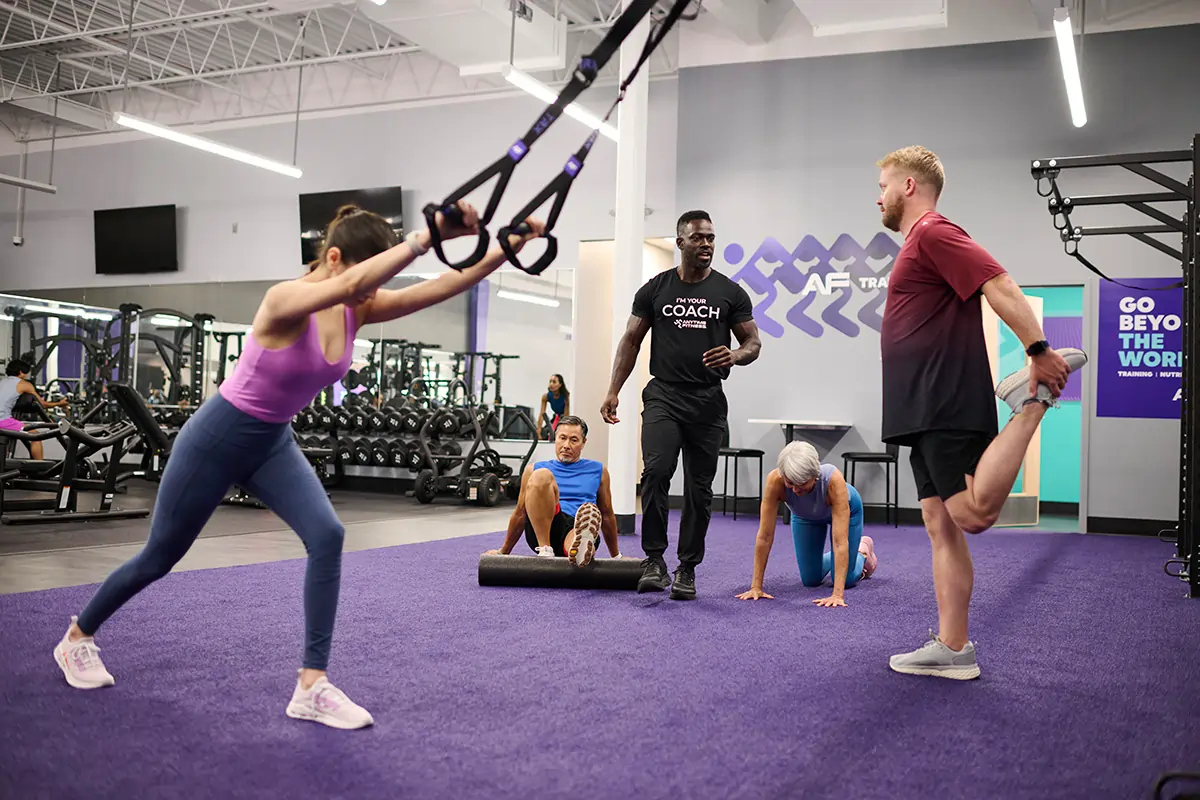
Consistency is essential for longevity, but it’s often misunderstood. Sometimes busy schedules, responsibilities, life changes, health issues, and travel can throw off an exercise routine or make it hard to get into a rhythm. (You’re human, and that’s bound to happen from time to time!) Long-term adherence is less about discipline and more about flexibility and systems that adapt as life changes.
The key is to look at consistency with fitness as an overarching theme in your life as a whole — it doesn’t necessarily mean every single day (though sometimes it can). Looking at a fitness routine too narrowly can lead to disappointment or a longer break than needed when unexpected life events get in the way. Instead, prioritize fitness as part of your holistic lifestyle, knowing some weeks, months, and even years will look different than others.
Use the tips below for building (and sticking with) an exercise routine over the long run.
5 ways to make fitness feel sustainable:
- Lower the barrier to entry. Shorter, efficient workouts done consistently outperform long workouts done sporadically.
- Anchor workouts to your schedule, not motivation. Motivation fluctuates; routines built around realistic time blocks last.
- Allow for different seasons of training. There will be phases focused on strength, others on conditioning, mobility, or recovery — this is normal and healthy.
- Redefine success. Progress isn’t always heavier weights; it can be better form, reduced pain, improved energy, or faster recovery.
- Return quickly after disruptions. Missed workouts don’t derail progress — but waiting too long to restart can disrupt your momentum.
The goal is not perfection, but resilience — the ability to return to movement again and again over a lifetime.
[boxout]
Longer “lifespans” vs. longer “healthspans”
You’ve likely heard of lifespan — the number of years someone lives. However, exercise doesn’t just extend lifespan. It preserves healthspan, or the number of years lived with strength, mobility, and independence. This means a person is not dealing with a disease or illness impacting their life. To promote healthspan, heavy strength training, in particular, can play a role in reversing decline caused by age, according to the National Library of Medicine.
[/boxout]
Here’s what longevity looks like in the gym
In gym environments, Coaches consistently see firsthand how exercise supports longevity. For example, people who exercise at the gym are often able to stay active and healthy through the years as a result. So, what does this look like, exactly? Let’s explore several common benefits.
Real people, real results
People who maintain regular strength and conditioning routines over many years tend to:
- Move with greater confidence and control as they age
- Maintain the ability to get up and down from the floor
- Preserve balance, coordination, and joint stability
- Remain independent in daily tasks like lifting, carrying, and traveling
What’s notable from a Coach standpoint is that these individuals did not train perfectly or intensely all the time. They adjusted loads, respected recovery, and stayed engaged even when life changed. Their success came from long-term consistency, not extreme effort.
Living well through the years starts exactly where you are
The secret to living well for years to come? Start now, keep it simple, and don’t let life’s curveballs knock you off track. Every squat, stretch, and step you take today is a step in the right direction.
Longevity isn’t about chasing the latest fitness fads or grinding yourself into the ground — it’s about playing the long game. Build habits that last, focus on movement that matters, and remember: Consistency beats perfection every time. So, go ahead — train for the life you want to live, not just the one you’re living now.
Building a life you’ll feel great living doesn’t happen overnight — or alone. We’re here to support your journey with expert Coaches and educational resources for all things longevity. Get started with these tips now!

.avif)