

The not-so-secret secret is out: Working out consistently is linked to lower mortality (a 19-25% decrease was reported in one American Heart Association study). But sticking with a routine over the long haul — and getting started — can be a challenge, especially if you haven’t in a long time (or ever). Hint: That’s OK!
Fortunately, we know a thing or two about making exercise accessible, effective, and yes — enjoyable, so that you can feel strong and energized. In this blog, we’ll share a beginner workout routine built with you in mind. We’ll cover:
- How exercise can boost energy levels
- A variety of warm-up and cooldown exercises
- A step-by-step seven-day workout routine
- Recovery strategies
- And more!
Getting started: How can a beginner gym workout boost energy levels?
We’re all beginners at least once throughout our fitness lives. We say “at least once,” because it’s very common to feel like you’re starting all over again after a period of time away from regular activity.
So, whether you are a first-time visitor to a gym (welcome!) or you’re back for another go, this guide is going to be a helpful tool to have in your back pocket and to be successful in your fitness journey.
People often report not having enough energy to exercise. So, it’s not a surprise that when starting a beginner routine, one of the most common motivations is to feel more energized — not only for working out, but for daily life. While working out can be tiring in the moment, it ultimately gives you more energy after you’re done and in the recovery phase.
How can this be? It comes down to a few main physiological factors, including improving circulation and promoting a state of conditioning.
Exercise improves circulation
With every heartbeat, your circulatory system is sending out freshly oxygenated blood (oxygen coming from all those deep breaths you’re taking!). Blood also carries nutrients that are needed for muscles to work, such as sugars, calcium, and water itself. More circulation leads to more energy, and movement helps circulation.
Exercise helps keep us in a state of conditioning
To understand what it means to be conditioned, think about the opposite state, called “deconditioned.” When someone is in a deconditioned state, their muscles are not accustomed to working out on a regular basis, and those muscles could also be lacking tone, tension, and strength.
Here’s an important motivational note: A deconditioned state is not permanent — the body responds and adapts to what it experiences, including exercise (especially resistance training!). Muscles can become conditioned (“toned”) and tightened again by kicking off a beginner routine and sticking with it. Another positive side effect of being conditioned? Your metabolism will be elevated.
Equipment 101: Finding the right weights
Part of starting your routine is figuring out which equipment you’ll use (think: machines, weights, resistance bands, etc.). When it comes to weights, barbells, and dumbbells, there are many things to choose from. You may have questions like:
- Which types of strength training equipment in the gym are right for someone new to strength training?
- What type of weights and weight ranges are recommended?
- When should you increase weight?
We’re here to help you find the right fit, use proper form, and increase weight safely and steadily. And for more personalized guidance about beginner weight lifting, we recommend working one-on-one with a Coach.
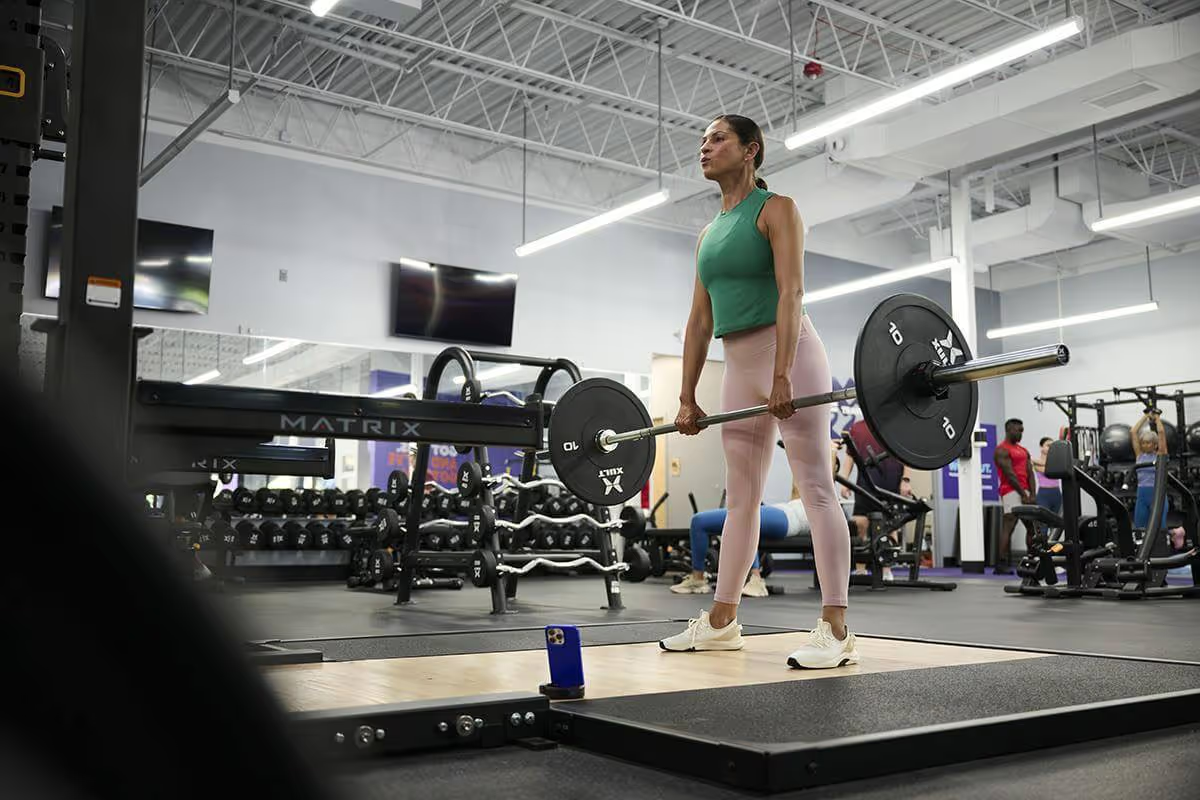
In the meantime, here’s a pro tip to help you get going: Selectorized machines and dumbbells are a great place to start. The machines teach proper form and allow you to lift a little heavier, since you are often seated and have the support of a back or chest rest.
When picking up dumbbells, on the other hand, the body will be moving in space. This allows for more muscle recruitment to stay stable, including the all-important core muscles. It’s generally a best practice to increase weight lifted every two weeks by 10%–20%. (Pro tip: Use the AF App to track workouts!)
Weight training vs. bodyweight training: What’s the difference?
While weight training is a common approach to building strength, bodyweight training can also be a great option. This will depend on the circumstances, like time, space, and gym availability (bodyweight exercises can be done almost anywhere, with any amount of time!).
If you’re looking to build strength as a beginner, you can start with this upper-body circuit as an example:
- Incline push-up: 5-10 reps
- Walk up: 5-10 reps
- Hip raise: 5-10 reps
- Walking push-up: 5-10 reps
- Continue this circuit for 10 minutes
If your goal is to truly build strength, weight training will be necessary as well. If you’re beginning strength training, start to add weights 3-4 weeks after kicking off your program. This will allow you to establish a base of strength and muscle recruitment with body weight exercises for 1-4 weeks.
Find variety with 4 types of warm-up routines
Before jumping into any workout for the day, first comes warming up. Without it, you’re asking your body (and your mind) to jump straight into exercise without preparation. This could lead to poor form, discomfort, or even injury. Being in the gym and warming up consistently will allow you to make progress that helps your body build resilience.
Learn about the four types of warm-ups below to decide what works best for your routine (we’ll get into those specifics shortly!).
Foam rolling as a warm-up
.gif)
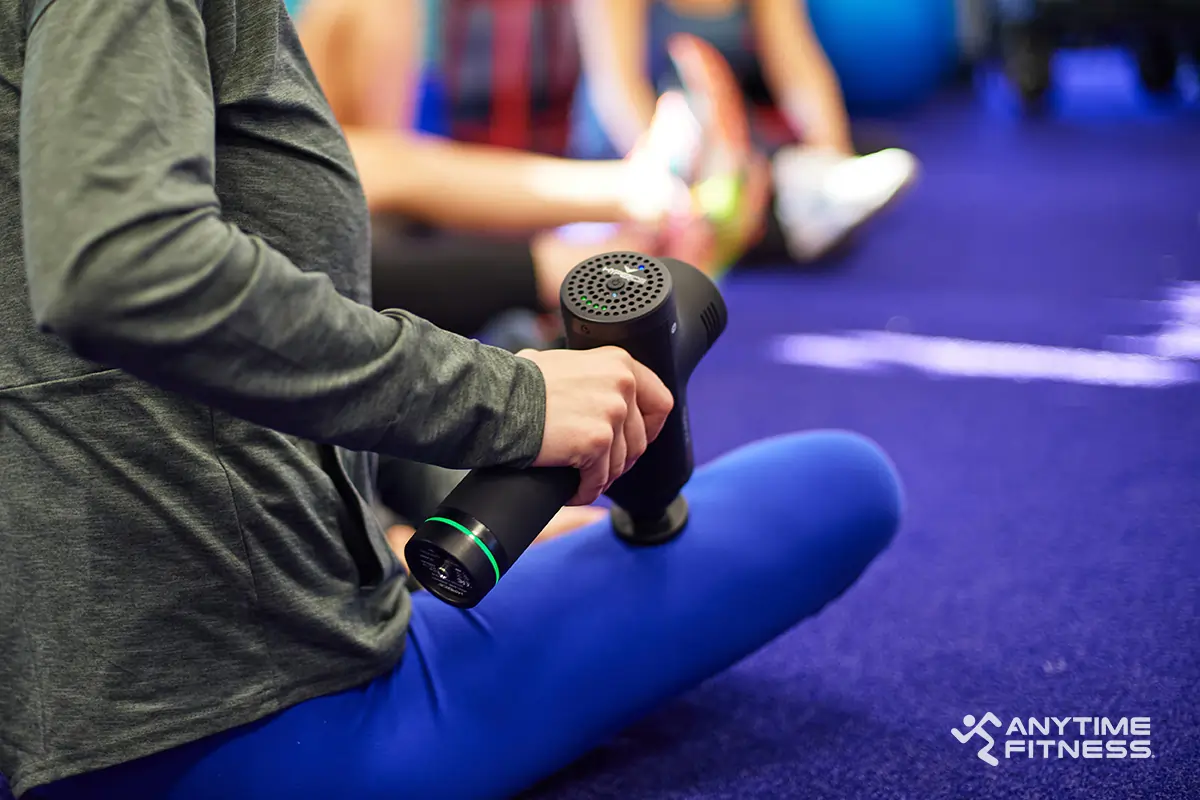
The foam rolling hype is well-deserved — it’s a tried-and-true favorite cooldown and recovery tool for athletes of all levels (and yes, gym-goers!). Foam rolling has benefits like reducing stiffness, increasing range of motion, and reducing post-workout soreness, otherwise known as delayed onset muscle soreness, or DOMS.
Aim for 30 seconds per side per exercise:
- T-Spine
- Glutes
Static stretches
Static stretches are another great place to start when warming up. They involve holding a position to target a certain muscle group.
Hold each stretch for 10-15 seconds per side:
- Arm (Forearm stretch)
- Hamstring (Hurdler stretch)
- IT band (Seated rotation stretch)
Dynamic stretches
Dynamic stretches involve movement and help to warm up your joints as well as your muscles (plus all the connective tissues that hold them together).
Perform each movement five times per side:
- Clamshells
- Half kneeling windmill to forearm
- Open book full body
Exercises to boost your heart rate
A warm-up primes your body for exercise, and getting your heart rate elevated is an important piece of this. This sends fresh, oxygenated blood throughout your body, so it’s literally “warming up” in temperature. It also primes your joints for action before you enter your workout phase. Try the cardio-focused warm-ups below.
Do each movement for 30 seconds:
- Mountain climbers
- Jumping jacks
Why is cardio important?
We love a good set of squats — but there’s always a place for cardio. The heart is a muscle just like our quads and biceps, and arguably one of the most important. Doing cardiovascular conditioning exercises like jumping jacks helps to strengthen the heart muscle with the added bonus of burning calories. This is because our energy systems switch to burning stored fat when doing cardio.
Bonus tip: Data from the National Library of Medicine suggests that working out at a consistent time can boost physical activity. So, for extra benefits, schedule workout sessions around the same time each day, with cardio activity incorporated.
Step-by-step 7-day plan for muscle gain
With warm-up options in the rotation, it’s time to explore a week-by-week beginner workout routine. Use the guide below to find variety, build strength, and stay on track.
Week 1: Kicking off your beginner workout routine
- Day 1: 25-minute beginner strength workout
- Day 2: Treadmill workout
- Day 3: Every minute on the minute (EMOM) strength-building workout
- Day 4: Cardio (day 2) or active recovery (day 6)
- Day 5: Endurance workout to promote healthy shoulders
- Day 6: Active recovery /workout
- Day 7: Day off
Weeks 2, 3, 4 + 5: Keeping it going
- Week 2: Repeat week 1 (listed above)
- Week 3: Repeat week 1, this time increasing weight lifted by 10-20%
- Week 4: Repeat week 3
- Week 5: Repeat week 3, this time increasing weight lifted an additional 10-20%
[boxout]
More helpful exercise tips
The 3-3-3 exercise rule
This rule includes three days of strength training, three days of cardio, and three days of active recovery. The 3-3-3 exercise rule can be a great tool if you’re unfamiliar with strength training and don’t necessarily want to follow a digital program. It’s easy to remember and offers flexibility for setting up your workout at the same time.
However, this rule does not prescribe reps and load to lift, which are important for building strength. If this is your goal, aim to do eight to 12 reps at a load that is heavy enough that the last few reps are difficult to complete.
The 4-2-1 exercise rule
If you’re looking for a workout to complement strength training, the 4-2-1 exercise rule can also be useful. Rather than outlining specific reps and sets, it stands for four days of strength training, two days of cardio, and one day of mobility or active recovery.
Instead of doing this for every strength training session, this method can be used every few weeks as a way to determine whether that one rep at max effort is increasing in weight. This is also a great way to check in on progress and give yourself a physiological boost!
[/boxout]
3 types of cooldowns
After a workout, it may be tempting to get up and go — we get it! But just like your warm-up, a cooldown is essential, helping your blood pressure levels and heart rate balance and return to a resting state. Get to know three different types of cooldowns below.
Foam rolling as recovery
The foam roller will help you prep for your workout as well as provide additional benefits when you use it afterward for muscle recovery! Spend ample time rolling each area (think: glutes, thoracic spine, and quadriceps) to make an impact.
Stretches
If flexibility is on your list of goals, stretching after you are done working out will help you turn that into a reality. When you’re done exercising, your muscles will be at their warmest, making them the most pliable for lasting change in muscle length. Stretching also gives you an opportunity to focus on your breathing, helping your heart rate return to a resting state.
Breathing for restoration
Box breathing is a technique that can be used to help your body return to a resting state after a workout. A post-workout breathing routine is especially helpful after high-intensity workouts that challenge the cardiovascular system (heart and lungs). Box breathing also strengthens the diaphragm.
Technique:
- Sit or lie down in a comfortable position.
- Start by taking a deep breath in for four full seconds and fill your lungs.
- Once full, hold the air in your lungs for four seconds.
- Release the air slowly for four seconds.
- Hold your lungs empty for four more seconds.
- You’re now back to the beginning of your breathing “box,” and you can start again by breathing in.
- Repeat 5-10 sets of this cycle of breath, or continue for as long as you’d like.
Active recovery (a must-have in your workout plan)
Certain days within your workout plan include active recovery, when you’re not focused on reps or sets, but on simply moving your body. This allows the muscles to recover, which is when they do most of their building. Try activities like:
- Walking
- Biking
- Swimming
- Yoga
Activities like yoga and swimming are great because they are low impact and allow you to work on mobility. When joints are more mobile, they can often reduce pain and allow for heavier lifting.
Monitor your fitness routine with full-body scans
Sticking with your workout plan week after week will lead to results over time — some of which are visible, some not. Anytime Fitness locations are equipped with Evolt 360 body composition scanners to help offer insights into the less visible progress happening in your body.
For example, it can be common for people who are seeking body fat loss to actually report temporary weight gain in the first month. This is usually due to increased muscle mass and bone density, which will show up on your scan report.
These body scans can assess your body composition (such as body fat versus muscle mass) and how it changes over time. We recommend getting a scan done routinely (monthly is a great cadence to start with!) and discussing your results with a Coach.
You’re not in this alone! Coaches are here to help
You do not need to do this aimlessly and on your own. In addition to this beginner workout routine, Anytime Fitness gyms are stocked with the best equipment anyone could ask for — caring, knowledgeable Coaches.
In the meantime, here are a few reminders:
- Benefits of starting a beginner workout routine include a boost in energy, improved circulation, and conditioned muscles.
- Foam rolling, stretches, and cardio are all effective warm-up activities to prep your body for your workout.
- When it comes to strength equipment, start with machines and dumbbells — then increase weight gradually.
- Active recovery includes low-impact activities like yoga, walking, and other light movement — embrace variety and have fun with it.
- Remember: Anytime Fitness Coaches are here to help!
Many of our Coaches have had their own transformational journeys and have felt the daunting feelings that can accompany starting a new routine. Take advantage of that expertise and schedule a fitness consultation with a Coach if at any point you’re looking for accountability, guidance, support, or motivation.
Looking for more beginner workout tips? Take the guesswork out of your strategy with these Coach-approved training methods and recommendations.
%20(1)%20(1).avif)