

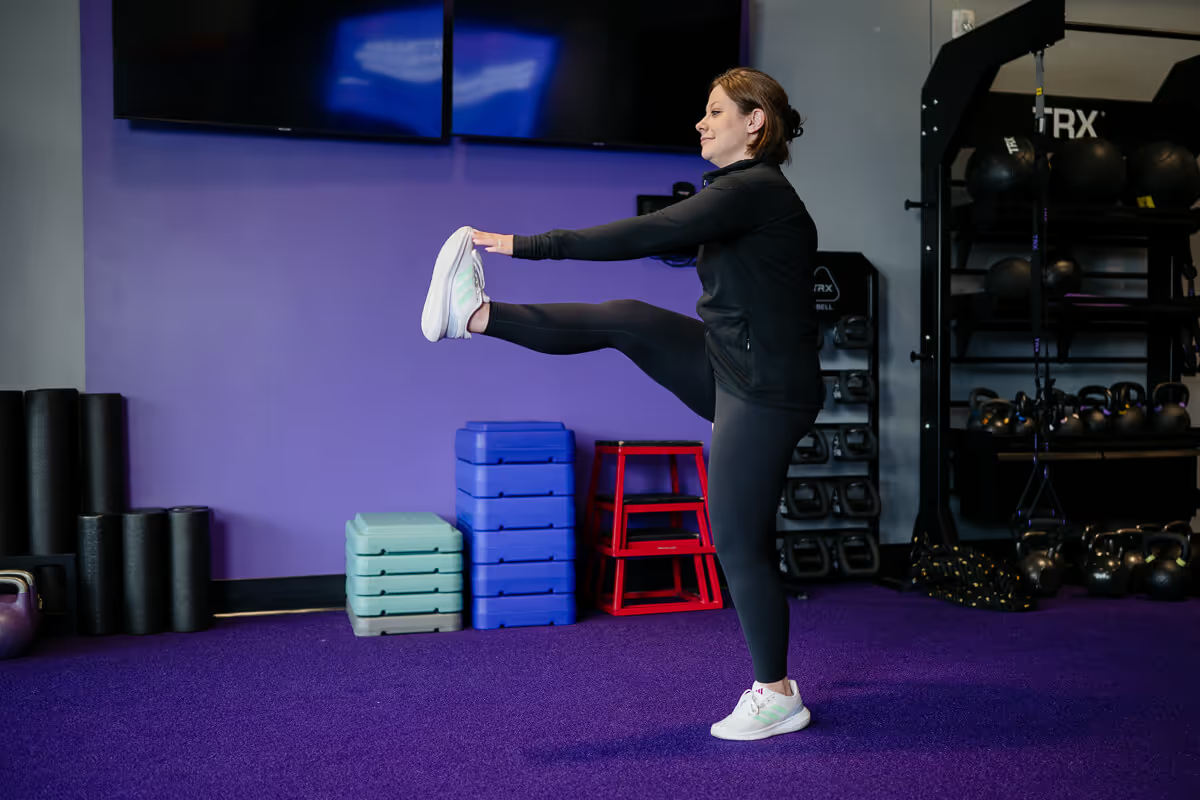
We’ve all skipped a few warm-ups from time to time — and chances are, you’ve felt the difference in your muscles, joints, lungs, and mentality. That’s because choosing a few stretches to do before working out is more than just a way to ease into your gym routine. In fact, daily stretching is linked to health benefits like improved blood circulation that affect long-term quality of life, according to Mayo Clinic. It supports optimal mobility, the ability to complete daily activities, and perhaps most importantly, a sustainable exercise routine. Taking a few minutes to stretch before your workout helps prepare your mind and body for activity today, and a lifetime of movement tomorrow.
Ready to find out why? In this blog, we’ll cover:
- Why stretching is so important (Hint: When we don’t have a chance to get “in the zone” mentally and physically, the quality of the workout is just not the same.)
- Dynamic vs. static stretching, and the benefits of each
- Eight dynamic stretches to do before a workout
- Eight static stretches to do after a workout
Why is it important to stretch before a workout?
Before we jump into which specific stretches to do before working out, let’s talk about why they matter. Warm up stretches help improve the mind-muscle connection, allowing your muscles to be activated more efficiently. What does this mean for your results? You’ll see more of them!
You’ll be able to move better and potentially even lift heavier weights or do additional reps — all thanks to better muscle activation from a warm-up that includes static stretches (those that are held for a short period) and dynamic stretches (those with controlled movements).
While stretching has clear benefits when it comes to warming up before a workout, it’s also a powerful tool for helping reduce pain and improve overall wellness. In fact, research has found that 12 months of stretching can be just as beneficial as manual therapy for people with chronic neck pain, according to the National Library of Medicine. This research also recommends that “Older adults over 65 years old should incorporate static stretching into an exercise regimen.”
So, if stretching can do all this, when it comes to considering whether or not to add stretching into your pre-workout routine, it’s a no-brainer.
Warm up stretches prepare your body to work out and support longevity
Practicing static and dynamic stretching helps increase flexibility, especially in the muscles and tissues that connect the muscles to one another as well as to the bones. While flexibility has first-hand benefits you’ll notice right away (more on that in a moment), it’s also an investment in the long-term health of your body. A 2024 study revealed that high rates of flexibility in the ankles, shoulders, knees, spine, wrists, hip, and elbows over time were linked to a lower likelihood of early death, according to Harvard Health.
Flexibility and range of motion go hand in hand. Here’s how improving both can benefit the body:
- When your muscles and connective tissues are more flexible, they’re also more resistant to injury.
- When your soft tissues (located in and around your joints) are more flexible, the joints themselves are better supported through the proper range of motion.
- Translation: Flexibility allows you to move your body with proper form while preventing the strain that can accompany tight, stiff muscles due to a lack of stretching — and in some cases subject your body to injury.
That brings us to this next question: What happens when you skip stretches before a workout? While it’s normal to skip a day here and there, a lack of consistent stretching can play a role in the muscles around a joint becoming tight or overworked. Unlike the agility that comes with a healthy range of motion, this stiffness can cause improper movement around the joint, potentially leading to pain and difficulty with daily tasks.
One example of this is “runner’s knee,” which is acute knee pain caused by tight muscles that connect to the kneecap (aka patellofemoral pain syndrome, or PFPS).
3 benefits of doing stretches before a workout that you’ll actually notice
The benefits of doing warm up stretches impact your workout and last well beyond leaving the gym. Every single time you commit to stretching (even if it’s just doing a few!) you’re improving your range of motion. This not only benefits the quality of your workout in the gym, but also continues throughout the rest of your daily activities. So, that loosened up feeling you experience after you do a nice stretch? It’s not all in your head. Your body is thanking you for warming up, supporting better movement, and reducing tension!
Here’s what else to know:
- As we mentioned, stretching leads to better movement during your workout. This means you’ll experience better muscle activation (crucial for results), but it also means better form during each rep along the way, thanks to an improved range of motion.
- Stretching allows you to slow down now to recover, and helps prevent injury from slowing you down in the future. It’s also key for preventing muscle strain and supporting recovery, and can help correct muscle imbalances (everyone has them!). Making this a practice leads to better movement in your shoulders, hips, back, ankles — everywhere you physically stretch — that you can see and feel.
- Let’s be honest — stretching feels good! This is because stretching helps boost serotonin, the feel-good chemical in our brains, while reducing inflammation which can cause joint stiffness and pain. A happier brain and less pain? Yes, please!
Working with the muscles: Static stretching vs. dynamic stretching
Static stretching and dynamic stretching are often talked about together, but each serves a different purpose and can be applied at different times during a workout.
- Static stretching: This is when you passively bring a muscle to the point of tension and hold the stretch for a minimum of 30 seconds. We’ll share eight examples to try below.
- Dynamic stretching: This is when you use the muscles’ ability to produce force combined with the momentum of movement around a joint to actively guide it through its complete range of motion. We’ll share eight examples of these stretches below as well.
Now, let’s take a deeper dive into when and how to get the most out of each stretch (think: better range of motion, greater flexibility, and an association with longevity over time).
What’s the difference between dynamic and static stretching?
Static stretching involves holding a stretch for 30 seconds or more. A common example is the “butterfly” stretch (adductor stretch) where the soles of your feet are together, your elbows are on the insides of your knees, and your inner thighs are stretched. There are no reps. Instead, you hold the position for about 30 seconds, one to three times per stretch and repeat one to three times per week.
A 2023 study about static stretching also reported that doing these exercises can build muscle strength, with particular benefits for people who may be less active. It also suggests that the benefits of flexibility are greatest when more reps are done (meaning more frequently), and when stretching is done for longer.
Dynamic stretching, on the other hand, involves reps of a movement around a joint. Examples include arm circles and leg swings. Dynamic stretches are performed for a certain number of reps, usually three to 10 depending on the movement. To get the most benefit from your stretches, make sure you choose ones that involve similar muscles and movements to what you’ll be doing in your workout. Essentially, these stretches will help you prepare for the exertion you’ll be doing post-warm-up.
Example: Let’s say you plan to do a chest workout. In this case, a proper warm-up will include both static and dynamic stretches for the chest and shoulders. A warm-up for leg day, on the other hand, will focus on lower-body stretches and bodyweight squats.
Is it better to stretch before or after a workout?
Stretching can be done before a workout to loosen up tight muscles and help improve your mobility and range of motion during exercises. So, what are the best stretches before a workout? Here’s a simple guide:
- Do your static stretches first. Aim for one to three sets per muscle group, holding each stretch for 30 seconds.
- Do dynamic stretches second. Aim for one set of 10-15 reps for three to 10 exercises to mimic the movements to come in the workout.
Stretching after a workout is also beneficial. Static stretches are especially helpful after a workout, since your muscles are warmest and most responsive to stretching. Doing stretches during this window can result in increased flexibility. As a bonus, post-workout stretching gives you something to focus on while your heart rate returns to its resting state.
How to practice exercise stretches safely
Stretching is safe and effective, but it can be overdone. Our bodies have built-in mechanisms to help us avoid overstretching, such as pain that comes with stretching too far.
Here’s how to gauge the difference between a healthy stretch and one that could be risky:
- When stretching safely, you should feel a gentle tension. Generally, you should be able to keep a straight face without clenching or wincing. Make sure you’re able to inhale and exhale deeply as you hold your stretch. (In fact, mindful breathing will help you achieve a deeper, more effective stretch!)
- It’s normal to feel challenged, but straining is a sign you’re past the point of beneficial stretching. This is your cue to dial it back and try again more gently, using your breath as a guide.
8 dynamic stretches to do before a workout
Ready to put dynamic stretching into practice? Get started with these eight options.
Squat
Muscles worked: Quads, hamstrings, glutes, hip flexors, calves
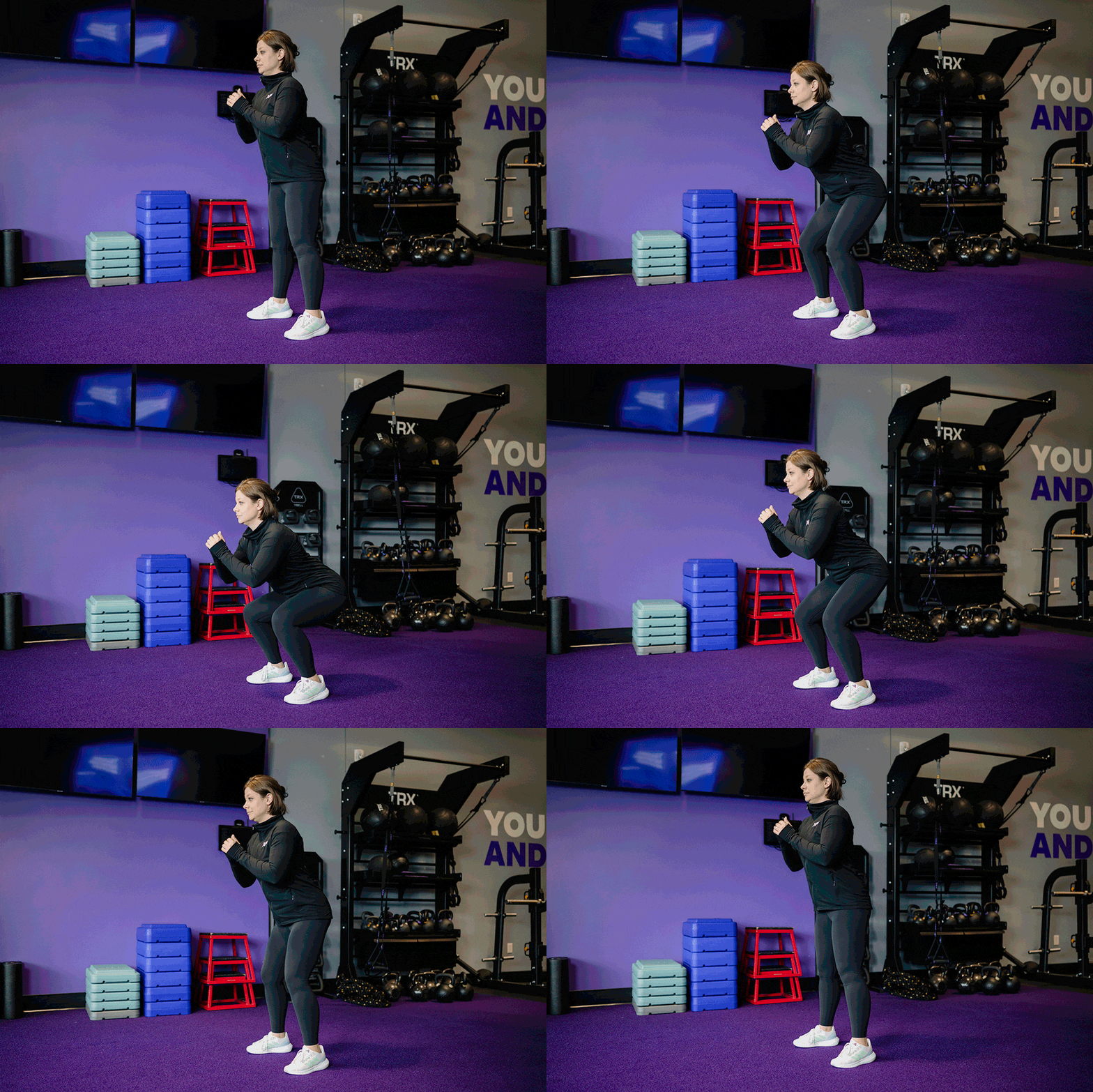
- Stand upright with your feet flat and shoulder-width apart and your hands at the sides of your head.
- Lower your body toward the floor, pushing your hips back and down while bending your knees.
- Push through your heels to return to the top position, keeping your back flat, your head up, and your hands at the sides of your head throughout the movement.
Around the world lunge
Muscles worked: Quads, hamstrings, glutes, hip flexors, pecs, shoulders
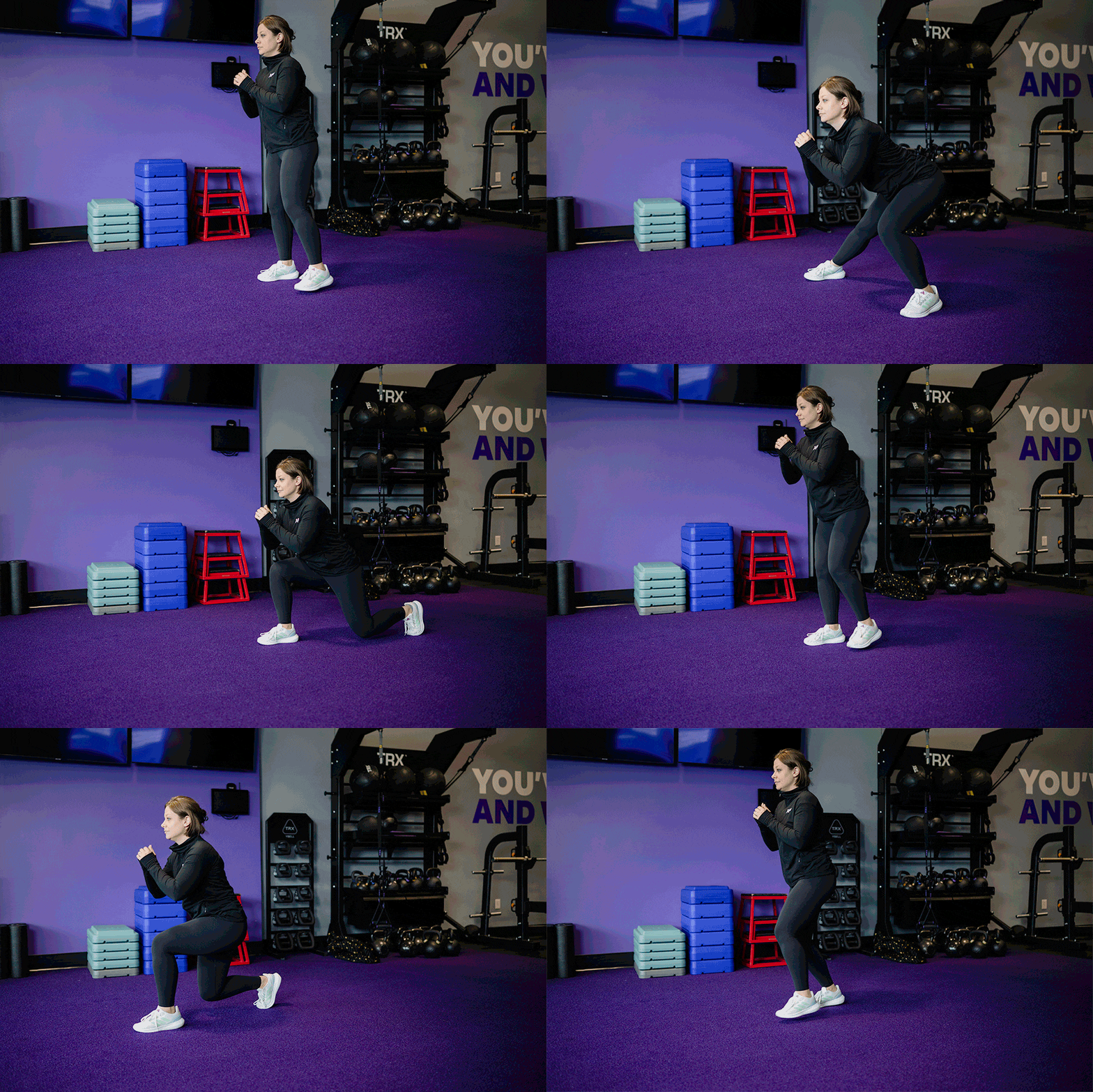
- Stand up tall. Step forward with one leg as you lower your back knee toward the ground. Drive through your heel as you step back into your starting position.
- Using the same leg, transition to a reverse lunge.
- Return to the starting position, then step back and across behind your other leg, lowering your body down.
- Push down on your front foot to return to the starting position.
- Complete 10-15 reps on each side.
Mini-band lateral step
Muscles worked: Quads, hamstrings, hip abductors
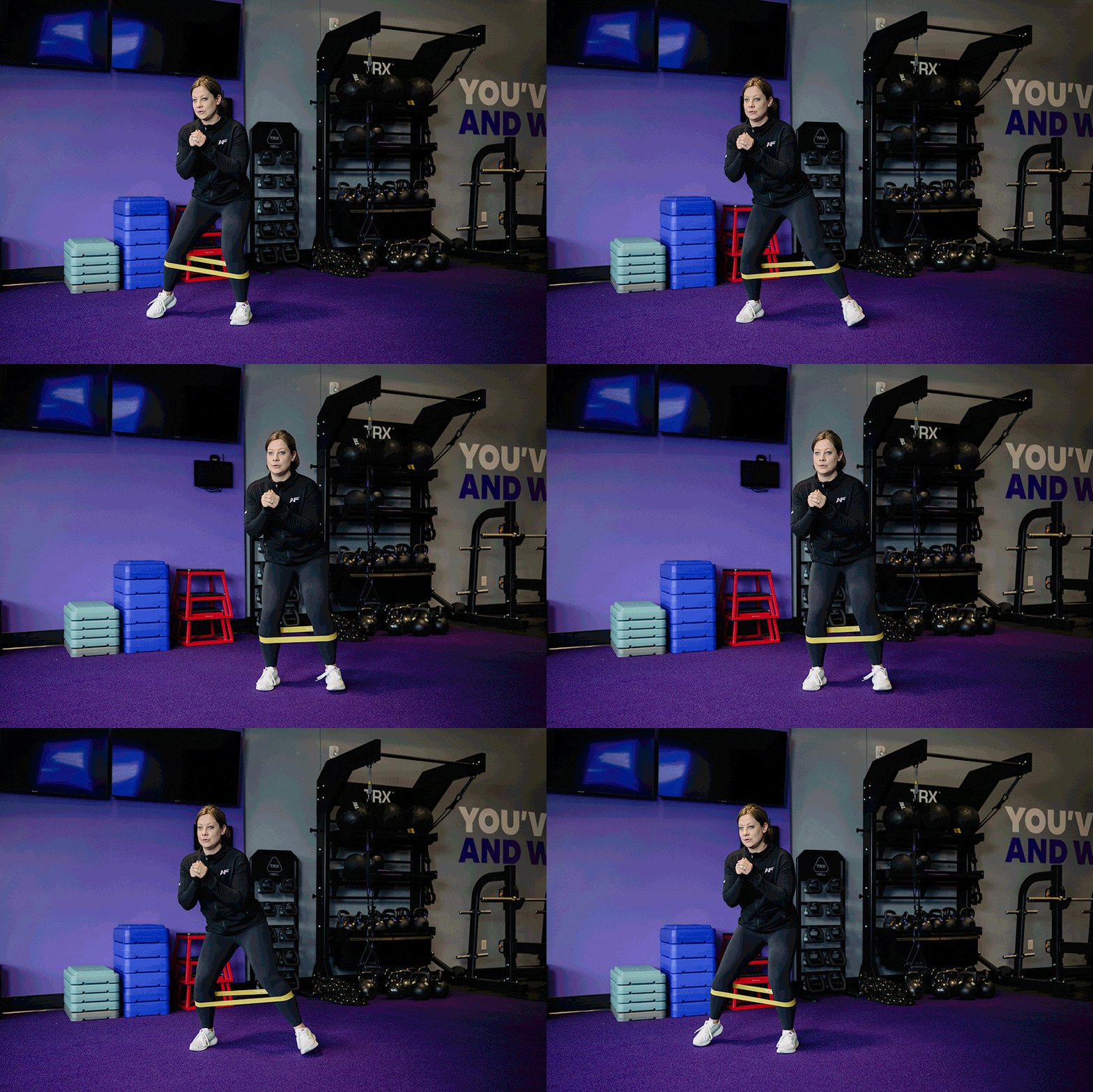
- Start in a hip-width stance with the band below the knees.
- Keep tension on the band, the core engaged, and toes straight ahead.
- Slightly squat and slowly step out to one side.
- Repeat stepping to one side for 10-15 reps, then repeat on the other side.
Leg swings (front to back)
Muscles worked: Quads, hamstrings, hip flexors, calves

- Stand upright with your hands on your hips and one foot off the floor, slightly behind you.
- Swing this leg up in front to hip height and then back behind you to the starting position.
- Maintain your balance and hold onto a stable surface such as a wall for support.
- Perform 10-15 reps per side.
Leg swings (side to side)
Muscles worked: Quads, hamstrings, hip flexors, calves

- Stand upright with your arms by your sides.
- Raise one foot and gently swing your leg across in front of the other leg.
- Reverse the direction and swing the leg out and away from your other leg to the opposite side.
- Continue gently swinging the leg side to side.
- Maintain your balance and hold onto a stable surface such as a wall for support.
- Perform 10-15 reps per side.
Frankenstein walk
Muscles worked: Hamstrings, calves
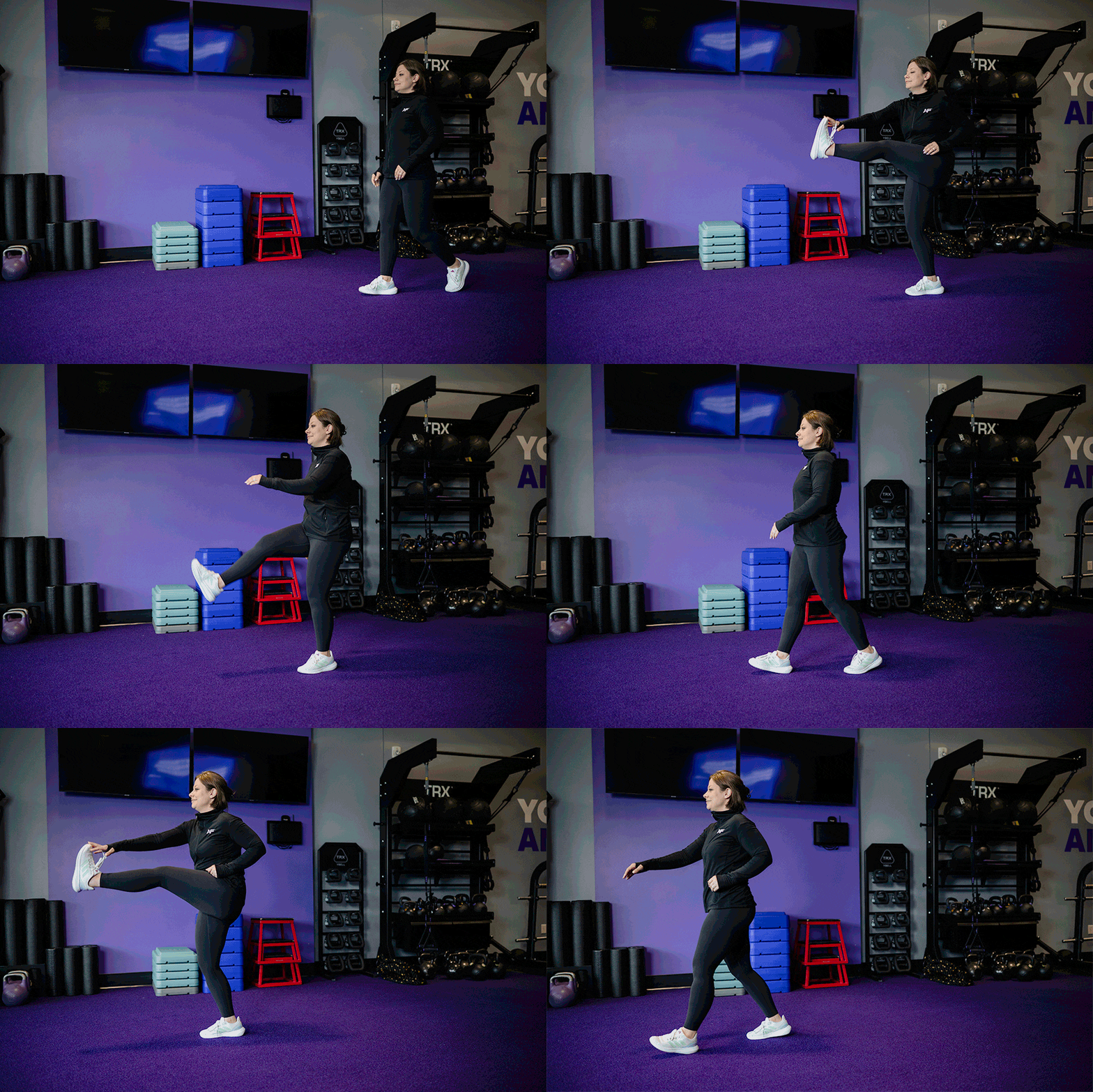
- Stand upright with your arms by your sides.
- Take a step forward, raising your leg straight up in front to hip height and your arms up in front to shoulder height.
- Step forward, raising the other leg up.
- Continue walking forward for 10-15 reps per side.
Side-lying open-book stretch
Muscles worked: Pecs, lats, obliques, erector spinae
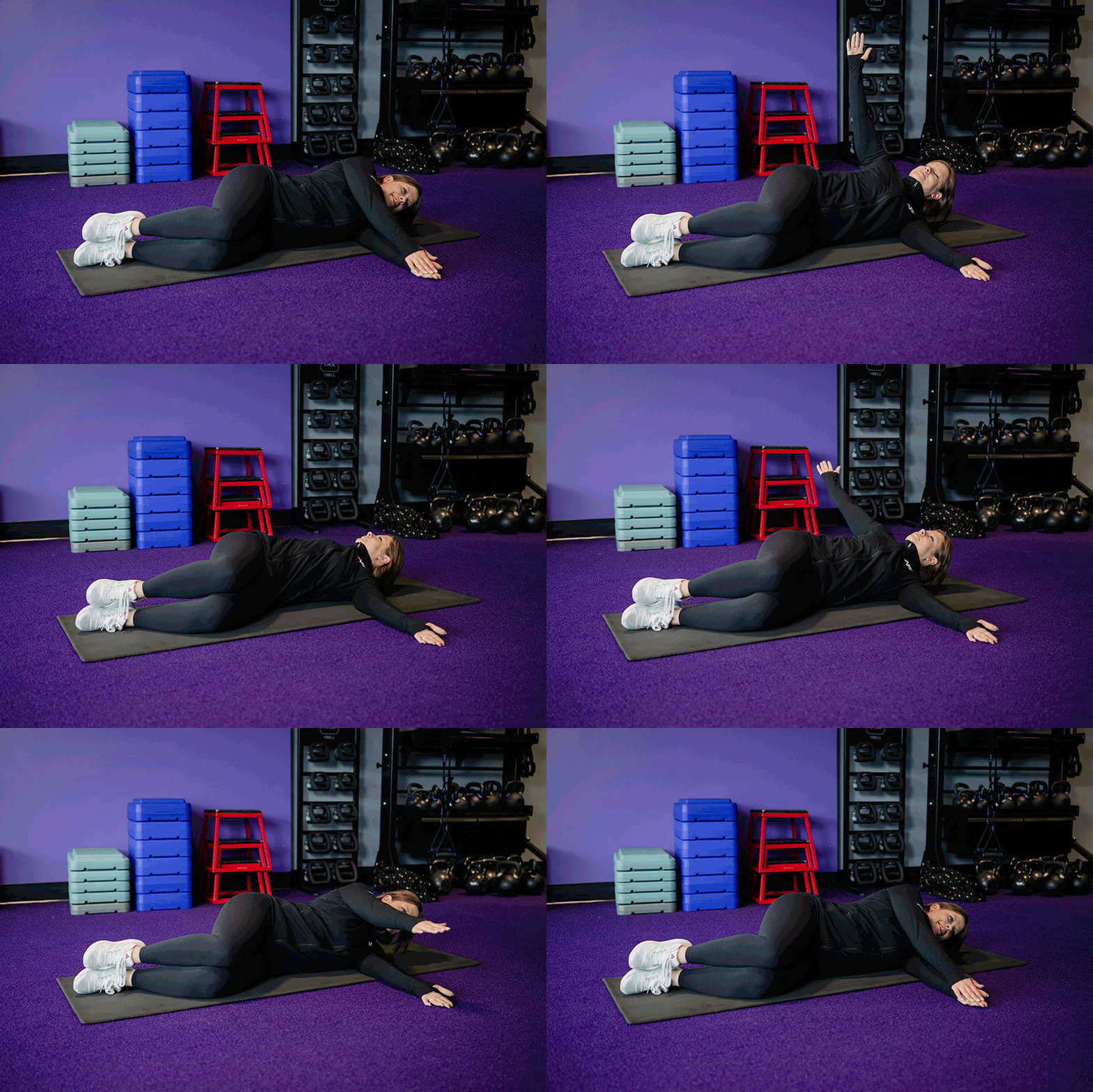
- Lie on your side with your arms together on the floor in front at shoulder height.
- Raise one arm straight up to a 90-degree angle and look up at your hand.
- Lower this arm straight down to the floor on the other side.
- Return this arm to the starting position.
- Perform 10-15 reps before switching to the other side.
Arm circles
Muscles worked: Biceps, triceps, lats, delts, traps, rotator cuff
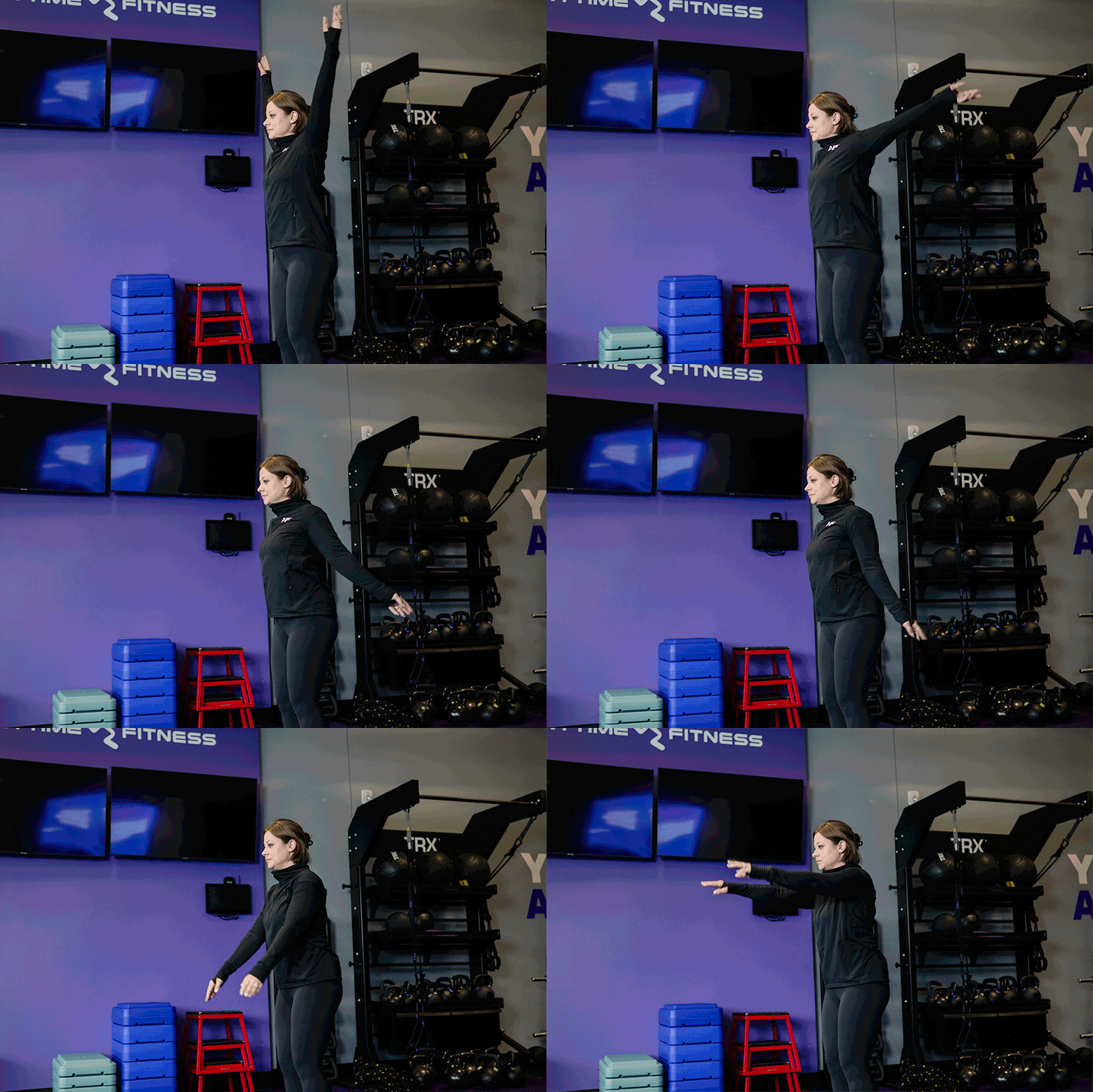
- Stand with feet about shoulder-width apart.
- Hold your arms out to the sides and move them in controlled forward circles for 10-15 reps.
- Slowly reverse direction and perform three to 10 backward circles.
8 static stretches to do after a workout
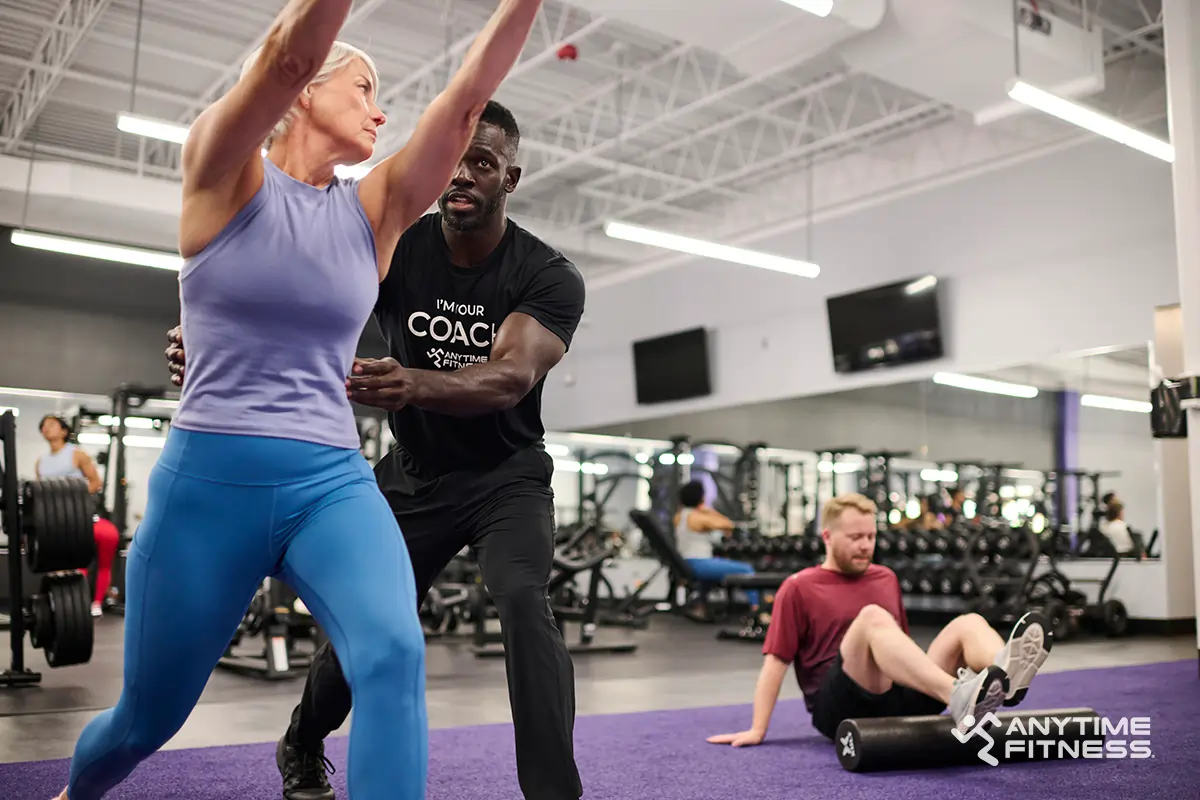
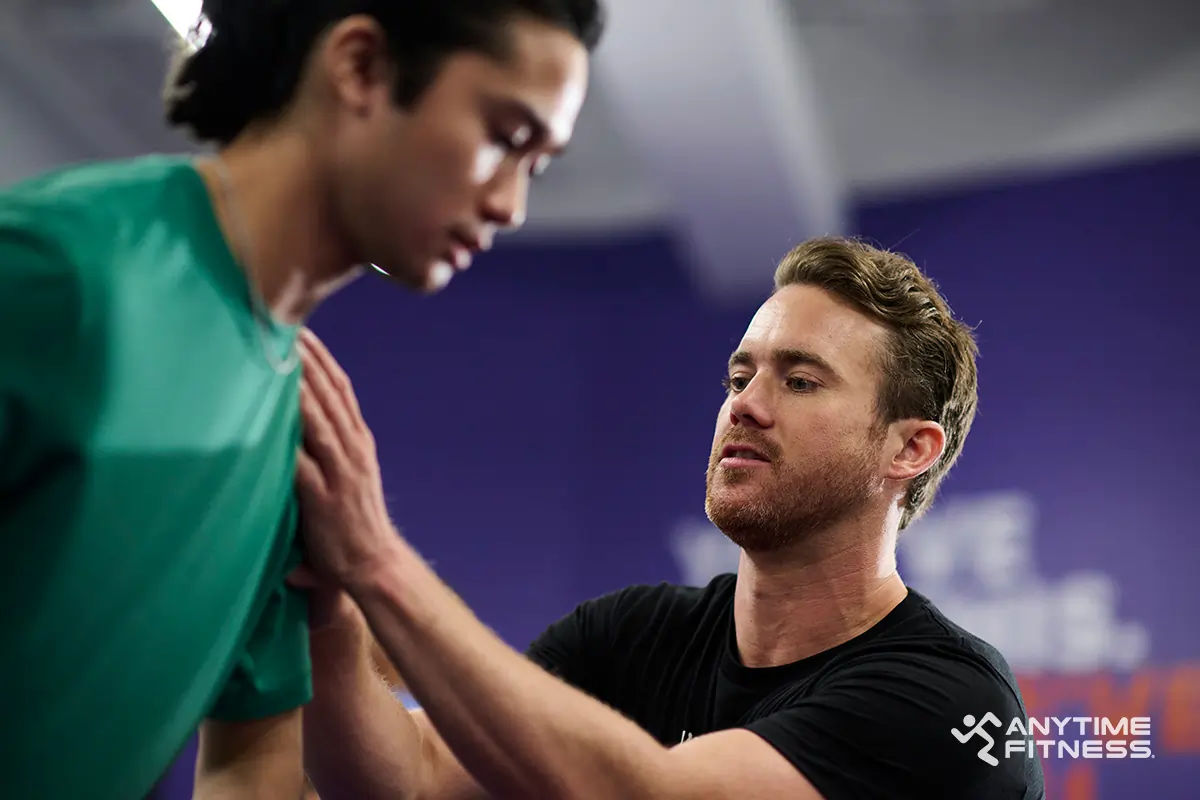
Important note: Not all stretches need to be done by everyone. For best results, pair up with a fitness professional such as a Coach at your Anytime Fitness location for a movement assessment to determine which specific muscle groups are overactive (tight) and should be stretched. A Coach can also help identify which muscle groups are lengthened (weak) and should be strengthened.
Static standing calf stretch
Muscles worked: Calves
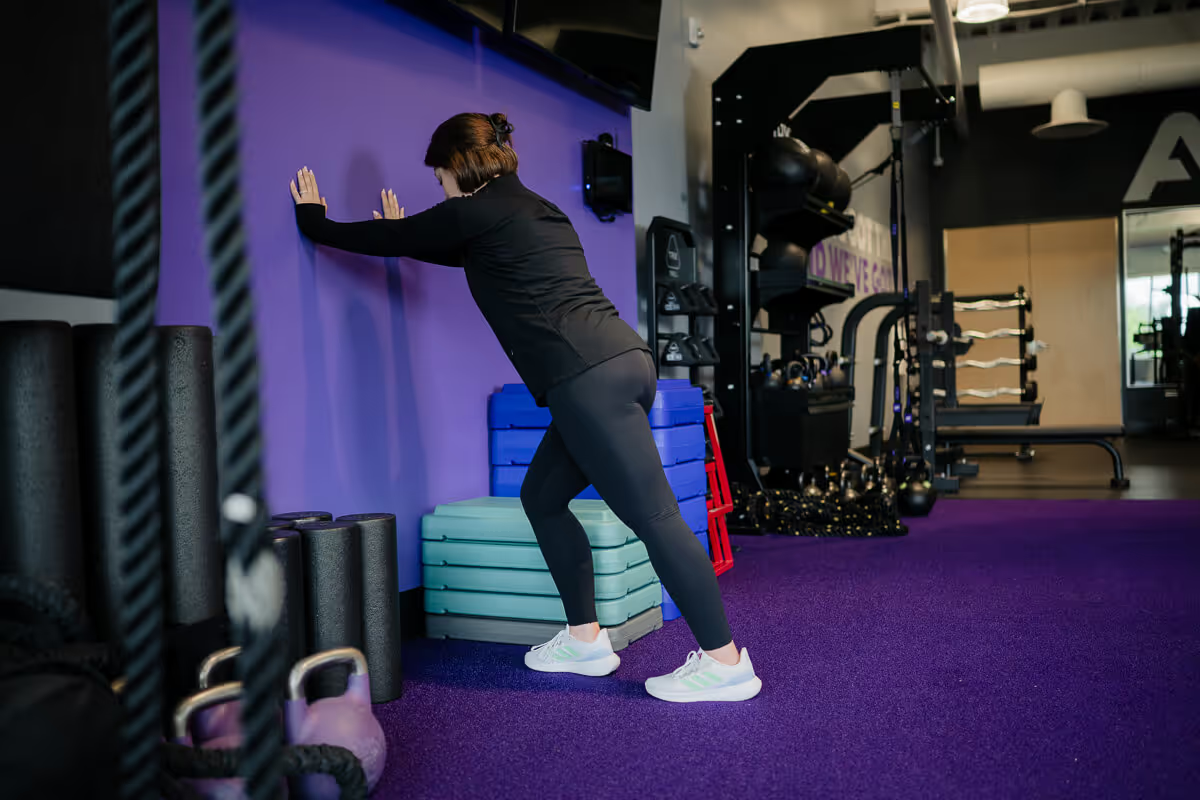
- Start in a staggered stance with your hands against a wall.
- Bend the front knee and extend the back knee.
- Keep your back foot flat on the floor.
- Lean your weight forward and push the back heel into the floor.
- Hold for 30 seconds on each side and repeat one to three times.
Banded lying hamstring stretch
Muscles worked: Hamstrings, glutes, calves
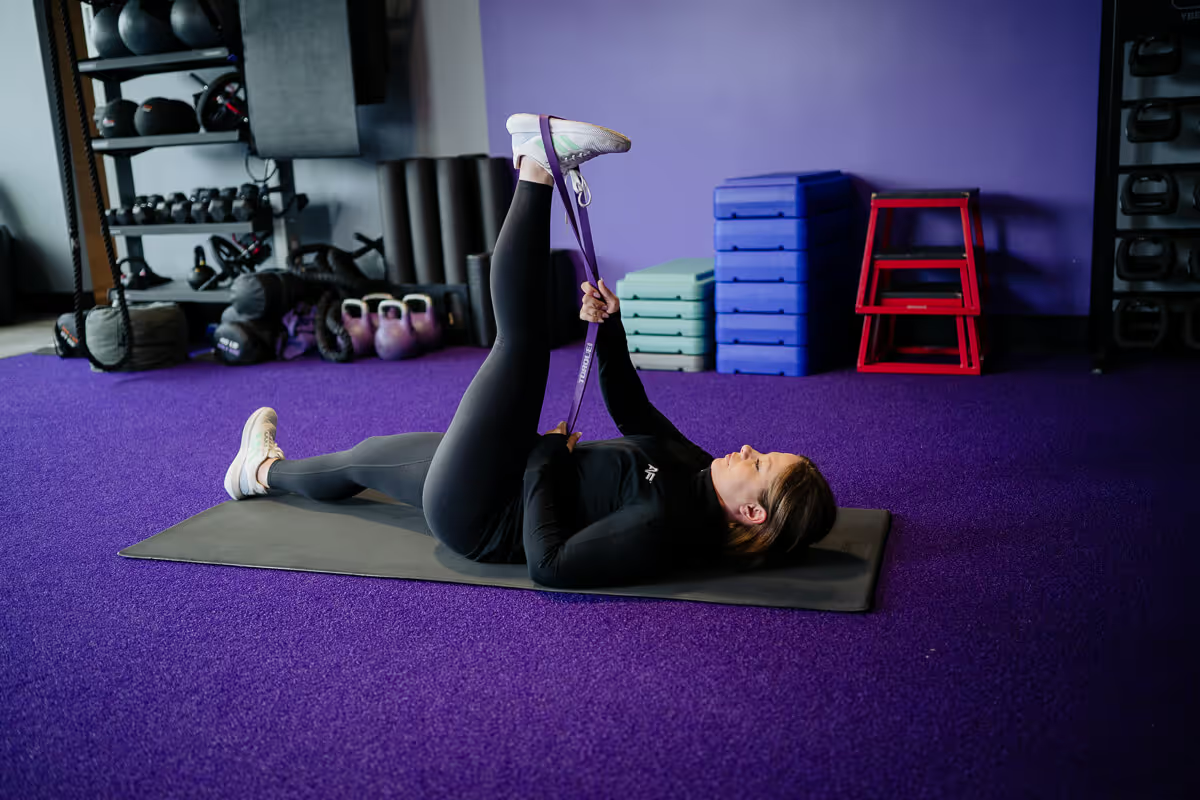
- Begin by looping a band around the arch of your foot.
- Grab the sides of the band and lay all the way back.
- Using the band gently pull your foot up and back toward your head until you feel a stretch.
- Be sure to keep both hips on the ground.
- Hold for 30 seconds on each side and repeat one to three times.
Static lying quad stretch
Muscles worked: Quads, hip flexors
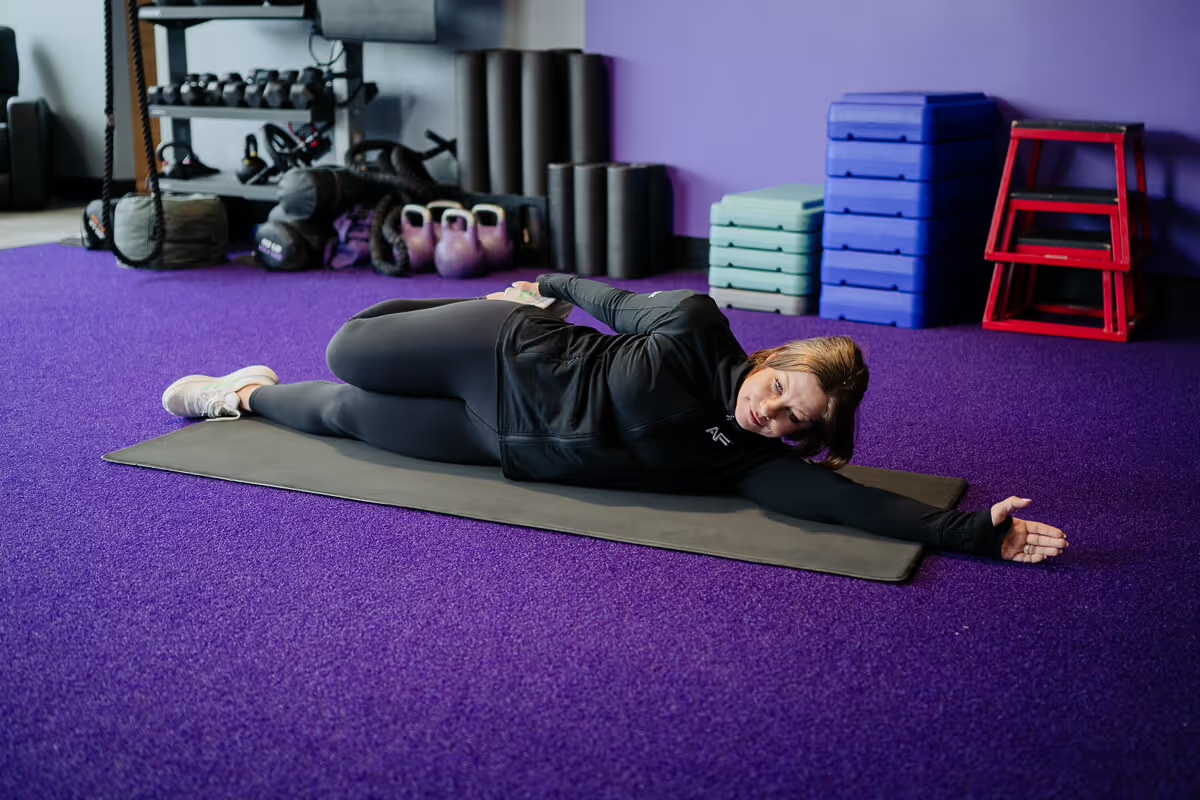
- Start by lying on your side.
- Bend the knee of your top leg as far as you are able, gently pulling with your hand.
- Maintain the position for 30 seconds.
- Return to the starting position.
- Do the stretch one to three times on each side.
Static seated “butterfly” (adductor) stretch
Muscles worked: Adductors, hip flexors
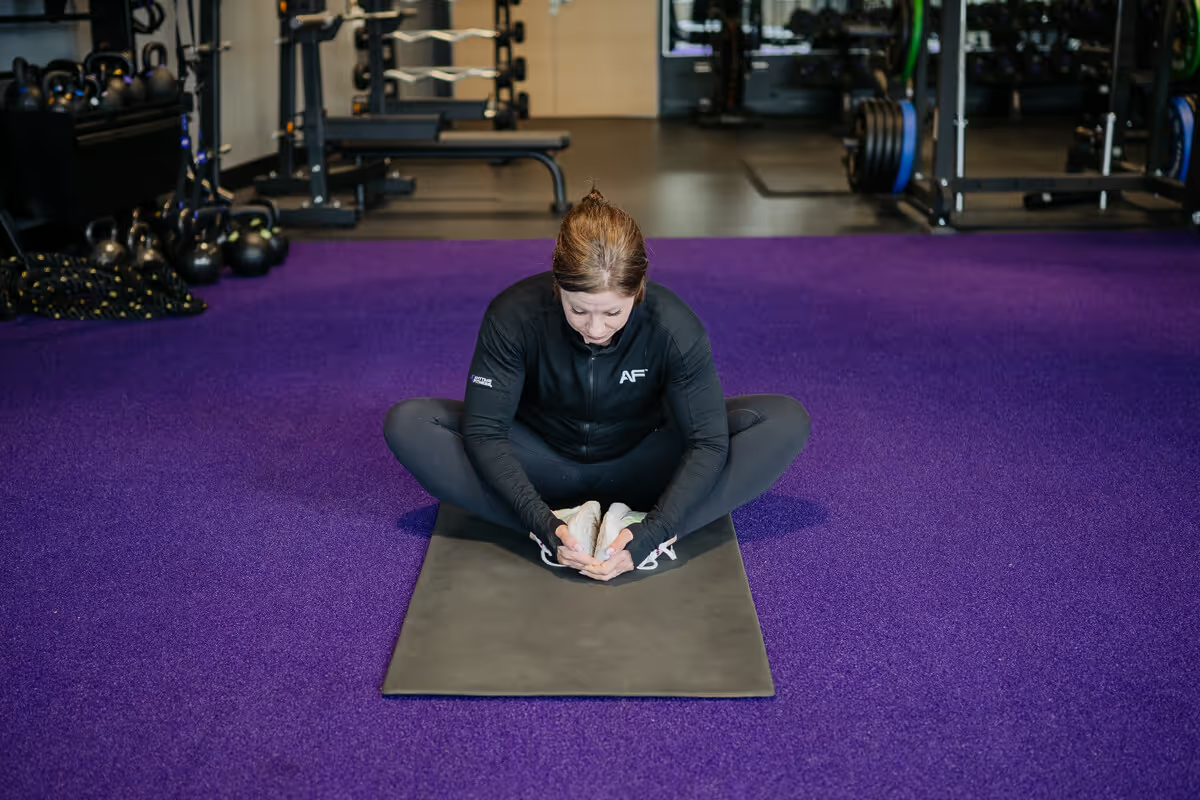
- Sit upright with your knees bent and the soles of your feet together.
- Place your hands on your ankles and lean forward.
- Place your elbows on the inside of your knees and gently push your knees out and down.
- Hold for 30 seconds and repeat one to three times.
Static kneeling hip flexor stretch
Muscles worked: Hip flexors, glutes
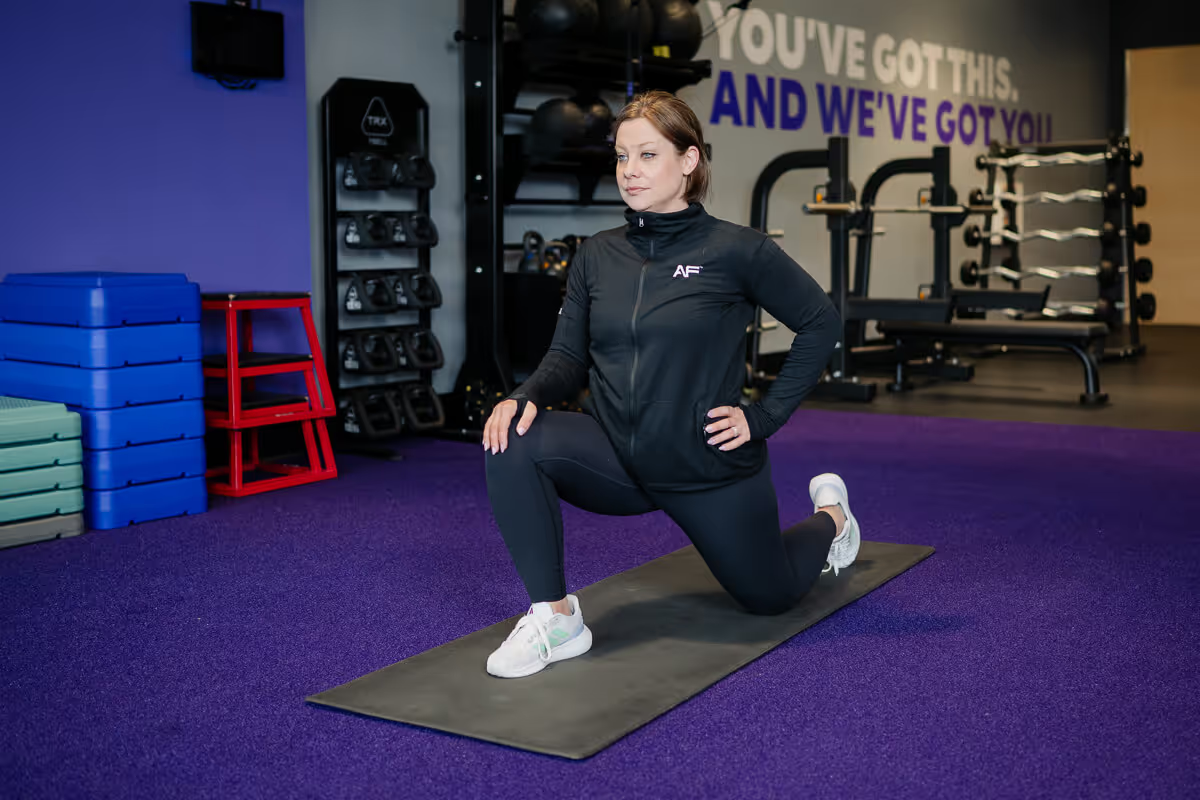
- Stand with your hips square with a step behind you.
- Step one foot onto the box into a split stance.
- Lower your back knee to the ground into a lunge position.
- Push your hip forward.
- Hold for 30 seconds on each side and repeat one to three times.
Static lying piriformis stretch
Muscles worked: Glutes, hip flexors

- Lie on your back with one leg out straight and the other bent at the knee.
- Raise your bent leg, placing your opposite hand on the knee and your other arm out straight.
- Gently pull your knee toward your opposite shoulder until you feel a comfortable stretch.
- Hold for 30 seconds on each side and repeat one to three times.
Static ball lat stretch
Muscles worked: Lats, traps, rhomboids
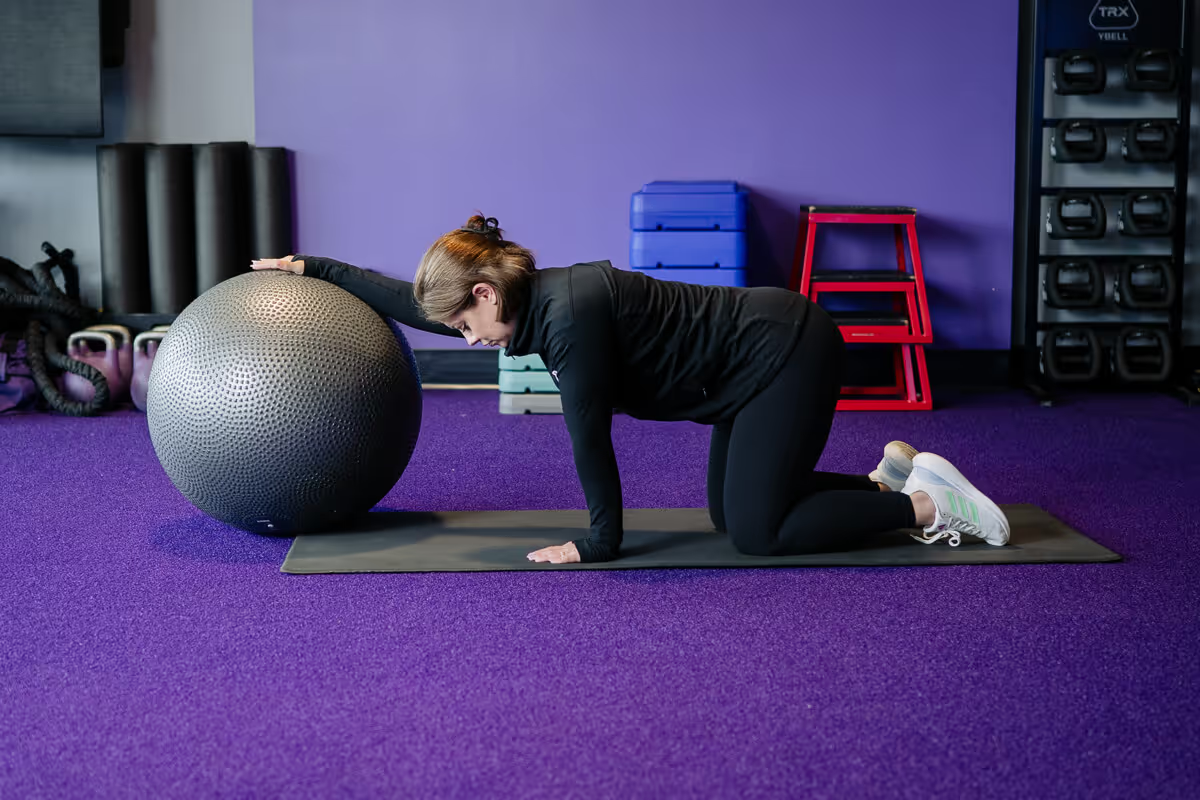
- Begin in a tabletop position with your knees under your hips and hands under your shoulders.
- Have the ball in front of you and slightly to the right side.
- Straighten one arm with your thumb up and place it on the top of the ball.
- Keeping your hips and shoulders square and your arm straight, bend forward until your torso and right arm are parallel to the floor and you feel a stretch along the right side of your torso.
- Control the stretch by gliding the ball away from your body.
- Hold for 30 seconds on each side and repeat one to three times.
Static standing chest stretch
Muscles worked: Pecs, delts
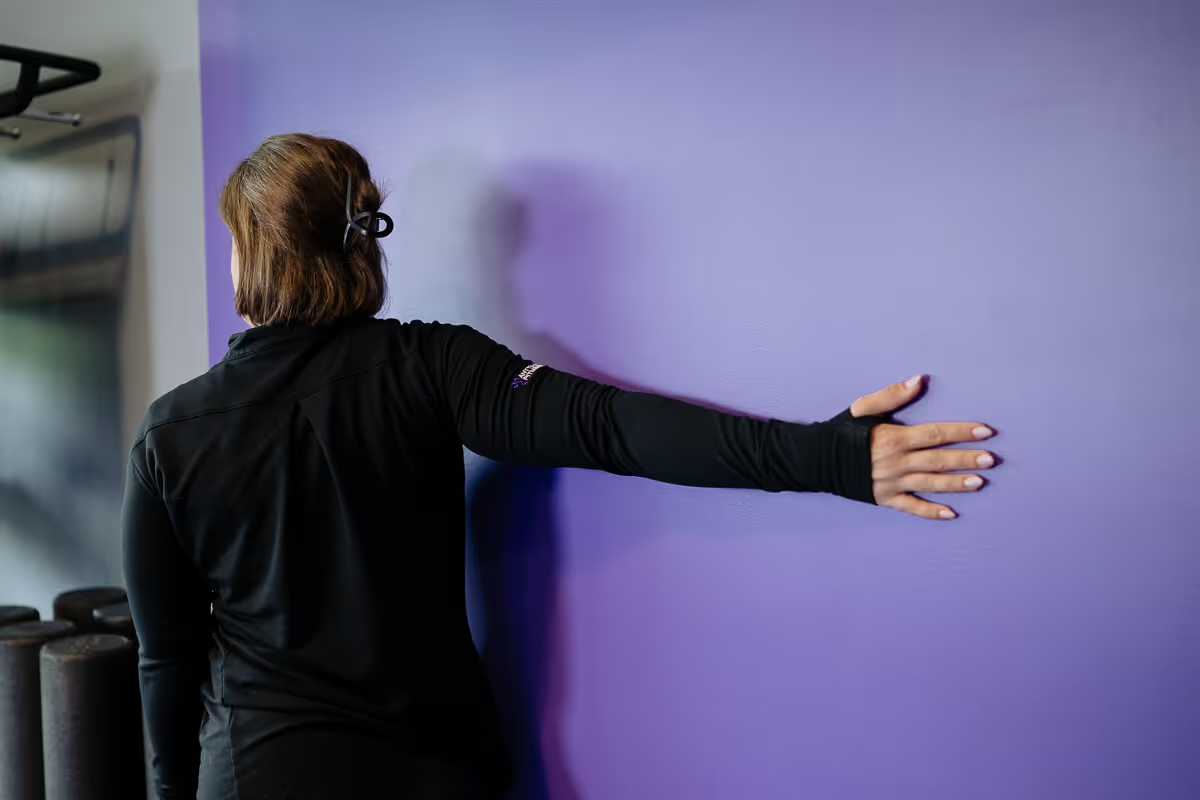
- Stand with your shoulder about a foot away from a wall.
- Reach your right arm back behind you and place your hand on the wall so that it’s in line with your shoulder.
- Take a step closer to the wall to feel a stretch through your right shoulder and chest.
- Then, slowly rotate your chest away from the wall to increase the stretch.
- Hold for 30 seconds on each side and repeat one to three times.
Pre- and post-workout stretches: A simple practice with life-long health benefits
Living a healthier, more active, and potentially longer life starts by adding warm-up and cooldown stretches into your workout routine, for just a few minutes per session. (Though longer sessions can be especially helpful, as we mentioned). Before you hit the gym, to recap, here are some of the key benefits of stretching that can improve your workouts (and your daily life):
- It improves muscle activation, making your workouts more effective.
- It helps prevent injuries by increasing flexibility and joint support.
- It increases your range of motion to help you move better (now and for years to come!).
- It helps calm your body and mind with a few minutes of movement.
The best way to integrate dynamic and static stretching into your wellness routine? Working with an AF Coach. Together, you’ll work to improve flexibility — for benefits today and in the years to come.
.jpeg)