

Did you know that your body produces GLP-1 naturally? In fact, certain lifestyle changes can increase your levels (albeit not to the same degree as medication) and lead to gradual, sustainable weight loss. As such, while medication is an effective strategy for some, it’s not the only option for weight loss and management.
Considering medication vs. natural GLP-1? Let’s talk about how to increase GLP-1 naturally so you can make an informed decision and create a plan that works for your goals.
You’ll learn:
- The science behind GLP-1 and how it affects weight loss
- How diet and exercise can increase GLP-1 naturally
- Which foods increase GLP-1
- Other fitness and lifestyle tips to increase GLP-1
Overview: What is GLP-1 and how does it affect weight loss?
GLP-1, or glucagon-like peptide-1, is a naturally occurring hormone that regulates your blood sugar levels and appetite. It works by stimulating insulin secretion while suppressing glucagon release, helping your body maintain stable blood sugar levels after eating. GLP-1 also sends hunger and fullness signals to your brain that help manage food intake.
These dual functions — balancing blood sugar and reducing appetite — make GLP-1 a key player in weight management.
[boxout]
Supplementing weight loss with GLP-1 medications
Medications like Ozempic and Mounjaro are becoming increasingly popular as weight loss aids because they mimic the effects of natural GLP-1 to regulate your appetite and help you feel fuller, longer.
Learn more about how these medications affect your body, plus how to support your GLP-1 weight loss journey through exercise and nutrition with these resources:
- Understanding GLP-1s and the Role They Play in Fitness
- How to Prevent GLP-1 Muscle Loss Through Exercise
- What to Eat on a GLP-1 Diet, According to a Dietitian
[/boxout]
How GLP-1 levels are affected by diet and exercise
GLP-1 is produced in our bodies naturally, but certain diet and lifestyle habits can influence the amount the body produces. While research is still emerging, the importance of regular exercise in GLP-1 production has been supported by decades of studies.
A 2021 review and a 2025 meta-analysis pointed to the fact that exercise — whether it’s one workout or a consistent routine — can boost levels of GLP-1 for people with type 2 diabetes (T2D). This supports the pairing of exercise with other interventions in the treatment of T2D and obesity.
Here’s what’s really interesting: These findings also extend beyond those with T2D. Stronger U’s Gianna Masi, RDN, adds, “Exercise is a key component in natural GLP-1 production. Regular physical activity, including both aerobic exercise and resistance training, increases GLP-1 and insulin sensitivity and post-meal GLP-1 response.”
In addition to exercise, recent studies have suggested that some natural dietary products like berberine and tea can influence your body’s natural GLP-1 levels (more on dietary supplements later!).
The science behind your body’s natural GLP-1 levels
Before we cover how to increase GLP-1 levels through your diet, let’s look at how GLP-1 works in your body. Understanding the natural processes behind weight management and metabolism sets you up for greater success in the long term. (Buckle up — it’s about to get scientific!)
It all starts in the small intestine with specialized “sensor cells” called enteroendocrine cells. These cells line your intestinal wall and act like tiny hormone factories. When you eat, they sense nutrients flowing by and release hormones in response.
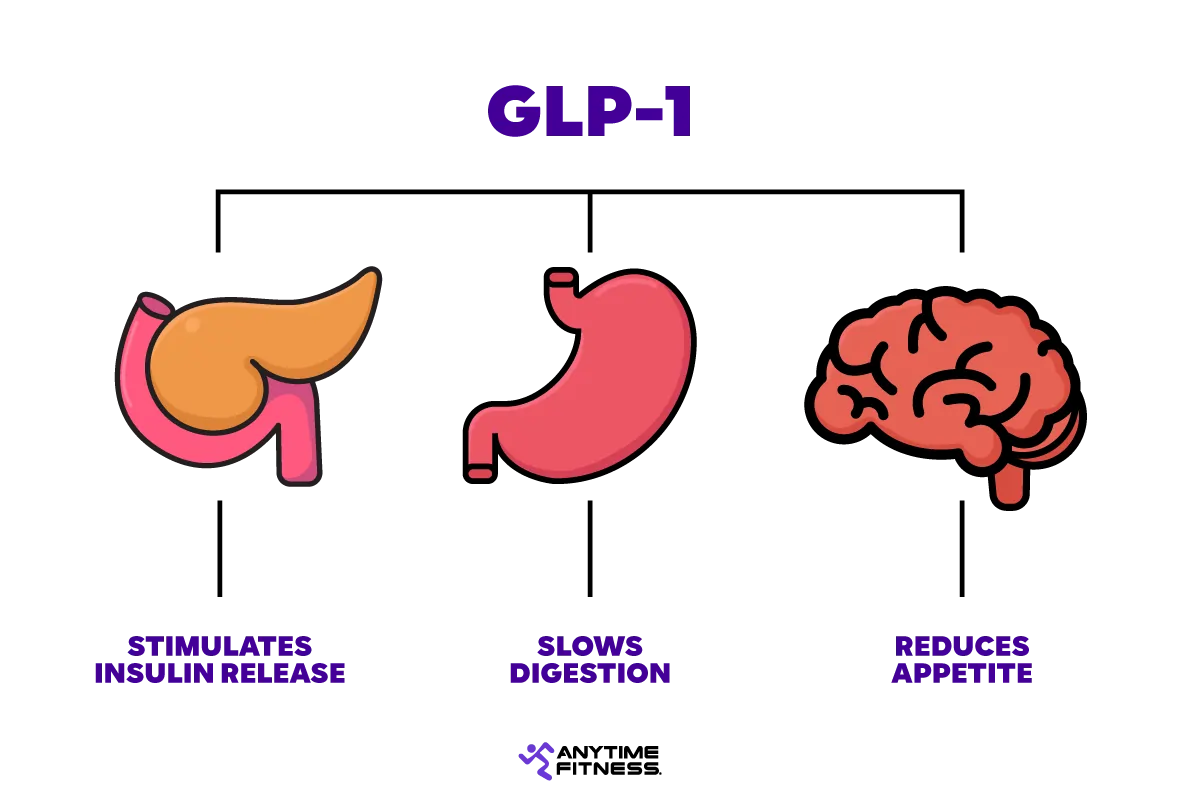
Some of these sensor cells are L-cells — their job is to produce GLP-1 when they detect macronutrients such as protein, fats, carbohydrates, or fiber in your intestine. Once the GLP-1 is released, it travels through your bloodstream to several organs and triggers specific actions:
- Pancreas: Stimulates insulin release
- Brain: Reduces appetite
- Stomach: Slows digestion
Supporting these L-cells through proper nutrition can directly benefit your body's natural GLP-1 production capacity, especially after meals.
The relationship between blood sugar, glucose tolerance, and GLP-1
In addition to the presence of macronutrients and fiber in your digestive system, your body’s natural GLP-1 levels are also intricately connected to your glucose tolerance (aka your body’s ability to regulate blood sugar levels after eating carbs).
People with better glucose tolerance tend to have higher GLP-1 levels and, therefore, more appetite control. On the other hand, poor glucose tolerance reduces the effectiveness of GLP-1. (This relationship explains why GLP-1-based interventions are particularly effective for people with prediabetes or early T2D.)
Exercise also helps the body use glucose more efficiently, which is similar to the effect of GLP-1.
How to increase GLP-1 naturally (without medication)
GLP-1 medications can be an effective weight-loss strategy for more profound impact, but they’re not the only option. A natural route may be more helpful for some, especially for these common reasons:
- Cost: GLP-1 medications can cost up to $500-$1,500 monthly without insurance coverage.
- Side effects: GLP-1 agonists commonly cause nausea (20%-44% of users), as well as vomiting, diarrhea, and constipation.
- Sustainability: Natural methods promote long-term lifestyle changes that support overall metabolic health beyond GLP-1 control.
Consider the following strategies and lifestyle changes to increase your GLP-1 levels naturally.
Note: Current research on how diet and lifestyle can influence natural GLP-1 is still developing. At this stage, nutrition should be considered an important foundation for overall health, with ongoing research needed to confirm specific GLP-1–related impacts.
Which foods increase GLP-1 naturally?
.webp)
Research demonstrates that several food categories can effectively stimulate GLP-1 release, but not at the same rate as medications. The good news is that these food categories are all beneficial for overall health as well as weight loss, so you can’t go wrong by adding them to your diet whether you’re taking a GLP-1 medication or not.
These foods have been suggested to stimulate natural GLP-1 release.
Protein-rich foods
Most high-protein meals stimulate GLP-1 release. Both animal- and plant-based protein sources can have this effect, but there’s currently no conclusive evidence that one is better than the other for stimulating GLP-1 release. The more important factor for protein is that the meal includes a complete, high-quality protein like lean meats, fish, eggs, tofu, tempeh, or whey.
While there isn’t a specific amount known to trigger GLP-1 secretion, protein intake is beneficial for overall health, satiety, and muscle protein synthesis — aim for 25-30 grams of protein at meal times.
Fiber-rich foods
Soluble fiber from oats, legumes, and vegetables promotes GLP-1 release. Research has not clearly defined how many grams of soluble fiber are needed to reliably boost GLP-1, but one report showed that 20 grams per day of oligofructose (a prebiotic subgroup of inulin found in plants) significantly elevated GLP-1 after a meal.
Healthy fats
Monounsaturated fats (think: olive oil, avocados, and nuts) and Omega-3 fatty acids stimulate GLP-1 release through fatty acid receptors on enteroendocrine cells. While early studies are promising, more human research is needed to determine how much of these fats meaningfully influences GLP-1 levels.
Fermented foods
Yogurt, kefir, and fermented vegetables may enhance GLP-1 levels through improved gut microbiome diversity and metabolite production (aka creating molecules that aid in energy production and cellular communication). Eating 1 cup daily of yogurt with live cultures has been shown to increase fasting GLP-1 compared to calorie restriction. (Expect modest effects, not medication-level changes.)
[boxout]
GLP-1s and gut health
Gut health is another factor that influences your natural GLP-1 levels. According to Masi, “There is a relationship between gut health and GLP-1 levels. The microbiome (gut) influences GLP-1 release; beneficial gut bacteria produce metabolites that talk to your digestive cells, telling them to stimulate GLP-1 release. Diverse, ‘healthy’ microbiomes correlate with higher GLP-1 release.”
On the flip side, poor gut health increases systemic inflammation, which can impair GLP-1 signalling and receptor sensitivity.
[/boxout]
Can dietary supplements increase GLP-1 levels?
In addition to dietary adjustments, certain supplements have also been shown to increase your body’s natural GLP-1 levels temporarily. Popular options include:
Berberine
Berberine is known to increase and activate the incretin hormone glucagon-like peptide-1 (GLP-1). Plus, a study on 116 people with diabetes showed that consumption of 1 gram of berberine per day for three months can reduce fasting blood sugar levels by 20%. (Consult your doctor before taking berberine to avoid complications or contraindications.)
Green tea extract
Green tea may modestly support GLP-1 levels while providing additional metabolic benefits.
Probiotics
Probiotic foods help increase GLP-1 production by improving gut microbiome composition (specifically, supplements that include Lactobacillus and Bifidobacterium species).
Whey protein
Whey protein stimulates GLP-1 production, which has glucose-lowering effects.
Yerba mate
Research on yerba mate is limited but emerging — some studies suggest it may enhance post-meal GLP-1 response.
[boxout]
Bonus: The 30-30-30 rule
The 30-30-30 rule is a common strategy for people looking to optimize their protein intake and meal timing for weight management. It stands for:
- Eat 30 grams of protein at breakfast.
- Eat breakfast within 30 minutes of waking up.
- Follow your morning meal with 30 minutes of exercise.
Masi notes, “The 30-30-30 rule has indirect connections to GLP-1 levels, because these behaviors contribute positively to managing body weight and body composition.” Consuming 30 grams of protein upon waking stimulates GLP-1 release, which helps regulate appetite throughout the day and improves insulin sensitivity. The 30-minute workout enhances insulin sensitivity and may improve GLP-1 receptor function.
However, Masi says the actual evidence is limited: “While individual components (protein intake and exercise) have GLP-1 benefits, the specific 30-30-30 protocol lacks dedicated GLP-1 research.” Even so, many people find this strategy to be an effective way to build momentum for the day, keeping them on the right track to achieving their long-term body composition goals.
[/boxout]
Other lifestyle tips to increase GLP-1 naturally
In general, living a healthy lifestyle can help with weight management and naturally increase your GLP-1 levels.
Masi notes, “Sustainable weight management isn’t about restriction; it’s about optimizing your body's natural hunger and satiety hormones through evidence-based nutrition and lifestyle practices … the goal should be to create lasting habits that support your body's regulatory systems with or without external support through medications.”
Masi offers these key guidelines for supporting your body’s GLP-1 response.
Sleep: Sleep deprivation reduces GLP-1 levels and impairs glucose tolerance. Aim for eight to nine hours nightly with consistent sleep-wake cycles.
Related: Why Sleep Is a Vital Part of Your Fitness Goals
Meal timing: Regular meal patterns with four-hour intervals between meals optimize GLP-1 release patterns.
Regular exercise: Aim for 150 minutes of moderate-intensity exercise weekly to meet the Physical Activity Guidelines for Americans and support weight regulation.
Increase natural GLP-1 to create a healthier you
Overall, it’s important to remember that we can’t increase our natural GLP-1 hormones to the extent that the medications can, but eating well and exercising can support natural GLP-1 hormones and drive weight-loss results (or even help reduce dosage if you’re on a medication). At the end of the day, choosing the method that works best for you is the most important part of your weight-loss journey.
Masi puts it this way: “Some individuals may choose medication, and others may not. In either scenario, it’s important to prioritize moving your body through exercise and resistance training, plan healthy meals, and give yourself time for rest and social connection. All of these factors will support your mind, body, and spirit in order to live a life that is healthy and fulfilling.”
More weight loss resources for you
- A Realistic 4-Week Weight-Loss Workout Plan for Beginners
- How to Read Nutrition Labels for Weight Loss: 5 Tips From a Nutrition Coach
- The Nutrition and Workout Plan to Get Strength for Life
Learn how to support your body and become a healthier, stronger version of you through personalized training, nutrition, and recovery from our expert Coaches. Find a gym to get started.


.jpeg)