

Tight hips got you down (or feeling downright painful)? No more. Enter: hip mobility exercises. Hip mobility is often overlooked, but it affects every part of your life, from your performance in the gym to your ability to do everyday activities. So, let’s talk about it! In this blog, we’re covering:
- The importance of hip mobility
- The emotional connection to the hips
- 5 signs of poor hip mobility and how to assess it
- 14 hip mobility exercises to add to your gym routine
Why does hip mobility matter?
Everything in our bodies is connected, so when there are weaknesses or imbalances in one area, the effects can often be felt throughout the entire body. The ability to move in all directions around your hips is important for daily living (and even longevity), as well as for preventing future injuries or conditions and maximizing your results in the gym.
Let’s look at lower back pain as an example. The highest incidence of reported low back pain happens between ages 30 and 40, with overall rates increasing each decade after. In short: Lower back pain tends to begin in the 30s and continues throughout the lifespan. Plus, research has shown a strong correlation between the hips and lower back when it comes to mobility and function. (That means it’s never too early to start strengthening your back and hips!)
While not all cases of lower back pain are caused by hip mobility issues, implementing hip exercises can help improve overall physical function. (More on this later!)
The emotional connection to tight hip flexors
In addition to its physical benefits, hip mobility may also be connected to emotional regulation for some people. Have you ever heard the phrase, “Trauma is stored in the hips?” While scientific evidence is lacking, some people have reported strong feelings of emotional release while doing activities like hip mobility stretches or yoga.
Research has also shown that physical activity is an effective strategy for lowering cortisol (stress) levels. Plus, a 2025 study found that regular stretching improved mindfulness and created a calming effect in college-aged students.
5 signs of poor hip mobility to watch for
Poor hip mobility can affect anyone, but it’s more common in people with a sedentary lifestyle. (Think: Jobs with lots of sitting.) While seated, the hip flexors are in a shortened position. Over time, they adapt by maintaining this shortened or “tight” position — that’s why hip weakness or immobility is often described as “tight hips.”
Signs of reduced hip mobility include:
- Tightness in the hips
- Difficulty with movement
- Soreness or pain in the hips or lower back
- Limpness
- Improper form or movement patterns during lifts
Notice any of these signs? It’s time to integrate stretching and strengthening exercises into your routine to help improve mobility.
How to assess hip mobility
If you’re not sure whether you’re feeling tight hip flexors or a different issue, a movement assessment can help identify muscle imbalances or over- and underactive muscles.
At Anytime Fitness, a movement assessment is part of your free fitness consultation with a Coach. During this session, your Coach will walk you through different exercises and motions to analyze your movement patterns.
For example: Your hip flexors could be overactive if your back arches or you have an excessive forward lean in the upper body during a squat. Since movement patterns are complex, there could be other factors or overactive muscles causing these movement patterns. Your Coach will work with you to identify your unique patterns and develop a training plan fit for your needs and goals.
Another common assessment that you can do yourself if the Thomas Test. Here’s how it works:
- Lie on the edge of a bench with one leg hanging off the side. Grab the opposite leg behind the knee and gently pull it in close to your chest.
- You should be able to pull your knee to your chest past 90-degree flexion (to about 120 degrees) without pain or discomfort. Your extended leg should not rise off the bench. If it does, that’s a sign of tight hips.
- Your extended leg should be able to bend at the knee at a 90-degree angle. If it can’t, that’s an indication of tight quads.
- If your extended leg has to rotate open to maintain contact with the bench, it’s a sign that the muscles on the outside of your hip are tight.
- Perform this test on one side, then switch to the other side, as there are often imbalances on either side of the body.
14 hip mobility exercises to try in your warm-up
A Coach can help you create a targeted training plan built for your body, but in the meantime, we’re sharing some of our favorite hip mobility exercises. This list of hip movements is broken down into four types of exercises: self-myofascial release (SMR), static stretches, dynamic stretches, and hip strengthening exercises. Try all or some of them before your next workout!
The ideal order for warm-up stretching is:
- SMR: One to three sets, hold for 30 seconds per area.
- Static stretching: One to three sets, hold each stretch for 30 seconds.
- Dynamic stretching: One set of three to 10 reps, perform three to 10 exercises.
SMR comes first because it relaxes your hip flexors and interrupts the mind-muscle connection that’s causing tension. Static stretching comes before dynamic stretching to optimize your joint range of motion.
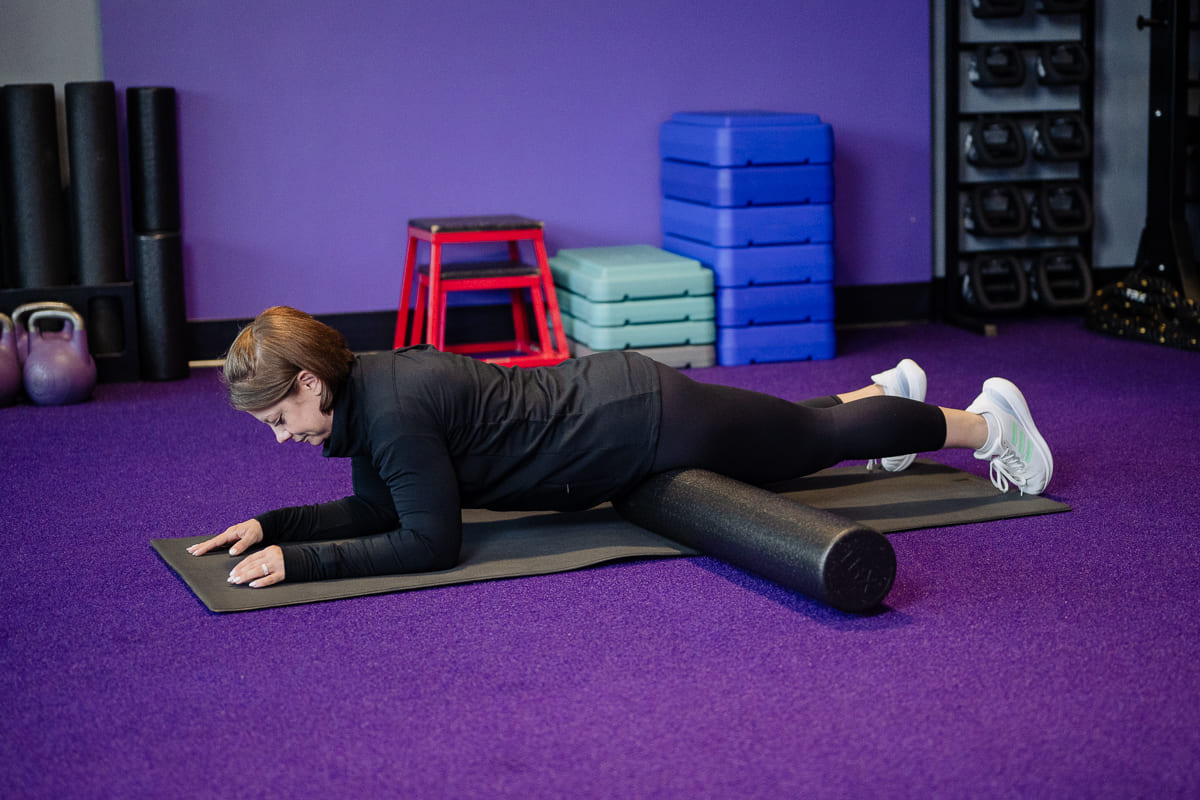
SMR: Hip stretch
How to:
- Rest on your forearms and lie face down with a roller under your hip. Keep your legs straight with one foot off the floor.
- Lean to the side of your raised leg and roll up and down from the top of your hip to your mid-quad.
Perform one to three sets on each side, rolling for 30 seconds at a time.
Pro tip: Go as slow as you can, focusing on tender areas. Breathe deeply and roll for up to 90 seconds if you need more time to release tension. For a more targeted and intense release, try a lacrosse or massage ball.
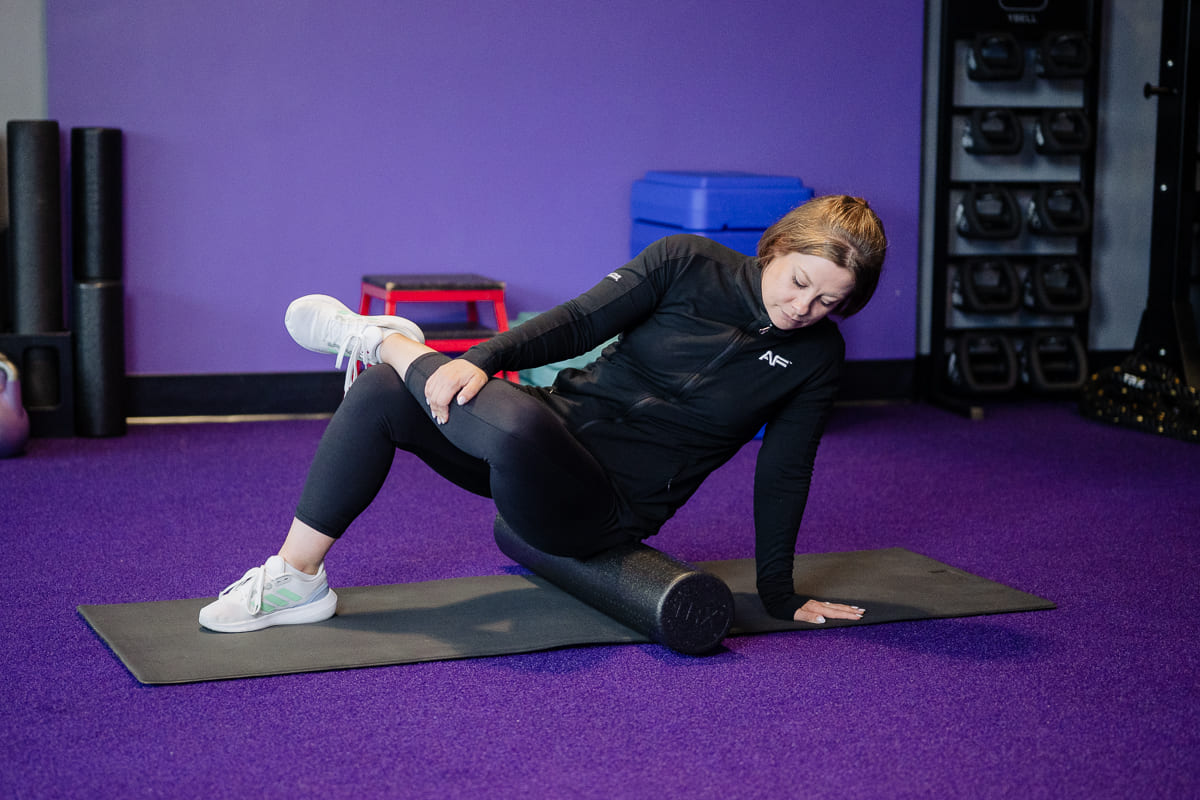
SMR: Hip abductor stretch
How to:
- Place a foam roller perpendicular to your body, underneath the soft tissue area between the hip and pelvis.
- Rotate your hip and pelvis on top of the roller while it’s stationary.
- Cross one leg over the opposite knee.
- Rotate slowly over the roller to hit the soft tissues of the lateral hip while mobilizing your hips and pelvis.
Perform one to three sets, rolling for 30 seconds at a time.
Pro tip: Stabilize your core as you move on top of the foam roller. Notice how your tissues feel and respond as you rotate. Do they feel tight or relaxed? Is there any pain? Continue rolling or stop as necessary.
Static: Kneeling stretch for hip flexors
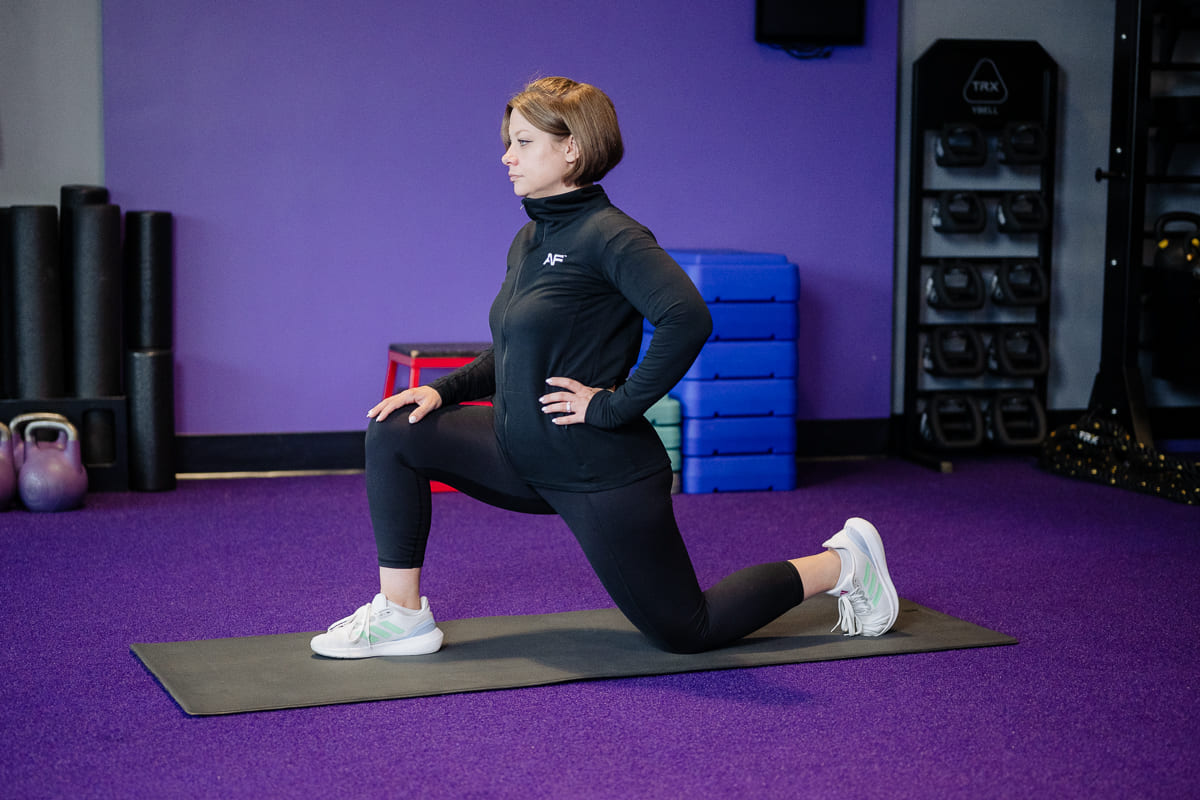
How to:
- Place one knee on the floor with the other foot forward in a lunge. Gently place your hands on your forward knee.
- Lean your weight slightly forward into your front foot, lowering your hip toward the floor.
- Keep the front foot flat and draw your navel toward your spine to intensify the stretch.
Perform one to three sets on each side, holding for 30 seconds each.
Pro tip: Opt for the lying version of this stretch if you experience any discomfort in the kneeling position.
Modification: Static lying hip flexor stretch
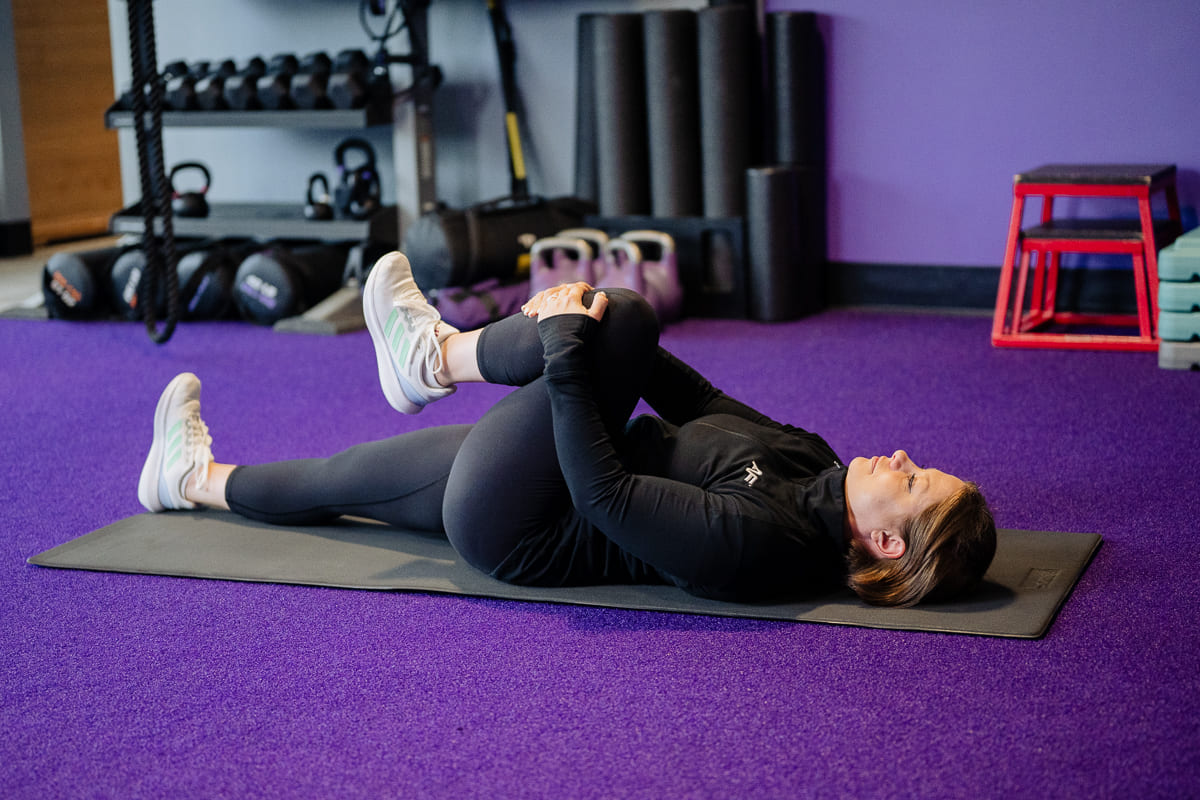
How to:
- Lie on the floor with one leg extended, hugging your other knee to your body.
- Grab the opposite leg behind the knee and gently pull it in close to your chest.
- Perform on one side, then switch to the other side.
Perform one to three sets on each side, holding for 30 seconds each.
Static: Lying hip internal rotation stretch
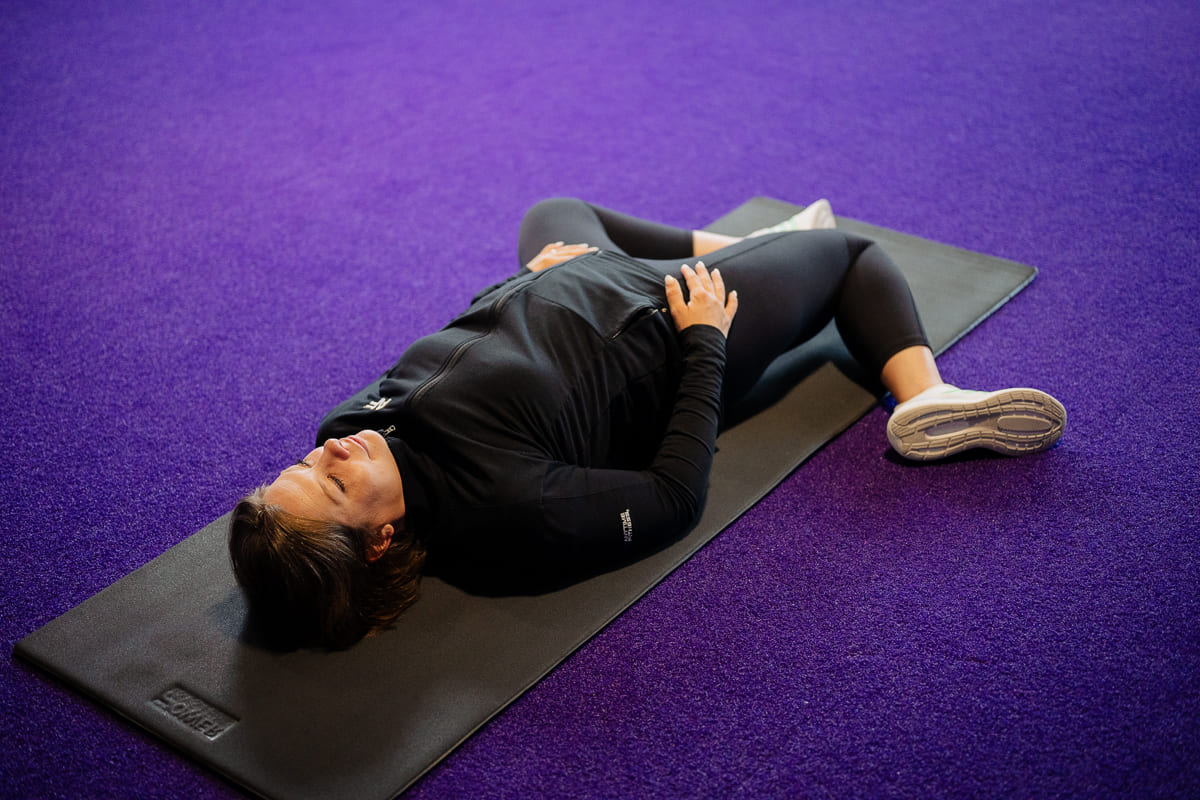
How to:
- Lie on the floor with your hands behind your head. Place your feet in a wide stance and bend your knees at 90 degrees.
- Lower both knees to one side, keeping them bent at 90 degrees.
- Switch directions and stretch to the other side.
Perform one to three sets on each side, holding for 30 seconds each.
Pro tip: To increase the stretch, place your lower leg’s foot onto the opposite knee. Allow your muscles to loosen and relax during this stretch as you feel gravity pulling your knees into the floor.
Dynamic: Standing hip circles
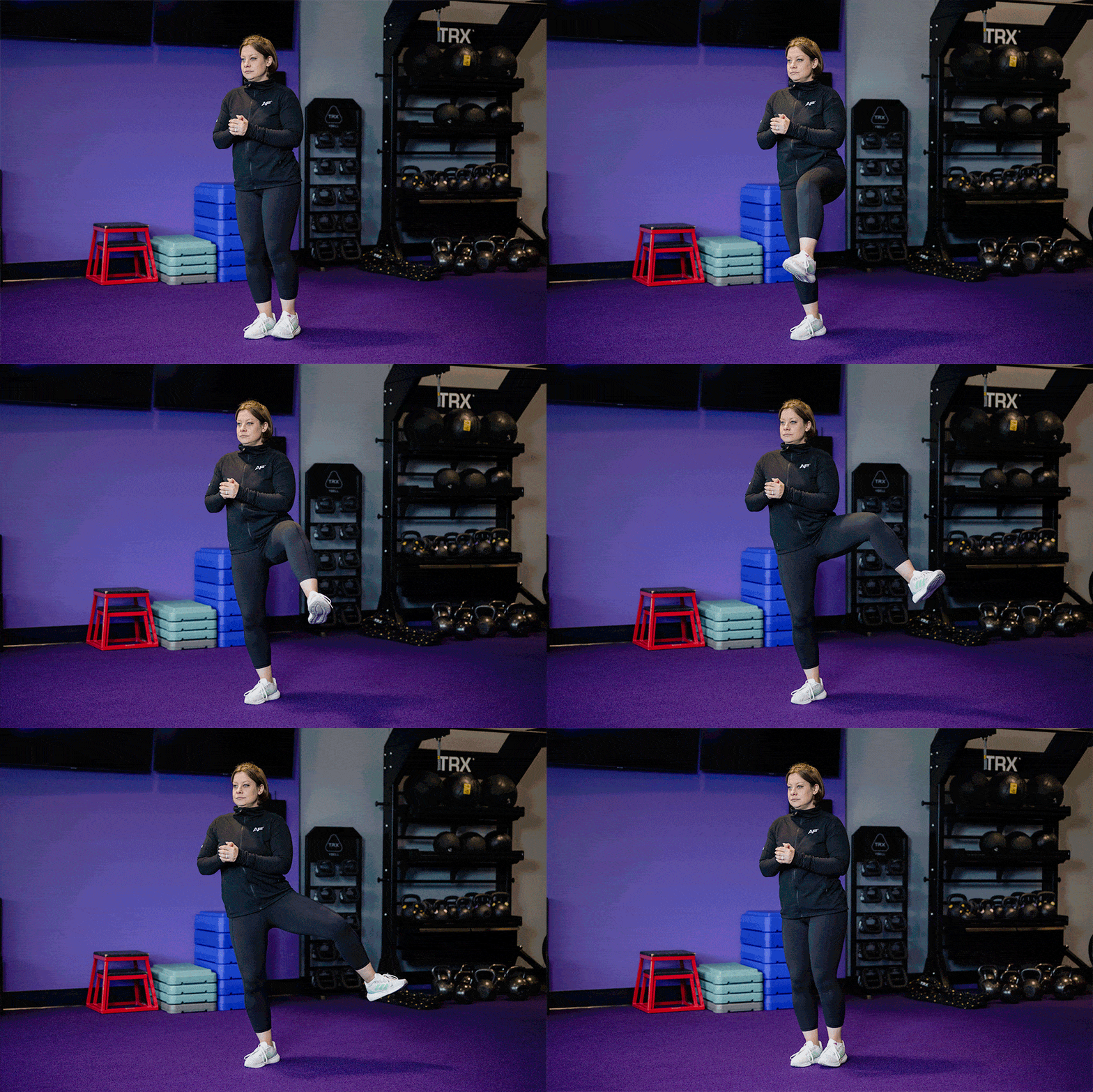
How to:
- Start in a hip-width stance.
- Raise one knee at a 90-degree angle and pull the leg to your side.
- Bring the same leg out in front of your body, then place it back in the starting position.
- Alternate legs between each rep.
Perform 1 set of 3-10 reps per side.
Pro tip: Perform reps in each direction (forward and backward). Keep your core braced and use your hip and leg muscles to move your leg, rather than momentum or swinging.
Dynamic: Seated hip mobility straddle stretch
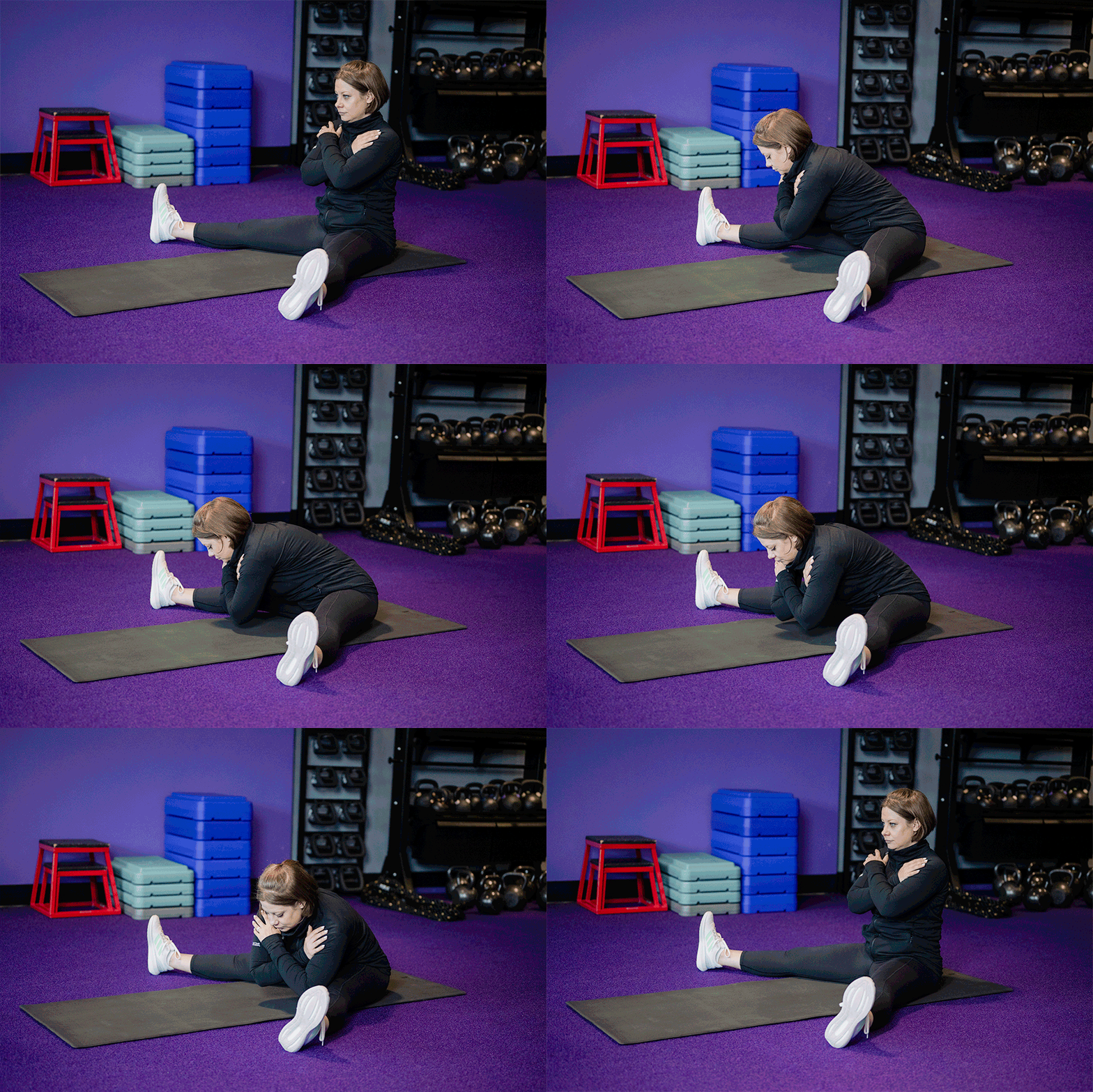
How to:
- Start in a seated split position with your toes pointed upward.
- Cross your arms across your chest.
- Maintain a tall spine while you hinge and circle your torso from the hips.
Perform 1 set of 3-10 reps per side.
Pro tip: Alternate directions with each rep and keep your core braced throughout the movement.
Dynamic: Spiderman hip hinge with rotation
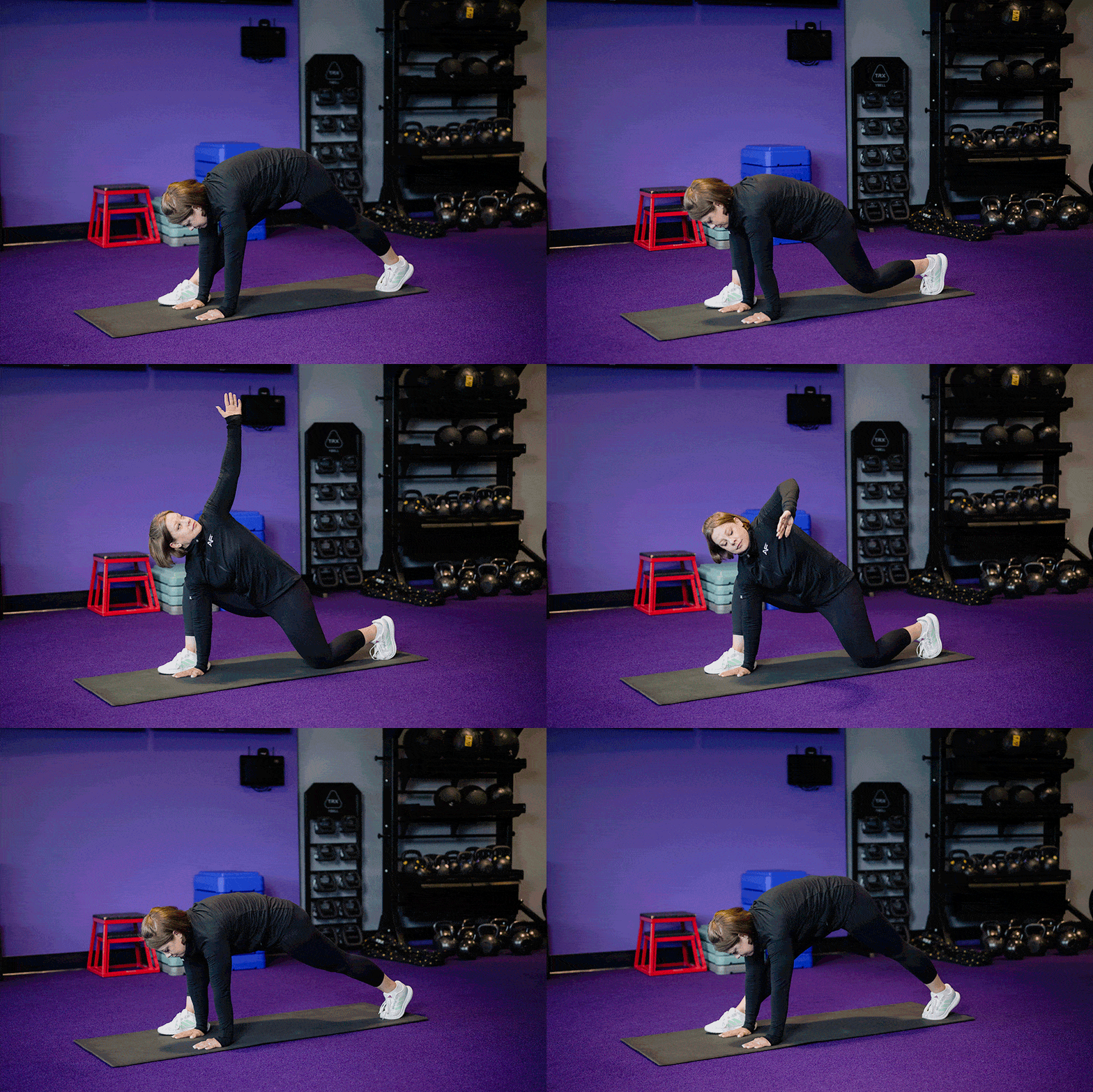
How to:
- Step back into a low lunge position with both palms flat on the floor. Keep them inside your extended knee.
- Push your hip backward to extend both legs straight.
- Come back down to a low lunge and place your back knee on the ground.
- Lift the arm opposite of your extended knee off the ground and rotate your body. Repeat.
Perform 1 set of 3-10 reps per side. Complete all reps on one side before switching to the other.
Pro tip: Keep your chest tall and open and spine extended throughout the movement.
Dynamic: Tabletop hip abduction (fire hydrants)
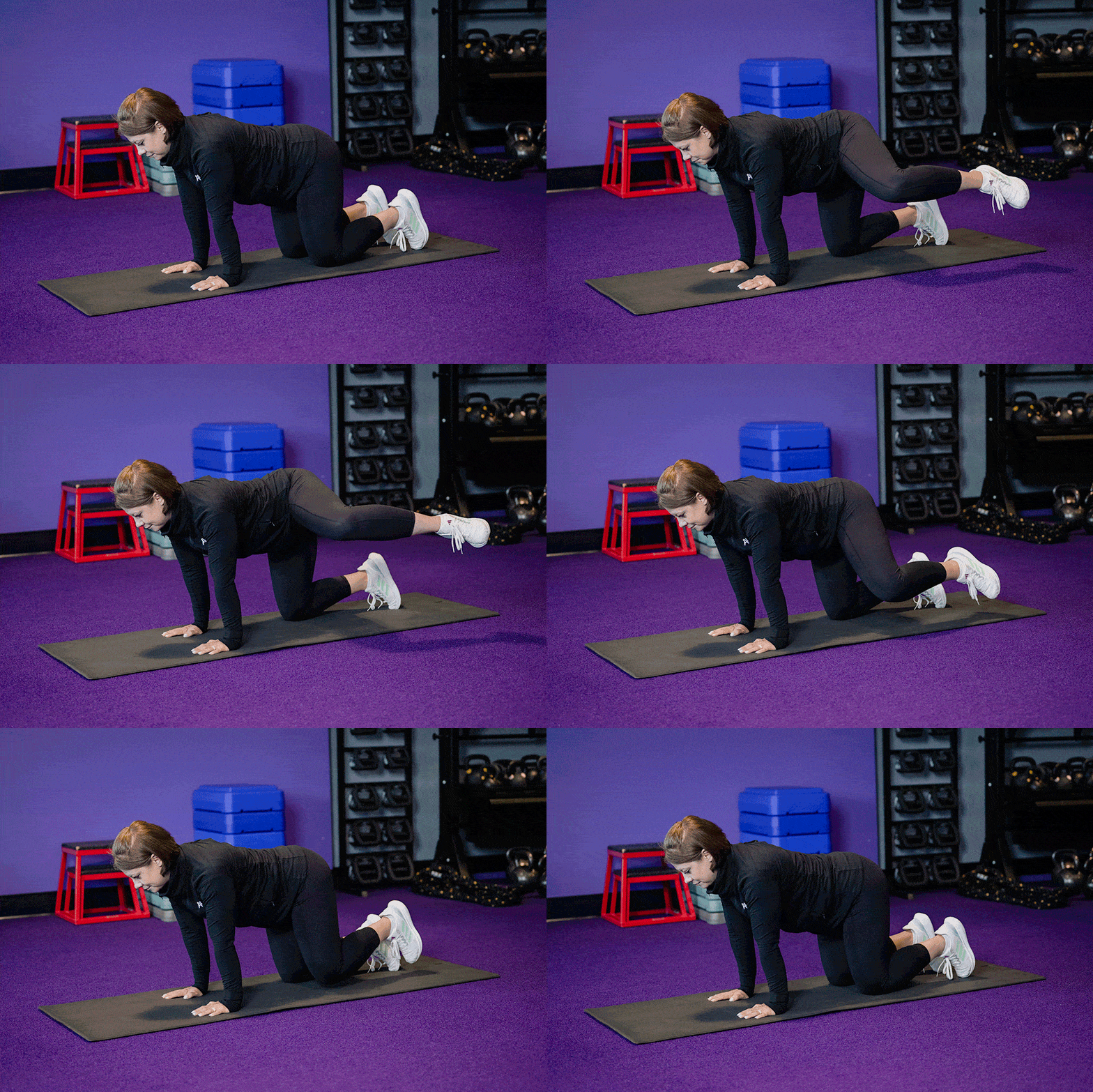
How to:
- Kneel on all fours with both knees and hands on the floor.
- Move from the hip and raise one leg up and out to the side, keeping your knee bent.
- Hold briefly, then lower your leg and repeat.
Perform 1 set of 3-10 reps per side.. Complete all reps on one side before switching to the other.
Pro tip: Avoid arching your back during this movement and maintain a neutral spine.
Hip strengthening exercise: Seated straight leg raise

How to:
- Sit on the floor with your legs extended straight in front of you.
- Flex your foot and tighten the quad (thigh) muscles of your right leg.
- Raise your right leg 1-2 inches off the floor.
- Lower the leg slowly to the floor.
Perform 2-3 sets of 6-12 reps per side.
Pro tip: Brace your core and keep your back flat during this exercise to maintain proper form and increase your hip strength.
Hip strengthening exercise: Mini-band side steps
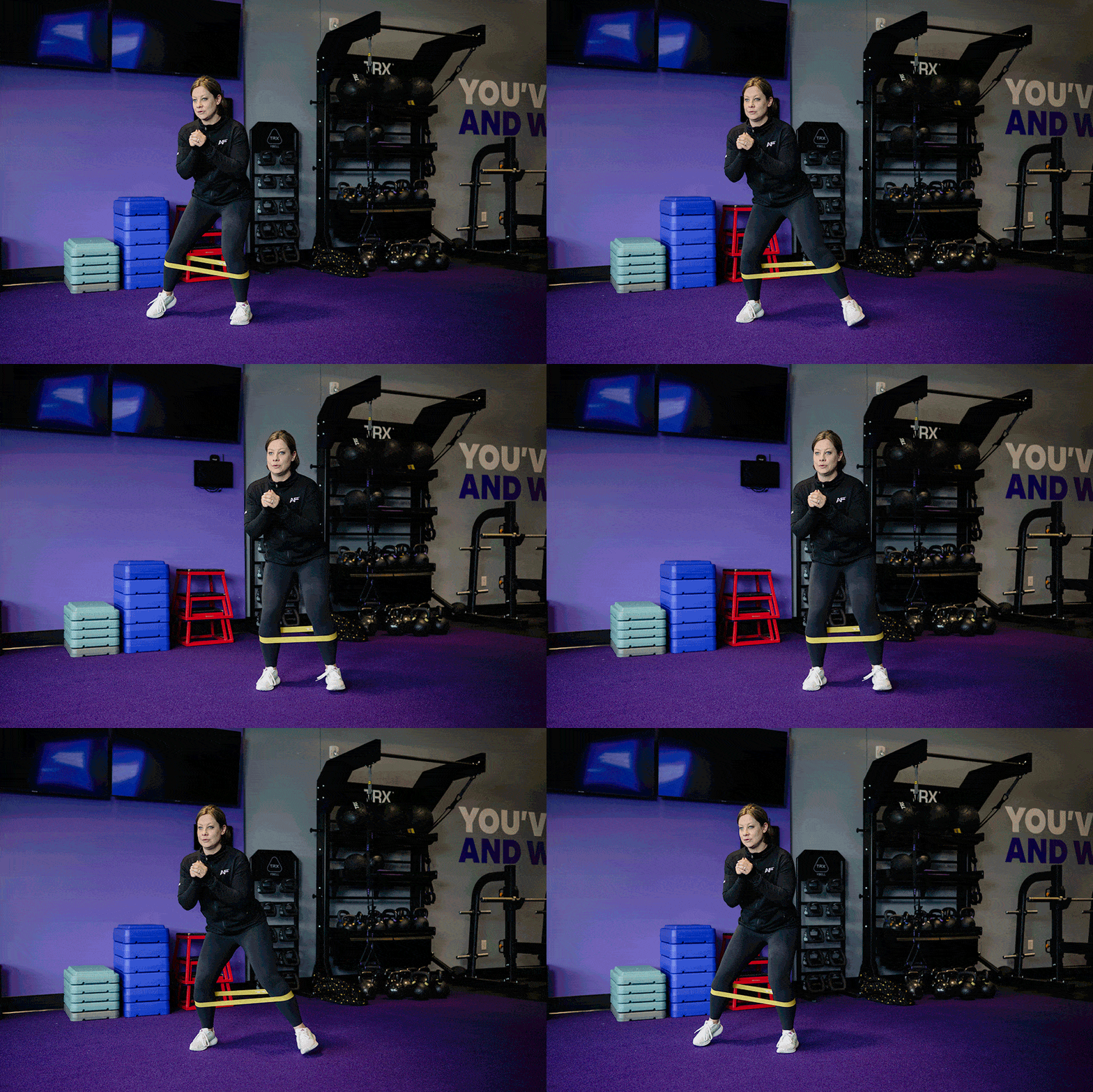
How to:
- Start in a hip-width stance with a band around both legs, above your knees.
- Keep tension in the band while engaging your core, and point your toes straight ahead.
- Squat slightly and slowly step out to one side.
- Repeat, stepping to one side for all repetitions.
Perform 2-3 sets of 6-12 reps per side. Complete all reps on one side before switching to the other.
Pro tip: Avoid letting the band snap your leg into place. Instead, use your hip muscles and outer thighs to resist the tension from the band.
Hip strengthening exercise: Split stance hip hinge
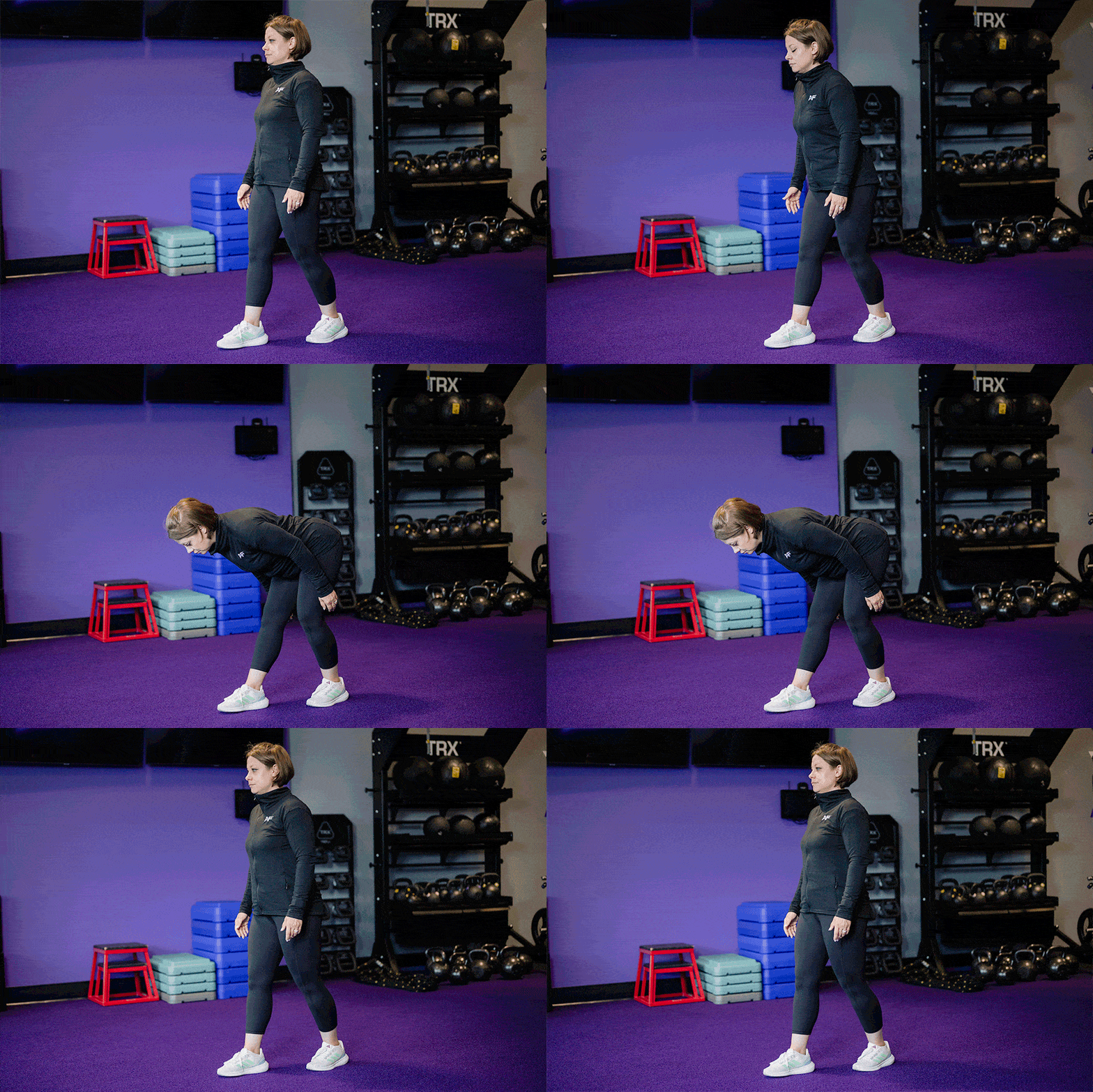
How to:
- Begin with your feet hip-width apart, then step one foot slightly back into a split-stance position.
- Keep your weight grounded on the front leg, then hinge back at the hip into a deadlift position. Keep your back flat and hips square.
- Return to the starting position.
Perform 2-3 sets of 6-12 reps per side. Complete all reps on one side before switching to the other.
Pro tip: If you need assistance with the hip hinge, try the band-resisted modification below.
Modification: Band-resisted hip hinge
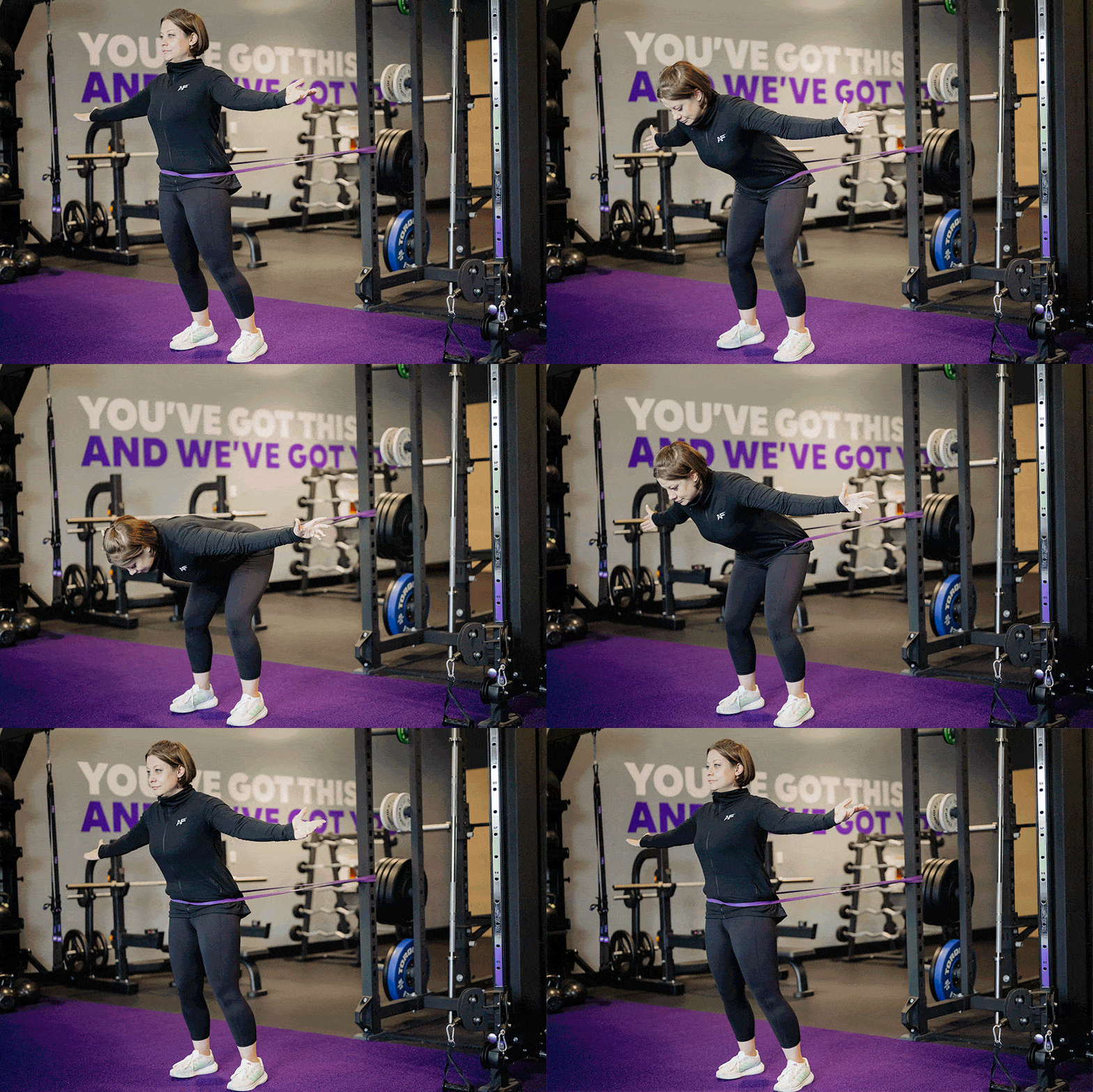
How to:
- Anchor a band around a rack or bench, close to the floor.
- Step through the band and place it near the crease of your hips.
- Step forward, putting tension on the band. Place your feet in a shoulder-width stance.
- Flex your knees slightly and hinge at your hips, allowing the band to pull your hips back.
- Drive the hips up and forward against the band to return to the starting position.
Perform 2-3 sets of 6-12 reps.
The gold standard of hip mobility and strength: Crab reach
While there isn’t a “best” exercise or stretch for hip mobility, the crab reach is highly effective because it requires mobility, flexibility, and strength.
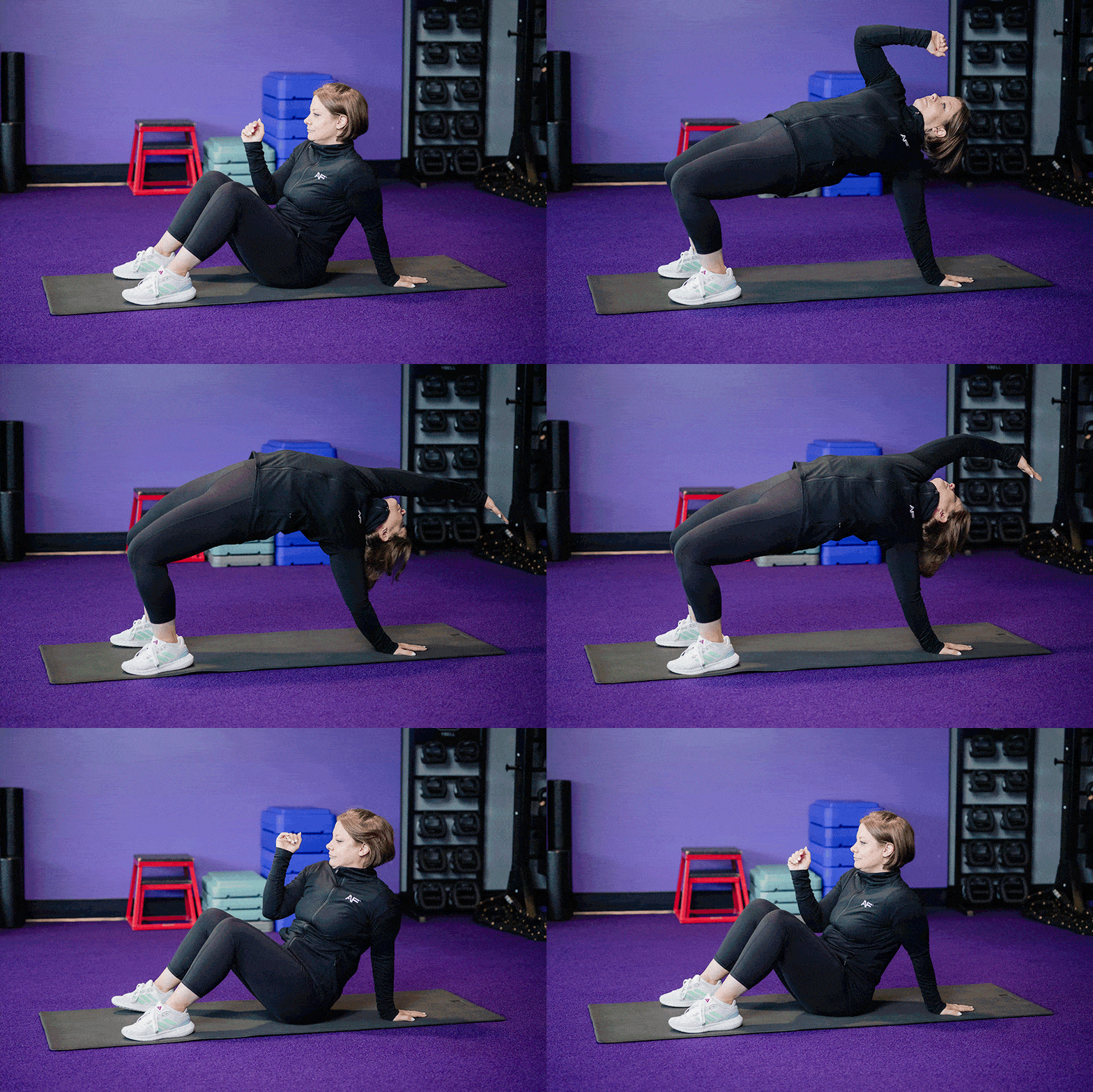
How to:
- Sit on the floor with your feet flat, knees bent, and one hand slightly behind your back.
- Lift your hips slightly off the floor and reach your free hand toward the ceiling, spreading your fingers wide.
- Raise your hips even further off the floor. As your hips come up, reach your free hand over the opposite shoulder.
- Pause at the top, then slowly return to the starting position.
Perform 2-3 sets of 6-12 reps per side.
Pro tip: Use your glute strength to help extend your body into the crab reach position, and avoid coming back to the starting position too quickly.
Reminder: Consistency is key with hip workouts
It takes repeated practice for our bodies to adapt and respond to hip mobility exercises and stretches. That being said, you can expect to start feeling improvements in your movement and mobility after a few weeks to about a month of consistent stretching.
For example: Better hip mobility will result in deeper squats with better upper body position, and as a result, the movement may feel “easier” or you may feel ready to move to heavier weights. You may also notice less pain during movements, and everyday tasks like getting in and out of the car may feel easier.
Doing a movement assessment with a fitness professional (like your AF Coach) is a great way to track your progress. From recording movement proficiencies to noting any tightness or muscle imbalances and how they’re changing, a Coach can help provide insights that you might not gather on your own.
Improve strength, reduce pain, and regulate emotion with hip mobility exercises
The benefits of hip strengthening exercises go beyond relieving tightness — from reducing lower back pain to improving overall mobility and even releasing emotional tension. Incorporating stretches and strengthening exercises can be a game-changer not only for mobility and results, but also for overall quality of life.
More stretching and mobility exercises to try
- Mobility Stretches You Can Do in 15 Minutes to Build Longevity
- Do These 7 Lower Back Exercises at Home to Reduce Back Pain
- 7 Yoga Poses for the Perfect Cooldown Stretch After Your Workout
Want more flexibility and mobility training? Try these six flexibility exercises for improved fitness and overall well-being.