

If your goal is to build muscle mass, the single-leg Romanian deadlift is one of the best exercises you can incorporate into your strength routine. Not only that, but it also boasts functional benefits, promoting stability and balance to help you move better and maintain strength for everyday life. Let’s talk about how to add one-leg deadlifts to your workouts for next-level lower-body muscle development and balance.
We’ll cover:
- The benefits and anatomy of deadlifts
- Traditional deadlifts vs. Romanian deadlifts (RDLs)
- What is a single-leg RDL?
- How to do a single-leg RDL step-by-step
- Three tips to master your single-leg RDL form
- Advanced one-leg RDL variations to challenge your muscles
If you’re not doing deadlifts, you’re missing major strength benefits
Before we get too deep, let’s talk about the traditional deadlift, which engages both legs at once. Deadlifts target the posterior chain — including the gluteus maximus, the strongest and largest muscle in your body. Having a strong posterior chain (backside) is key to athletic performance, performing everyday activities (think: running, jumping, walking, and lifting), and preventing injury.
Deadlifts are also compound exercises, meaning they engage two or more primary joints. The benefits of compound exercises like deadlifts include:
- Higher calorie burn compared to single-joint exercises
- Increased strength and stability
- Improved functional movement
- Time efficiency (more muscles activated)
The anatomy of deadlifts: It’s all in the hips
What makes deadlifts so effective? The key movement is a hip hinge. You've probably felt that nice stretch in your glutes that comes with a hip hinge during a deadlift; this stretches the muscle to an optimal length for exerting the maximal force.
At the same time, your hips rotate slightly inward as you push your body back into that hinge position. That movement helps stretch the glutes a tiny bit more and allows them to contract with more power, which translates to increased muscle strength.
Traditional deadlifts vs. Romanian deadlifts: What’s the difference?
There are many variations of deadlifts, and one of the most common is the Romanian deadlift. What makes these two movements unique? Here’s an overview.
Key features of a traditional deadlift:
- Weights are set down between reps
- Knees bend in a squat-like stance
- Movement activates several muscle groups, including the glutes, hamstrings, traps, quads, lats, and core
Key features of a Romanian deadlift (RDL):
- Weights stay off the floor throughout each set
- Knees maintain a soft bend while you hinge at the hips
- Movement targets glutes and hamstrings
Want an even more advanced deadlift variation? Enter: the one-leg RDL.
What is a single-leg RDL? Your ticket to next-level lower-body strength
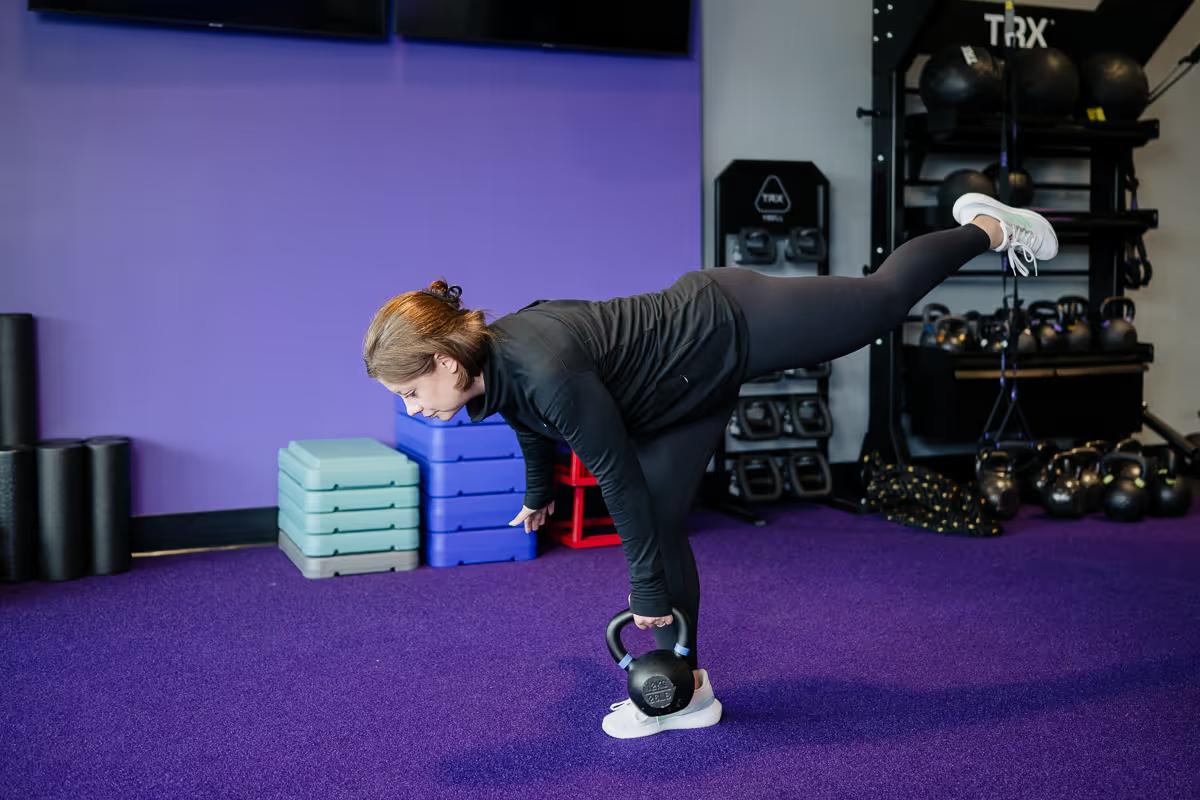
The single-leg Romanian deadlift is a unilateral version of the RDL, typically performed with a weight for resistance. It targets the hips and glutes one leg at a time, increasing muscle activation while promoting stability and balance.
Why should you add the single-leg Romanian deadlift to your workout?
One-leg Romanian deadlifts challenge your balance, coordination, and core stability to build real-world strength all in one movement.
Other benefits of single-leg RDLs include:
- Reducing side-to-side strength imbalances
- Improving muscular control
- Increasing the power you need for everything from sprinting and jumping to simply moving better
How to do a single-leg RDL with proper form
Without proper single-leg RDL form, you’ll miss the muscle-challenging leverage — and the gains. Here’s a step-by-step guide to single-leg Romanian deadlifts to ensure you’re using proper form and getting the most of every rep:
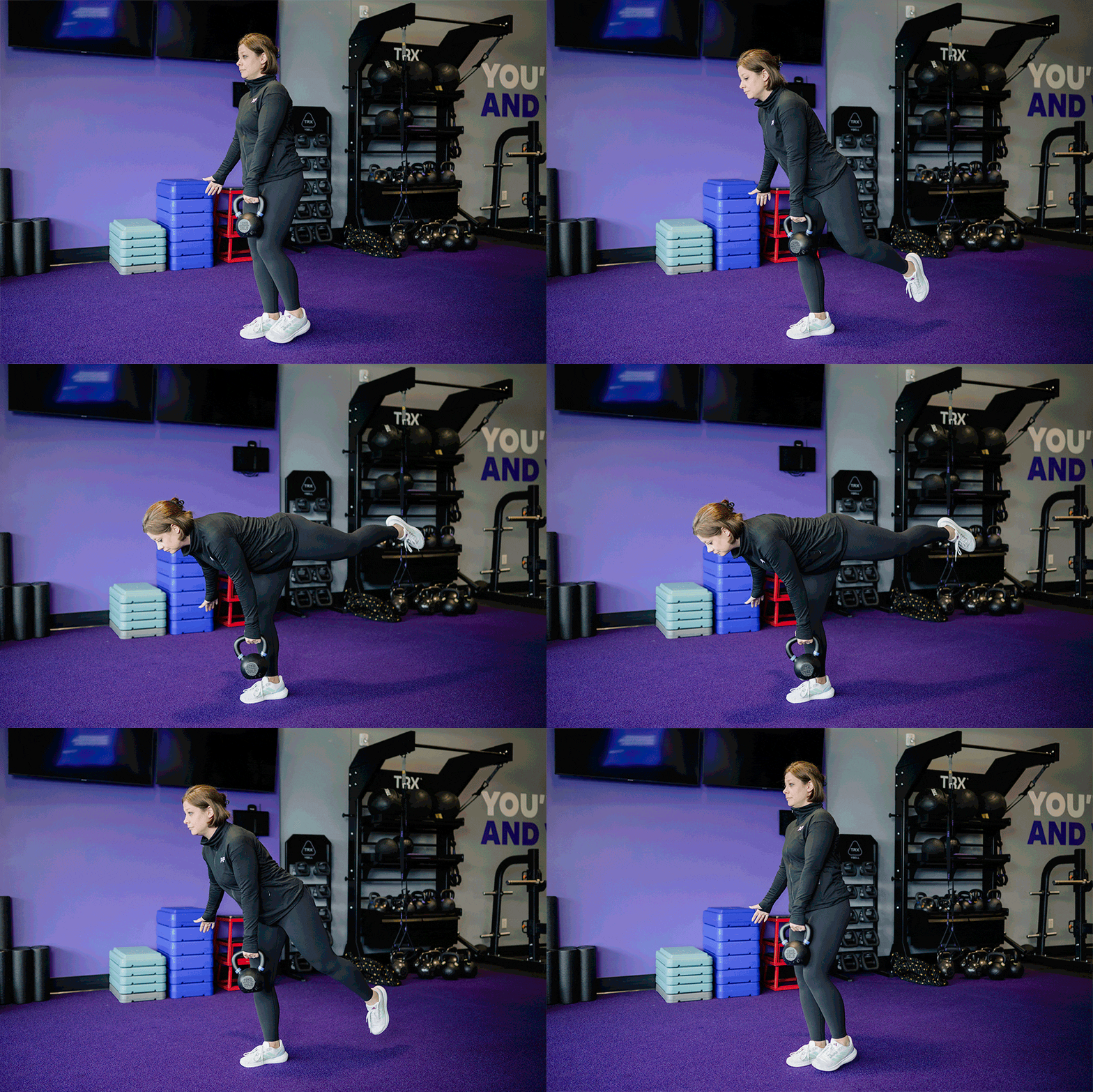
- Start in a split stance with most of your weight on your front leg.
- Keep a soft bend in both knees and use your back foot as a kickstand to maintain balance throughout the movement. Keep your hips and shoulders square to the front.
- Brace your core and hinge at your hips, sending them backward until you feel a gentle stretch in your front-leg glute. Allow your working side arm to travel down your front leg, keeping your arm (or weight) close to your body throughout the movement.
- Drive through your front leg to return to the starting position. Keep a neutral spine throughout the movement to protect your back.
Perform three to four sets of six to eight reps per side. Repeat all reps on one side before moving to the other.
3 tips to improve your one-leg RDL form
Even if single-leg deadlifts are already part of your routine, these tips can help you maximize your form and results.
1. Strengthen your mind-muscle connection during your warm-up.
Having a strong mind-muscle connection between your brain and glutes is essential. Even if you already have proper one-leg RDL form, you can use your warm-up to help improve your glute activation during your workout. Try adding these two moves to your next lower-body warm-up.
Band-resisted hip hinge activation drill
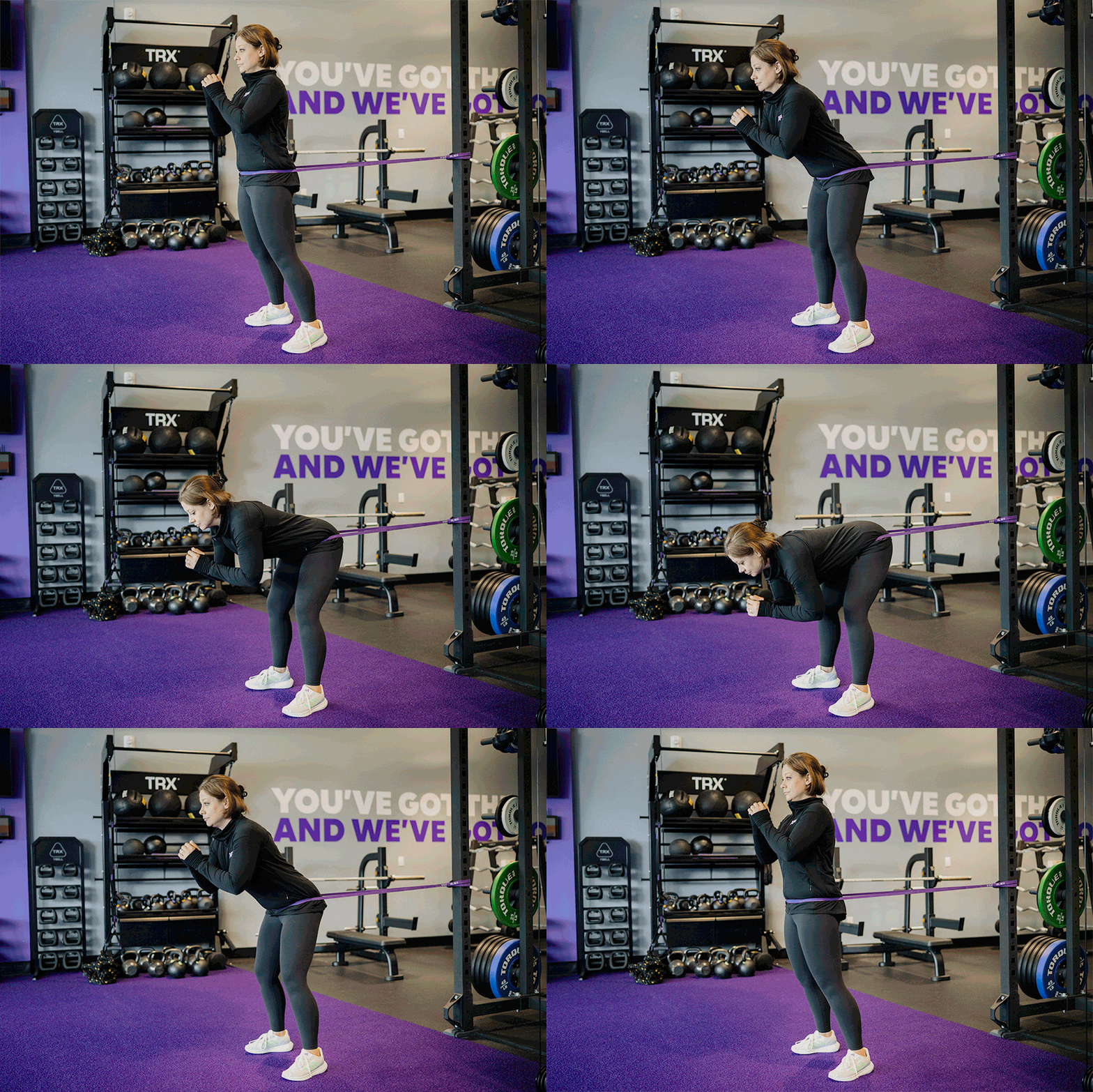
How to:
- Anchor a band close to the floor.
- Step through the band and place it near the crease of your hips.
- Step forward, putting tension on the band. Take a shoulder-width stance.
- Slightly flex your knees and hinge your hips, allowing the band to pull your hips back.
- Drive your hips up and forward against the band to go back to the starting position.
Complete one to three sets of 10-15 reps.
Single-leg reach
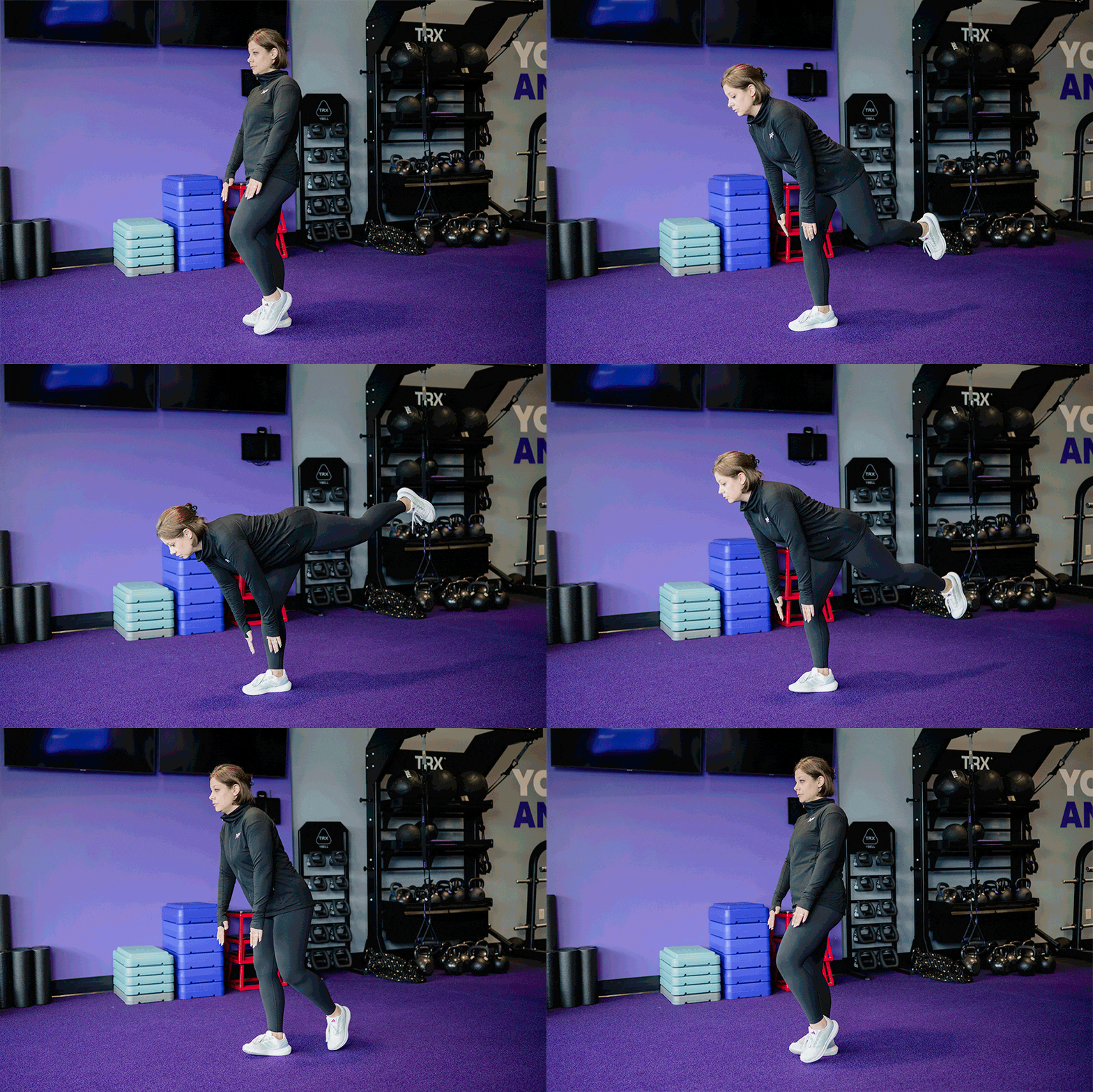
How to:
- Stand upright with one foot on the floor, knees slightly bent, and arms by your sides.
- Bend forward at the waist and keep your back straight, lowering your torso down and reaching for the floor. Keep your standing leg straight throughout.
- Push off your standing foot to go back to the upright position.
Complete one to three sets of 10-15 reps.
2. Focus on your core to boost stability.
Stability and balance start with the core. Try the “thread” method during your next lift: Imagine there is a piece of string being threaded from your belly button to your spine; as this string becomes more taut, it brings your abdomen closer to your backbone from the inside. Doing this helps you properly brace your core for better form and injury prevention.
3. Work out muscle imbalances.
Do you feel stronger or more stable on one side when you’re doing single-leg deadlifts? This is known as muscular imbalance. To correct it, start your reps on your non-dominant (weaker) side. Use the same amount of weight and reps when you move to your stronger side. Over time, this process will help you build strength in your non-dominant side and maintain strength on your dominant side.
How to incorporate single-leg Romanian deadlifts into your routine
Single-leg RDLs can be done once or twice a week as part of your leg workouts — this allows you to target your other major muscle groups while incorporating rest days to help your muscles repair and prepare for your next workout.
For optimal results, one-leg Romanian deadlifts should come after bilateral compound movements in your workout. This is because bilateral lifts are typically the heaviest in your workout, so doing them first ensures you have the energy need to lift heavy weights without reaching fatigue.
Single-leg RDLs should also be done before any plyometric or cardio training that could exhaust your lower body — and therefore sacrifice your form.
One-leg RDL variations to challenge your muscles
If you’ve been practicing single-leg Romanian deadlifts for a while and want to keep them in your routine while continuously challenging your body and mind, try one of these single-leg RDL variations.
Single-leg deadlift with stabilization

How to:
- Place your rear foot on the floor behind and at an angle to your standing leg. This rear foot acts as a kickstand and provides extra stability, allowing you to lift heavier loads.
- Perform a single-leg RDL.
Single-leg RDL with slider

How to:
- Stand upright with one foot on the floor and a slider underneath the other, a soft bend in your knees, and arms by your sides.
- Bend forward at the waist and keep your back straight, lowering your torso down and reaching for the floor. Keep your standing leg straight throughout as you move the slider back with your rear leg.
- Bring your rear leg back to the starting position by squeezing both glutes and keeping your core engaged.
Rear-foot elevated single-leg RDL
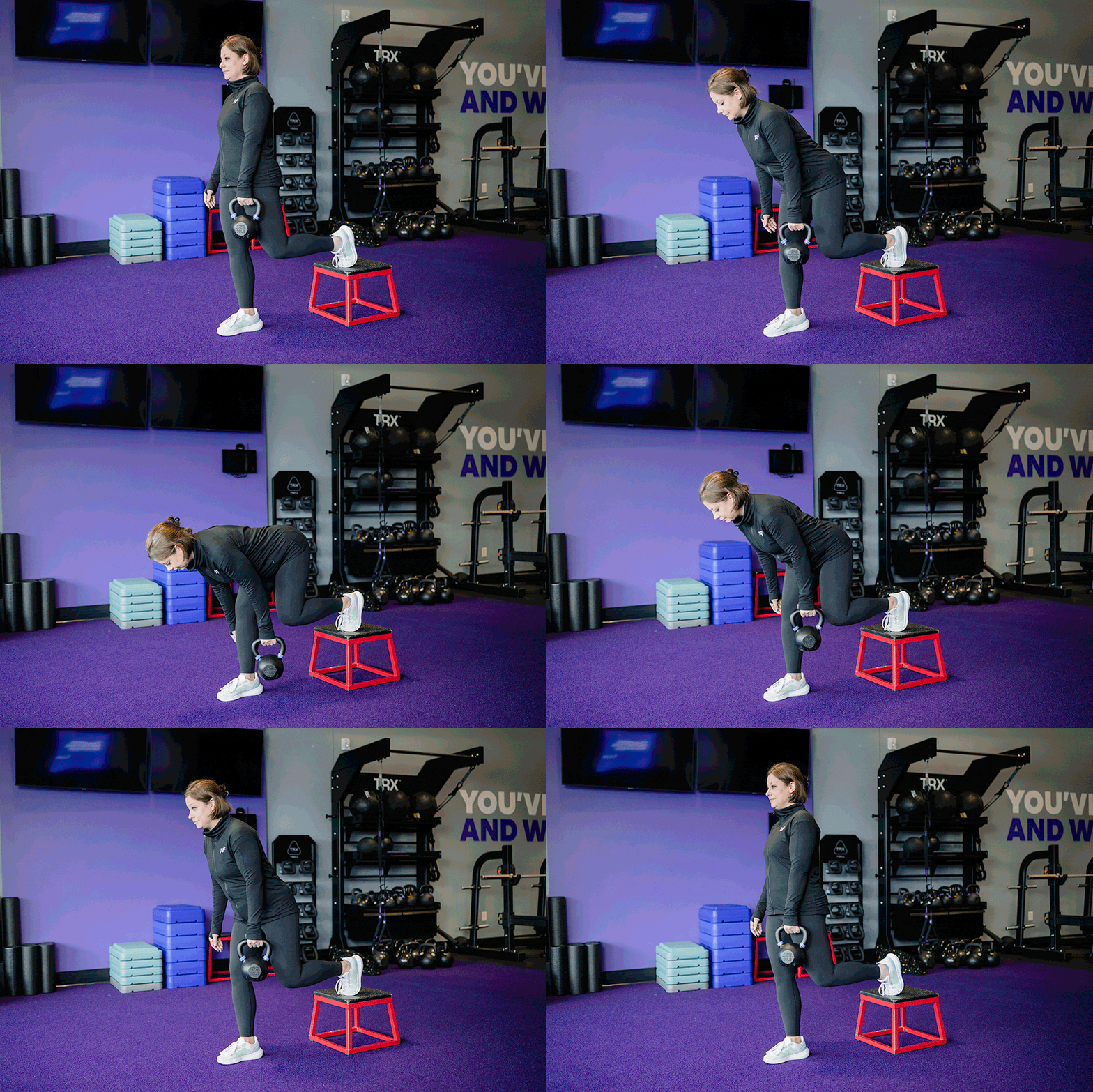
How to:
- Elevate your rear foot on a small (6-12 inch) box or with your foot flat against a wall behind you.
- Perform a single-leg RDL.
This variation provides stability by placing your rear foot on or against a stable surface, but is a progression over the single-leg RDL with the elevation of the rear leg.
Promote strength, balance, and healthy movement patterns with single-leg Romanian deadlifts
If one-leg Romanian deadlifts aren’t part of your strength training routine already, take this as your sign to add them! Regularly practicing single-leg RDLs provides the strength and stability you need for healthy movement for life. Not only are they effective for building lower-body muscle, but one-leg RDLs can also correct imbalances to help you perform your best inside and outside the gym, whether it’s playing a sport, hitting your next personal best, or simply moving better.
Already practicing single-leg deadlifts? Keep it up, and keep finding ways to challenge your muscles: more reps, more weight, or new variations. Remember: Consistency is key to progress, and we’re here with all the equipment, Coaching, and resources you need to reach your goals.
More strength training tips to level up your results
- Work Smarter, Not Harder: The Power of Periodization Training
- The Best Muscle-Building Diet to Fuel Your Growth
- How to Do Bulgarian Split Squats
Training is just one piece of the strength-building puzzle — recovery is just as important as the workout itself. Check out our ultimate guide to post-workout recovery to help your muscles repair and boost your performance.