

Dead hangs may seem like a simple exercise that feels amazing in the moment, but the benefits go beyond the few seconds or minutes that you’re hanging from the bar. In the long term, this exercise can be a game-changer for your strength workouts — and your quality of life. Let’s talk about dead hang benefits and how adding them to your routine can take your results to the next level.
We’ll cover:
- What is a dead hang?
- Four key dead hang benefits
- What muscles do dead hangs work?
- How to incorporate dead hangs into your training routine
- How to do a dead hang with proper form
- Four advanced dead hang variations
What is a dead hang?
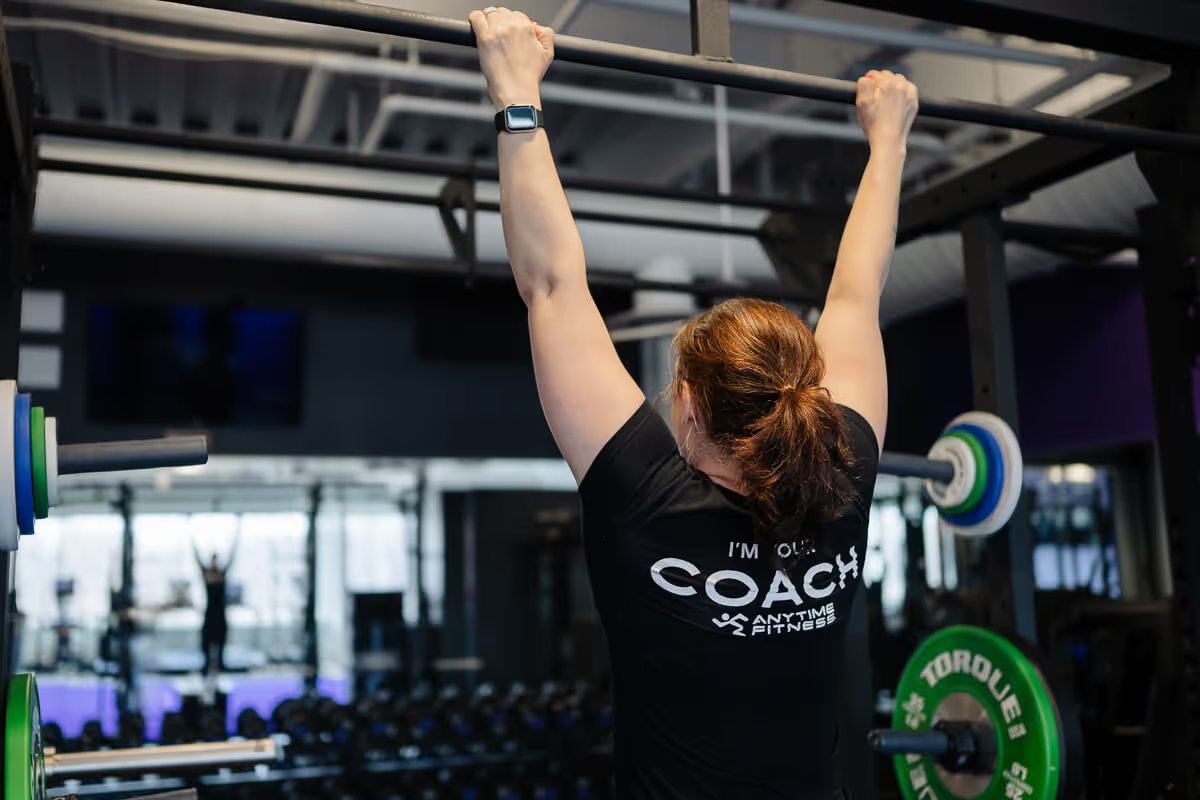
As the name implies, a dead hang is a hang from an overhead bar. This is an isometric movement that uses your back, shoulders, and core muscles, challenges your grip strength, improves your posture, and strengthens your hands, wrist flexors, and forearms.
Dead hangs are typically measured by duration, meaning you hold for as long as you’re able. As you practice dead hangs, aim for increasingly longer dead hang times, and when you’re feeling ready for more challenge, try an advanced variation (more on this later!).
4 key dead hang benefits that level up your strength routine
Let’s cover one of the most common questions about this upper-body move: Are dead hangs good for you? The answer: Yes! Dead hangs belong in your strength training routine, especially if you’re:
- Trying to lift more weight (for example: improving your PRs in deadlifts, pull-ups, or rows)
- Training to handle more volume (sets and reps) during your workouts
- Experiencing tightness in your shoulders and back
Why? Dead hang exercise benefits include:
- Improved grip strength: Grip strength is a key indicator of longevity because the stronger your grip, the stronger your entire body is likely to be. This opens the doors for improved bone health, muscle mass maintenance, and overall health and quality of life.
- Muscle activation: Dead hangs activate your upper body and core muscles to prepare your body for workouts.
- Spinal decompression: One of the most-loved benefits of dead hangs is spinal decompression, or gentle stretching of the spine. (If you’ve ever done physiotherapy, you might be familiar with this!)
- Mental toughness: Dead hangs are a unique exercise because it’s just you vs. the clock — regularly practicing them and aiming to go longer each time is a surefire way to build grit and confidence for bigger lifts and longer holds.
What do dead hangs work?
If you’ve done a dead hang, you probably remember how great it felt on your back. This is because dead hangs use the force of gravity to help decompress your spine. Spinal compression is a common side effect of a sedentary lifestyle, like sitting at a desk for long hours. During a dead hang, the weight of your lower body pulls the rest of your body down, providing space between your spinal discs and giving you a release from this pressure.
You’ll also feel the release in your shoulders because the position creates more space in and around your shoulder joint. This is especially true if you tend to store stress and tension in your upper body (you’re not the only one!).
When it comes to specific muscles, dead hangs primarily target your upper body and core, including:
- Lats
- Traps
- Deltoids
- Rhomboids
- Abs
- Obliques
They also strengthen your hands, wrist flexors, and forearms.
Do dead hangs build muscle?
No matter what your muscular development goals are, dead hangs are an effective practice to add to your routine. Here’s how they relate to specific training goals:
- Increasing strength: Dead hangs promote general strength in your hand muscles, wrist flexors, and forearms.
- Adding mass: If your goal is to add muscle mass, doing dead hangs increases grip strength, which is often a limiting factor in strength training movements like deadlifts.
- Building endurance: Dead hangs are isometric exercises, so doing them regularly helps build strength endurance. To achieve this, you can superset your dead hangs with an exercise that works an opposing muscle group, like a barbell row or lat pulldown.
How to incorporate dead hangs into your routine
You can do dead hangs every day if you have access to a bar. How you do dead hangs depends on your training routine and goals. Here are a few examples.
As a warm-up: Dead hangs are a great warm-up for upper-body days with movements like pull-ups, lat pulldowns, or presses. Try a few short sets of dead hangs for a moderate intensity. Aim for a duration that feels challenging but manageable. (The same goes for dead hangs as recovery.) Since the goal is to activate, not exhaust, release before your grip gives out.
For strength: To maximize the strength benefits, maintain tension in your core, upper body, and shoulders as you hang. Start with 10- to 20-second holds and work your way up. Dead hangs can also help develop the strength required to do a pull-up or improve your pull-up form.
For recovery: If you’re focused on using dead hangs for recovery after a workout, allow your core to fully disengage and put all your energy into your hands. Use them as a hook on the bar and release every other muscle as you hang, from your shoulders to your elbows to your ankles. This promotes better spinal decompression, which can improve mobility and flexibility while reducing back pain.
How to do a dead hang with proper form
Even if you’ve been doing dead hangs regularly, a form check can help you hang longer and gain more strength and stability.
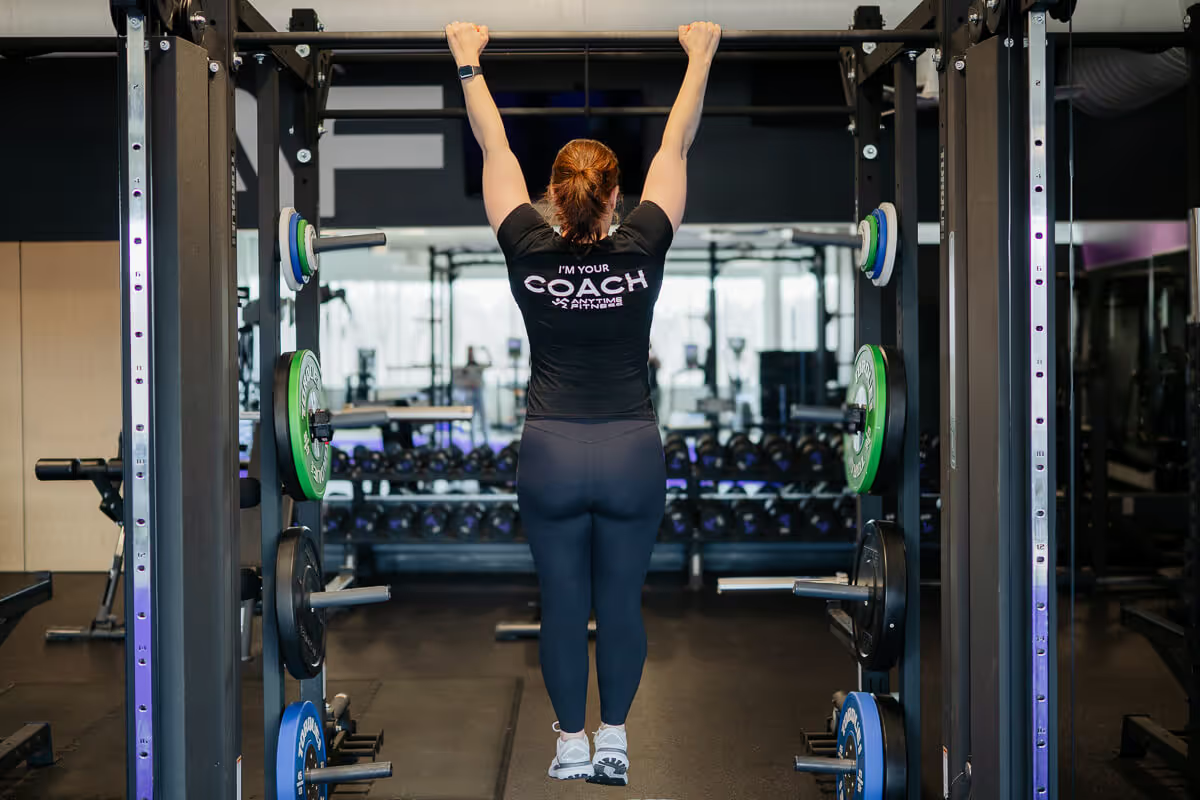
How to:
- Place your hands on top of a door, Smith machine, or overhead bar.
- Slowly bend your knees or step off the box you’re standing on and allow your arms to take the weight of your body.
- Slowly lower to a hanging position.
- Release any tension or flexion in your shoulders. Imagine them dropping away from your ears.
- Hold for as long as possible, bracing your core and glutes.
- Step down when you start to feel your grip give out.
Pro tip: Instead of clenching or squeezing the bar, use your fingers as hooks that hang over the bar. This allows for full extension of your upper back and the flexor muscles in your arms.
3 dead hang grip variations to target different muscles
Using a new grip variation is a simple way to change up your dead hang routine and challenge your muscles. There are three main variations:
- Overhand: Primarily targets the forearms and upper back
- Neutral: Primarily targets the shoulders
- Underhand: Primarily targets the biceps
Dead hang safety tip to boost results
Proper setup is key to maximizing your results and avoiding injuries during dead hangs. Make sure you have a stable way to reach the bar and get down from it safely, rather than dropping down to the ground. You can use a box (such as a 12-inch or 18-inch box jump) or bring the bar lower (such as on the Smith machine). This also makes the exercise safer since you don’t have to jump up to reach the bar.
4 dead hang modifications for added strength and stability
1. Active hang
In an active hang, you engage your shoulder blades and back muscles to increase the stabilizing and strengthening effects of a traditional dead hang. To properly engage your upper back and shoulder muscles, imagine you’re breaking the bar in half by squeezing your shoulder blades together.
2. Dead hang with rings
Dead hangs from rings are less stable than those done from a bar, which makes them more challenging — and therefore, better for improving stability. If you have access to rings, perform dead hangs from rings to continue building strength, endurance, and stability in your shoulders and core.
3. Weighted dead hang
To do a weighted dead hang, you’ll need a weight belt with chains or weight plates attached to increase the load. You’ll know you’re ready for weighted dead hangs when you can easily do three one-minute bodyweight dead hangs in a row, or one two-minute dead hang.
Start with a weight belt plus a 10-pound plate, then increase gradually as you feel stronger and more confident.
4. Single-arm dead hang
The single-arm dead hang is a more advanced version that uses only one arm to support the entire weight of your body. Before progressing to the single-arm dead hang, master the weighted dead hang with an additional 50%–70% of your body weight.
It’s time to add dead hangs to your strength routine
Dead hangs are a simple practice with serious benefits. The key to results? Consistency. Just a few seconds or minutes a day can improve the quality of your workouts along with your strength, mobility, and ability to do everyday activities like lifting, running, and climbing. Whether you’re just getting started or trying an advanced variation, challenge yourself to hold just a few seconds longer. Take it from us — the results will be worth it!
More strength and wellness tips for you
- Train Smarter, Not Harder: The Power of Periodization Training
- The 8 Rear Delt Exercises Your Workout Is Missing
- The Best Muscle-Building Diet to Fuel Your Growth
- 4 Important Ways Exercise Can Improve Your Mental Health
Interested in more recovery tips? We’ve got you! Learn how to take rest days to maintain muscle growth.